
After talking about expanding our solar power on Friday, today I want to talk about other ways to have power in a grid-down environment. These are going to be most applicable for local or regional emergencies, not long-term global emergencies, but may be better than nothing in a global or long-term outage.
Backup Generator
One of the best and most popular methods of temporary power during a grid outage is to own a portable generator that runs on gasoline, diesel, and/or propane and to store sufficient fuel to cover your anticipated needs.
One thing that makes a generator ideal is that you can size it to your load. For example, if you need to run a well pump, you may need a generator that can produce 30 or 50 amps at 240 volts. If all you need to do is run a refrigerator and some lights, you can get away with small generator that produces less than 3,000 watts and powers two or four 120-volt outlets. The smaller generators usually consume less fuel, run quieter, and are lighter and easier to transport.
Another advantage of gasoline generators is that relief organizations that respond to regional emergencies will be ready to provide gasoline because the need for it will be so high. Diesel will be less available, with propane somewhere in the middle.
The downside is that these generators are loud, generate exhaust and carbon monoxide, and are only good as long as there is fuel. When it runs out, so does your luck.
Intermittent Usage
If you are using a gasoline generator to provide power in a local or regional emergency, my advice is to run it twice a day for up to three to four hours at a time. That should provide enough power to keep your refrigerator cold and prevent your food from spoiling. If you have a freezer, plug it in, too. Unless you have a medical device that needs constant power, food preservation should be your number-one priority.
Depending on your generator model, that short run time should use less than a five-gallon can of gasoline. That’s important because you need to stretch your gas, not consume it all in a rush by running your equipment constantly. And why run your generator when it is light out or you are asleep?
When we used this intermittent approach, we would run the generator when we woke up and use it to power the kitchen appliances, so my wife could make coffee and I could make breakfast. After the refrigerator cut off, we knew it was cold again, and we would unplug it and plug in the washing machine to do a load of laundry. Our 3,500-watt generator was not strong enough to run the clothes dryer, so we hung the laundry on a clothesline to dry. We could even run the dishwasher if necessary, but we usually did that at night.
When it started to get dark, we would start the generator again and let it run the fridge and freezer plus a few plug-in lamps. We also prepared and then ate dinner while it ran. We would often go to bed when we shut off the generator.
Using Solar Generators
Solar generators are becoming increasingly popular, but I would rely on one only if I had a gasoline generator to recharge the solar generator when the sun was not shining.
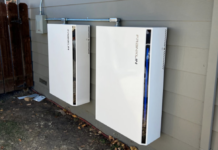
There are many brands, sizes, and styles of solar generators out there. Most are little more than large batteries that provide power to various outlets and can be charged with small solar panels. Most are not meant to power your whole home—unless you live in a tiny house or an RV.
If you have a medical or other device that requires constant power, a solar generator can help. They can also be used to recharge your mobile devices and laptops.
Larger units can be used as a bridge, a way to power some devices during an outage. If the power goes out because of a thunderstorm and you expect it to be on again in a few hours, you can use your solar generator to power your electronics and lighting during the outage. However, if the outage lasts for days, your battery won’t, especially if you are using it to run your refrigerator and/or freezer and other appliances.
While many such devices come with small 100 or 200 watt solar panels, you will need 400 or more to fully recharge it. My advice is to take the device’s nameplate capacity and divide it by five. That will give you how many hundred watts of panels you need to recharge it on a sunny day. For example, if you have 2,000 watt hours of battery storage in your solar generator, you need at least 400 watts of solar panels. If you have 4,000 watt hours of battery storage, you need panels that provide a combined 800 watts.
A Recent Outage
One day last week, our power went out at about 9 a.m. because of high winds. Our utility emailed and said it would be back on at 1:30 p.m. It actually came back at 11:30 a.m.
If your outages are like this—one to six hours—that’s perfect for a solar generator. You can power a few things around you to reduce the inconvenience, and when the power comes back on, plug in the solar charger and recharge it. No need to break out the solar panels.
If, on the other hand, the grid goes down at 9 a.m. on Monday because of a storm and doesn’t go back on until 11:30 a.m. the next day, your solar generator may not have sufficient power. This is where kicking on a gasoline generator to take over the load and recharge the solar generator becomes necessary.
Work Arounds
If you have occasional outages and cannot afford either a fossil fuel generator or a solar generator, here are a few basic work arounds you can use in a grid-down scenario:
- Headlamps are my number one recommendation. They put light where you need it. I have at least six, and my wife has two. You can prep food, read a book, work with your hands, and do many other things in the light of a headlamp.
- Other flashlights and lanterns are also useful. We use one at the dining room table and when we take a shower. We prefer the kinds that take rechargeable batteries.
- Maximize the available daylight. While the lights on our living room ceiling and above the dining room table are convenient, we really don’t need them during the day. So be like our ancestors who didn’t have electricity and worked during the daylight and went to bed when the sun set.
- Cook with fire, something else that was common until about 100 years ago. During an outage, we will often cook on our outdoor grill. It includes a single burner, so as long as we have propane, we can grill something and heat a pot or pan. In the winter, we cook on the wood stove. During the summer, we can build a fire pit and cook outside. In our camping gear, we have a two-burner Coleman multi-fuel stove and a single-burner propane stove. Either of them can be used in a pinch.
- Water to flush: I expect everyone who loses water pressure when the power goes out already knows this, but you can get one flush from each toilet. After that, you need to haul water to fill up the tank behind the toilet. Don’t waste your drinking water on flushing. Of course, there is also the great outdoors. Just try to be hygienic, bury your waste, and wash your hands.
Powering your Furnace
In the winter, a lack of electricity will shut down forced-air heat and radiator systems. This can contribute to frozen pipes and potentially lead to death as the temperature in your home drops over a period of days, making it unlivable.
If you rely on gas or fuel oil for heat, your system likely requires 400 to 800 watts of electricity to run the blower motors, circulator pumps, and other components. Either a solar generator or a fossil fuel generator can provide sufficient power to run your gas or oil furnace for a few hours, but only if your system is safely connect your power source.
I’m not going to tell you how to set this up, but I am going to recommend you contact a professional electrician to set it up for you. Alternatively, you can conduct some research on YouTube and find a do-it-yourself method. Just be careful, and never back feed the grid.
Having heat during a multi-day power-outage in the middle of winter can be the difference between survival and disaster. Think about this before the first storm blows in.