

Despite another storm that is expected to bring us some significant snowfall and more cold temperatures, I’m going to pivot from local issues and look at global ones, namely war. Specifically, the likelihood of war in Iran.
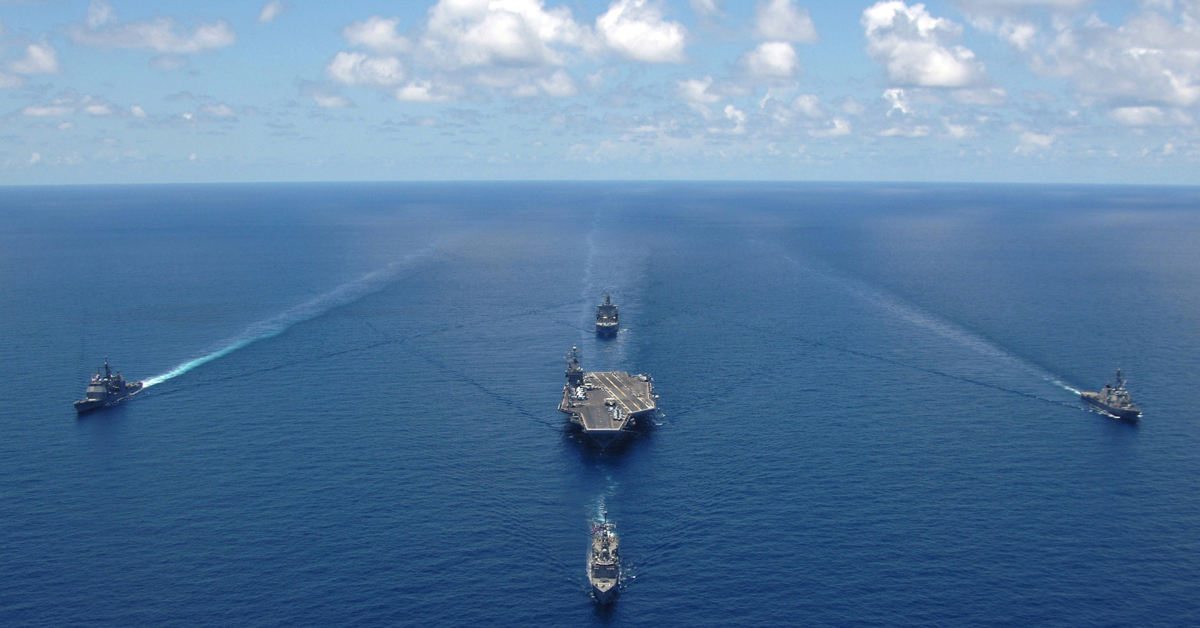
As we saw earlier this month in Venezuela, President Trump doesn’t send naval armadas to far-away places and just let them sit there. He uses them as a threat, and if the threat doesn’t achieve his aim, he uses them as a cudgel.
Right now, it looks like Iran may be the next country to get its shins whacked. Or maybe it would be more accurate to say its head removed. Even if that “head” is deep in a bunker, as some have said.
You know it’s getting real when the heads of state head to their bunkers.
A Knock Out Combination
Last year, Israel landed a flurry of blows on Iran. They destroyed Hamas. They gutted Hezbollah. Then Israel knocked out Iran’s air defenses and bombed the heck out of them. The U.S. followed up with Operation Midnight Hammer which blasted Iran’s network of bunkers for producing nuclear materials.
After a “peace” deal was signed, Iran was like a woozy fighter on the ropes, barely holding itself upright. But the bout wasn’t over. In the next round, Iran continued to take body blows, including protests that further weakened it. Now the U.S. appears poised to strike again, this time with a much larger attack.
The question is: why? What has Iran done that makes it the subject of an attack? Are they still trying to develop nuclear weapons? Yeah, but that’s been going on for decades. Oh, that’s right, Trump is going to attack because the regime has killed thousands of protestors, something it has also done before.
The protesters and Iran’s human rights abuses are just smokescreens, a convenient excuse. Protecting Israel is just a happy coincidence. The real reason is to deprive China of Iran’s oil.
Look at what happened after Trump knocked out the leadership of Venezuela: they stopped shipping oil to China and Cuba. Look at what happened after the U.S. started interdicting so-called ghost tankers: fewer tankers are carrying oil to China. And what was one of the first things Trump wanted to do after taking office? Take back control of the Panama Canal, which China manages.
We are in the Quiet Phase of a War with China
China has been at war with us for a long time. It’s a slow war, a shadow war. Trump is the first president who is fighting back. He may lack subtly, but he doesn’t lack bluster. Instead of fighting with cyberattacks, or more overt measures that blur the line between kinetic war and shadow war, he is fighting with money and oil. He is fighting by controlling chips and advanced technology, and by taking U.S. operations of TikTok out of Chinese hands. When Canada wants to buy cheap EVs from China, he threatens Canada with higher tariffs. Not to punish Canada so but to wound China.
Trump expects the war to go hot one day, so he is weakening China before the bullets, drones and missiles fly. By reducing our role in Ukraine, he is allowing us to move assets to the Pacific. Trump is not worried about Russia, a former superpower; he’s worried about China, an emerging superpower. Because he knows that without adequate preparation—building up our forces while weakening theirs—China could win the next war.
China has made no secret of its desire to “reunify” with Taiwan. Just recently, China also made it clear that Japan is in its sights, too. Because if Japan is going to get involved anyhow, why not strike Japan first?
China’s target date is supposedly in or after 2027. The more Trump can delay that by starving their supply of oil and economic support, the more advanced technology we can field and the better we will fare. Our allies will also be better prepared.
China’s Military Shuffle
If you are on top of the news, you will have seen that China’s military leadership is undergoing a shake-up. We don’t have a great deal of clarity into what is happening, but we know that two of China’s top military leaders have been ousted, the most recent in a long line of military leaders purged because of corruption.
The Wall Street Journal reported that Gen. Zhang Youxia, Xi’s highest-ranking military deputy, was accused of giving China’s nuclear secrets to the U.S. No one knows if this is true, but what if it was a plant by the U.S.? What if the general was a strong ally of Xi and the United States wanted to weaken China’s military by undermining its leadership? What better than to implicate their leader as a U.S. spy? Let me be clear: I am speculating, playing what if. But I think it is just as likely that we planted evidence as it is that he gave us nuclear secrets.
Will the loss of military leadership set back China’s plans for attacking Taiwan? Well, it certainly won’t hurt.
Building Up to a War Footing
Russia is on a war footing, as is Ukraine, cranking out thousands of drones and other munitions every month. China is close to switching its industry from consumer goods to military items. Trump is trying to get Europe to build its forces, spend more on defense, and support Ukraine so that the U.S. can do less in Europe. He is moving our military complex onto a war footing, but the rest of the industrial base in the U.S. is not there yet. Getting it ready for war will take time, another reason to fight with the weapons we have: proxy wars, a financial battle, eliminating threats in the Western Hemisphere, and reducing the flow of energy to China.
Meanwhile, our warfighters gain experience on these deployments. Our pilots get more hours in the air. We get real-world experience and to see first-hand how our new weapons work under actual battlefield conditions. Contrast this to the last battle China fought, which was with clubs and knives against India along the Line of Actual Control. Which country do you think will be better prepared for a future battle in the air, and on and under the sea? The one that has been there and done that.
As the clash between an emerging superpower and a superpower clinging to its past strength grows more likely, your preps should also be on a war footing. Maybe there won’t be any attacks on our homeland, but that doesn’t mean we won’t suffer from the war’s effects. Think shortages that make the pandemic’s aftermath look like small potatoes. Assume there will be cyberattacks on banks, utilities, police departments, hospitals, large corporations, airlines, trains, solar power systems, and electronic devices mad in—you guessed it—China. Plan for attacks by terrorist cells. Expect martial law.
What Should Your Preps Look Like?
How long can you stay in your house without outside resources? If some kind of SHTF event breaks out nationally, regionally, or even locally, the longer you can lie low, stay off the streets, and keep your tag from being read by license plate readers and redlight cameras, the better.
This takes obvious things like food, but to stay home for 30 or 60 days while the world around you goes to hell also requires you to have a supply of everything from laundry detergent to toilet paper. If you have a pet, you need to have sufficient pet supplies. If you are on prescription meds, you need to have extra on hand. Then there are comfort things, like shampoo and coffee.
Unlike during the pandemic, you can’t count on Amazon Prime or Walmart+ to bring things to your door during the initial stages of an open conflict with China. Your credit card might not work or your bank’s system might be down. Web access might be intermittent, at best. Hackers might have penetrated their online systems. UPS, FedEx and the Post Office might not be making deliveries. Trucks might not be running because there is no diesel or because attacks on the electrical grid have stopped the pumps from running. You have to live on what have in your home, and you also need to protect it and yourself
The longer you can be self-sustaining, the better. Start with weeks, build to months, aim for a year, and then keep adding supplies.
I hope you have already started.