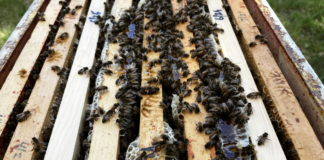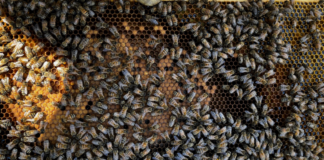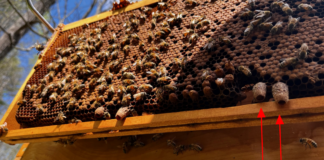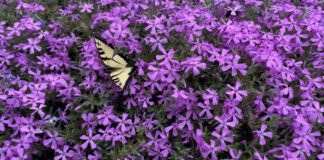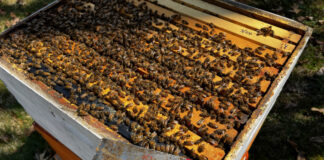
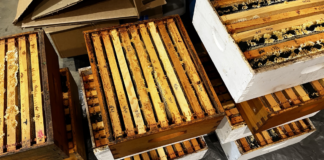
A healthy hive of bees after a long winter with some bitterly cold nights.

Self-Reliance Ranges From Sleeper Cells to Beekeeping

From surviving winter hive losses to the threat of domestic sleeper cells, being prepared includes spring chores and self-defense.
I snapped this quick shot when I opened a hive yesterday. The reason it is blurry is because my phone was in portrait mode. There were more bees than I expected this time of year, and it worries me that they might consume their resources before spring, despite having most of a pollen patty still available (on the right).

Homestead Update: Managing Bees in Unpredictable Weather

Beekeeping in January, upgrading the Ruger 10/22, and vacuum-sealing ammo. How unusual weather is shifting this winter's homesteading priorities.
This was an average hive with a decent amount of bees in it this late in the season. You can tell it is warm because they are not clustered,

Early Winter Honeybee Care for Winter Survival

A spate of warm weather gives us a chance to feed the bees before cold and possibly snow hits us around Thanksgiving.
This honey bee is on the blossom of a plant commonly known as "Autumn Joy." It has been blooming for a couple weeks in our area.

Prepping the Bees To Survive Winter

As winter grows closer, the honeybees grow more desperate to set aside stores. Beekeepers help them by feeding them and treating for mites.
Bees on a frame of capped honey

The Fall Honey Harvest is in the Jar

Our fall honey harvest is in, and we set a new record for honey production. Extraction and bottling is a lengthy process because we do it by hand,
Our late spring honey harvest netted 125 pounds of honey, much of it very dark and rich.

Our Spring Honey Harvest is a Big Success

The spring honey harvest is complete, and it yielded some of the tastiest honey Pete has ever produced.
All three hives pictured have double deep hive bodies. The hive on the right has four medium suppers and the hive in the center has three. The smaller hive was split off one of these hives because it was growing too fast. You might think it was split from the center hive, but it is the progeny of the larger hive. This queen is just a superstar when it comes to producing bees and honey.

Bees Thrive as Interesting Weather Patterns Hits the Homestead

We've had unusual weather this year, but it seems to be benefitting both the trees and our honeybees. We expect a record honey harvest.
The nuc (left) arrives in a temporary beehive. The beekeepers lifts out the frames and adds them to an empty beehive. This larger hive body gives the queen more room to lay eggs and the bees room to put nectar and pollen,

From Four Beehives to Ten in a Month

The bees are overflowing! Time to create some more splits to prevent swarming. I also add a nuc to bolster my bee's genetics.
I was given these two beehives by a beekeeper who was moving and couldn't take her bees with her.

Beekeeping Grows more Difficult in 2025

Commercial beekeepers have lost between 60 and 80 percent of their beehives in the past nine months, endangering the food supply.
This is a good looking frame of capped brood for this early in the year. he queen laid a good pattern and if you look closely, you can see just-hatched bees emerging from their cells.

It was a Tough Winter for our Honey Bees

The weeks of bitter cold weather in January took their toll on Pete's bees, but enough hives made it through he can rebuild his apiary.