In 1989, after ten years in Afghanistan, the Soviet Union pulled out of the unpopular, unsustainable war. The USSR’s war in Afghanistan not only lost public support and cost thousands of lives, but it also cost billions of rubles, which the USSR could ill afford. When the Soviet Union collapsed in 1991, economics were one reason; another was that non-Russian states in the Baltics and elsewhere saw what happened and realized the USSR was no longer capable of suppressing a secession movement.
Now, more than 40 years after the USSR lost the war in Afghanistan, Russia may be edging towards the same level of defeat, losing a war it started that is killing their soldiers, angering the citizenry, and hurting its economy. Putin, a former KGB officer who prides himself on being a student of history, may have missed the most important lesson in the past 50 years of Russian history. By trying to recapture the “glory” of the post-WWII Soviet Union that ruled half of Europe, he glossed over the lessons of Afghanistan.
When their initial foray into the country floundered, when Kiev did not fall in the first week or two, and the faults in Russia’s logistics and military equipment were revealed, the seeds of their eventual loss were planted. Those seeds were watered as Russia failed to achieve air superiority, the front stagnated, and Ukraine provided more resistance than expected. They bore fruit when Ukraine became adept at drone warfare, started building its own cruise missiles, and brought the war inside Russia’s borders, attacking targets deep inside the country.
Critical Losses
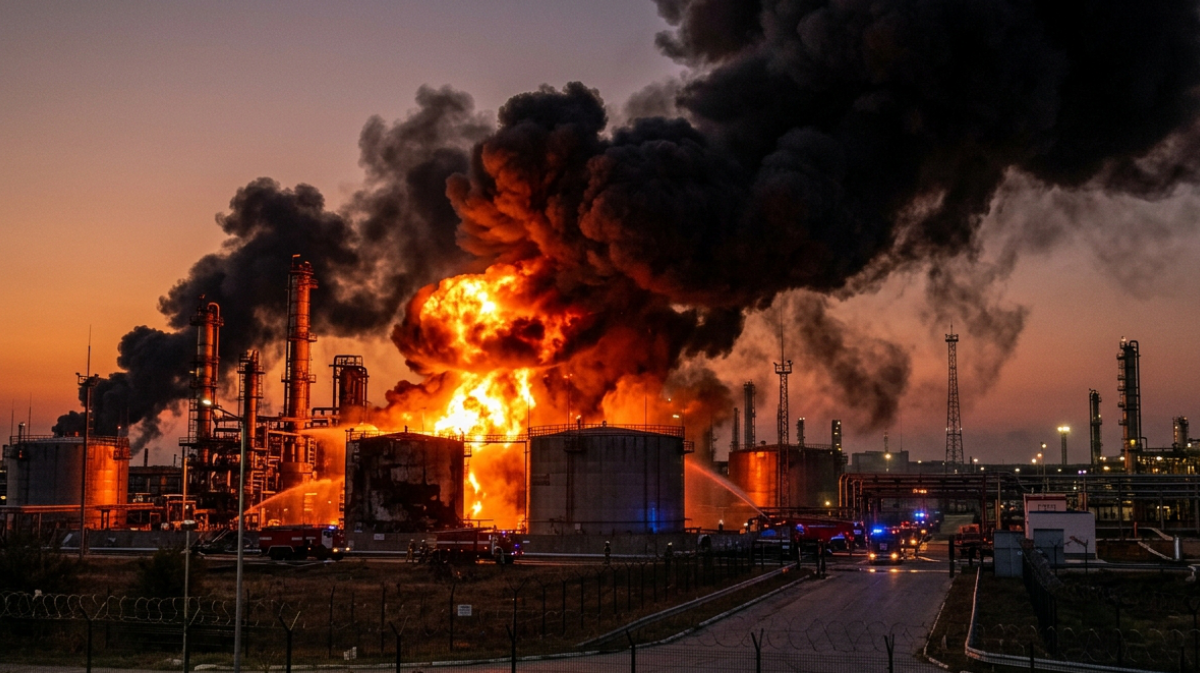
As bad as it was to see armored troop carriers and tanks blown up by Javelin missiles and suicide drones, the bigger losses have been strikes on Russian naval vessels, surprise raids on Russian bomber bases and stealth fighters, and multiple strikes on Russian oil assets. Just as President Trump is squeezing the Iranians economically, destroying oil storage depots, loading facilities, and refineries is putting the financial squeeze on Russia. Already on a war footing, they are not only suffering from the loss of oil sales but also from the cost of repairing and rebuilding this infrastructure. Add sanctions, and it becomes more difficult to rebuild anything that requires technology or materials from outside the country.
The longer the war lasts, the weaker Russia looks. This could lead to several potential outcomes.
A Palace Coup
Putin’s plan to win glory and leave a legacy has backfired. He may not admit it, but others in the Kremlin might. Again, history shows a parallel: In 1944, high-ranking German military officials who realized Hitler’s plans were leading to the destruction of the country tried to assassinate him. Although harder to coordinate today due to increased surveillance and the epidemic of senior officials falling down stairs or out of windows, an assassination or coup from the inside could lead to an end of the war and a reset for Russia. With Putin out of the way and a “friendlier” government in place, Russia could regain access to closed markets and slowly rebuild its economy and, eventually, its war machine.
Russia Goes Nuclear
While Russia has threatened to use nuclear weapons, it has not done so; could that change if Putin gets desperate? If so, would a decision to do so trigger a coup?
Even if Russia were to strike Kiev with “only” a small, tactical nuke, it would likely trigger a global response that makes what happened to Iran look like child’s play. While a nuclear strike might help Russia win the battle for Ukraine, it would brand Putin a pariah and potentially result in a retaliatory strike. At the very least, I expect Ukraine would immediately start developing nuclear weapons (if they have not done so already) and their drone and cruise missile strikes would become far more deadly when armed with nuclear warheads.
China Invades Russia
Putin is not the only leader who wants to build his legacy before leaving office, and if Taiwan looks like an increasingly tough target, Xi might decide a weakened Russia would have even more to offer than a small island. China would not even need to capture the entire country. The western half would give it access to minerals, the majority of Russia’s oil reserves, and vast swaths of agricultural land. It would be enough to give China everything it needs to become self-sustaining and potentially power China to surpass the United States.
Of course, Russia has nuclear missiles, a serious deterrent. But we have seen the state of the old Soviet vehicles when deployed to Ukraine. They suffered from poor maintenance; trucks got flat tires, and tanks were outclassed by modern weapons. Russia’s nuclear weapons are old, while China’s are new. Would Russia dare to use them? Would China dare to risk it?
A Slow Slide
The most likely scenario is probably more of the same. Russia will continue to slowly lose ground, infrastructure, and money until it accepts a peace deal or collapses from a combination of internal and external pressures. The latter could cause another lost decade, the kind where it pays to have gold and silver buried in your backyard, a basement filled with canned food, and a few acres on which to garden. Fortunes will be lost and gained until a new version of the country again rises from its ashes.
If the government collapses, the army dissolves as soldiers go unpaid and unfed, and nothing is left but confusion, that could be the opportunity for China and other countries to seek to change their borders with Russia.
What this Means for Preppers
This is an opportunity for preppers to observe and study, to see what an assassination, a nuclear strike, an invasion, or a collapse look like and what it means for those on the ground. It’s a learning opportunity; a chance to collect data, assess your personal preparedness level and ability to withstand a similar scenario at home, and prepare accordingly.
Meanwhile, be thankful that we are not in the same predicament as Russia, but do not assume we never will be. Much has changed over my lifetime, and I expect more will. As technology speeds up the pace of change, we need to realize that change can bring challenges as well as benefits. So stay prepped. Whether it is a global threat or a local one, you need to be ready.
Secure Data Storage
I am pleased to announce that we have a new sponsor, a company called Enoch Worx. They offer a digital file cabinet that provides a safe and secure way to store, find, and retrieve your personal data, from tax records to bank statements and photographs. I have started using it as a replacement for Evernote, which has become a prohibitively expensive way to store my data in the cloud. I tried OneDrive and hated it so much I disabled it my PC.
They offer a free version if you want to try it out or don’t have much data, but the paid version has far more features, including the ability to forward an email to it and know it will save the attachment for you. If you use the discount code “Pickled” at checkout, you can get a free month of the premium version or apply the same $3.99 discount to an annual subscription. And yes, I stand to make a a little money to offset my hosting costs if some of you sign up, so thank you in advance.