
On Sunday morning, I read an article in the Wall Street Journal with the headline, The Economy May Have Stuck the Soft Landing. Nobody Wants to Jinx It. The author says, “The vital signs of the American economy are pointing in the same, favorable direction more convincingly than at any point since before the pandemic. Inflation is falling. The labor market is holding. Growth has been solid.”
That sounds darn good, doesn’t it?
But the author also calls it a “snapshot, not a verdict” and reveals that it wouldn’t “take much to shatter that fragile equilibrium” we see in the jobs market.
Hmm. That part doesn’t sound so good.
So, which is it? Which should you prepare for? Well, let’s rely on the prepper’s traditional approach and prepare for the worst while hoping for the best, regardless of what the headlines, TikToks, and YouTubers say.
Do Not Trust the Unemployment Numbers
I didn’t believe the employment numbers under the Biden administration, and I don’t see any reason to start trusting them today. The biggest metric for individuals is whether you have a job and are you likely to keep it. If so, the future is pretty rosy. If not, your personal economy could be heading towards a recession.
The recent introduction of Claude Opus 4.6, a powerful new AI from Anthropic, has turned the coding world and the software market on its head in less than two weeks. This is just a start. Expect similar disruption in other markets and layoffs to increase, at least in the short-run.
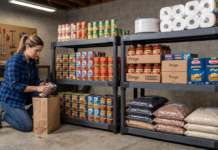
My advice has consistently been to reduce your expenditures and eliminate debt, have more than one way to make money, and diversify your investments, including into assets that will survive an economic crisis. The $100 worth of food I wrote about on Friday is just one example. Buying precious metals, real estate, and ammunition are other options. I find having $1,400 of firewood piled up and ready to burn is far more reassuring than having $1,400 in the bank. Stealing it would require a dump truck and heavy equipment, the government won’t want to confiscate it, and if the bank fails, the firewood will still heat our house next winter.
The Wealth Effect
As housing prices climb, the stock market reaches new highs (Dow 50,000), and the balances on retirement funds grow, people feel more confident and are willing to spend more. This is called the “wealth effect.” The problem is that the stock market can fall, housing prices might plunge, and those fund balances could drop, leaving the same people wishing they hadn’t bought that new car, the expensive vacation, or replaced their living room furniture.
Of course, we don’t know what will happen, and anyone who tells you they do, is lying. Oh, the doomers predicting the bubble will pop will be right, eventually, but maybe not for three years or more. And slowly, things will recover, as they have before.
So what should you do? Make a budget and stick to it. If you have extra money, don’t spend it on frivolous things. Ignore Trump’s hyperbole and let the Fed take their victory lap, but don’t let them convince you to spend good money on bad investments. And by bad investments, I mean things that do not produce income but will cost you money when the market turns.
If you are itching to buy something, buy things that can do double-duty as preps. If you want a second home, buy one that could be a retreat. Want a new vehicle? Get one with four-wheel drive so you have a better chance of getting out of town when the SHTF.
If we are indeed in a period of relative economic calm (and I think the jury is still out), take advantage of these apparent good times to prepare for what will undoubtedly be the coming bad times.
Keep an Eye on the Middle East and Iran
One thing the author ignores is what happens if we get into a shooting war with Iran and they close the Strait of Hormuz. One thing that contributed to lower inflation is falling gas prices. You can expect them to spike if Iran mines the strait.
Iran represents a big unknown. They folded pretty quickly when Israel bombed them, but that doesn’t mean they will if we attack. They talk a big game, but it is impossible for someone at our level to know how much of that is a bluff. Maybe all of it, but maybe not.
Then we have the war in Ukraine. Recent comments by some Russians make it look like a peace deal could be closer, than ever a deal that will boost the economies of both the U.S. and Russia, possibly at the expense of China. But we’ve heard about a peace deal since before Trump was elected, and it’s hard to determine if anything has changed. Meanwhile, drones, missiles, and ground attacks are taking place daily.
Finally, we have China, perhaps the biggest threat of all, not only militarily but economically. Our only saving grace here is that if China hits us economically, the resulting trade war will hurt them more than us.
Black Swans and Fingers Crossed
Don’t let a positive headline or a negative post derail your plans. The reason we prep is to be prepared for what comes, regardless of what it is. Be prepared to weather the worst, and you will coast through the good times.
While international events are important, you may have your own black swan coming in for a landing. You may be hit with an emergency that never makes the headlines. A health scare, local weather event, house fire, or layoff might hit the same day the stock market hits a record high, Russia signs a peace agreement, and Trump gives everyone a $2,000 tax rebate, but that won’t make it a good day.
Bad times will come, but they may not last. Good times may be here, but they may not last. Up here on our mountainside, we don’t worry too much either way. That’s the state of mind and material you should aim for: a level of preparedness and self-sufficiency high enough that not much threatens you.
Disclaimer
I am a prepper, not a financial advisor, attorney, or military strategist. Any investment in commodities, precious metals, or real estate carries risk. Always conduct your own due diligence and consult with a professional before making significant financial or security decisions.