When you get right down to it, we spend much of our adult lives trading dollars for calories (food) and energy (watts, joules and/or BTUs), plus physical stuff to make our lives more comfortable. Since it usually takes work to produce dollars, we are effectively trading work for food, energy, and stuff.
That hasn’t changed much over the centuries; it’s just that dollars are now an intermediary. Rather than trading a goose for a bag of potatoes, we are trading a dollar for a bag of potato chips. The peasant had to raise the goose or plant and harvest the potatoes; we have to go to work to earn our dollar.
From the hunter-gatherers on the steppes or the plains to the serf in the Middle Ages to the pioneers in the early United States, people have had to perform physical work to produce food and energy (a warm home and a hearth to cook on) and obtain basic stuff, like a blanket, bucket, a knife, and set or two of clothing. The basic mechanisms haven’t changed, just the type of work, how we store the energy, and we have a much greater variety of stuff.
We have it Easy
Even with the recent inflation, we are getting calories, energy, and stuff at incredibly low prices, at least when viewed from a historical perspective covering hundreds of years. This is largely because our machines and tools are so efficient. We have it far easier than generations born just 150 or 200 years ago, not to mention those from 1492 when Columbus sailed the ocean blue, or in 1066 when William the Conqueror invaded England, or back when Christ was born. Yet societies persisted then, and well before. The question is, can we live like that today?
When a global blow-up happens and we lose the grid, the Internet, and the ability to refine oil, make steel, or produce rubber and plastics, we’re going to be set back centuries, possibly even millennia. After all, the Romans had running water well before the birth of Christ, but if we lose electricity, most Americans won’t.
In that kind of SHTF scenario, our lives will get harder, our luxuries will disappear, and the pursuit of calories and BTUs will consume more hours of the day—likely all of them. Leisure time will cease to exist, except for the day after a large animal is slaughtered and everyone’s bellies are full.
Let’s look at something shy of a global collapse and think about what happens when dollars are no longer worth anything. Whether this is because of inflation, an economic collapse, a governmental debt failure, or a TEOTWAWKI scenario doesn’t matter. This is not a question of why the dollar loses value, but a discussion of what happens when it does.
BTUs and Energy after a Collapse
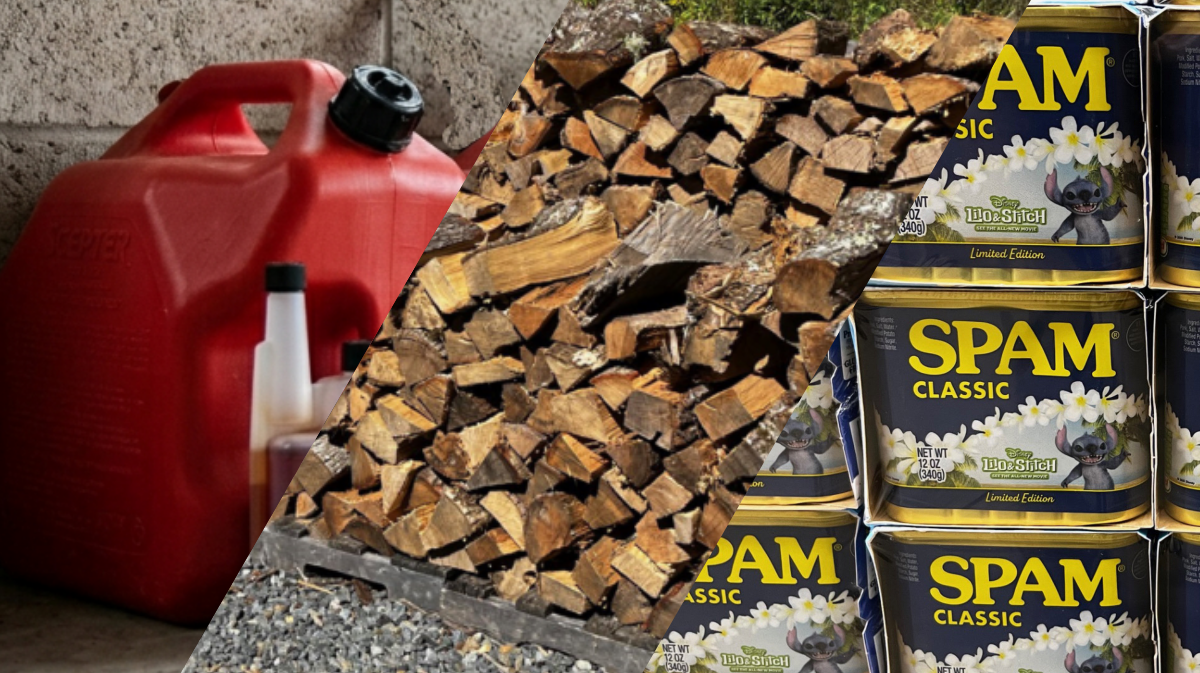
On multiple occasions, I have written that having a year’s worth of firewood is like having money in the bank. The government can’t tax it, and six cords of wood are difficult to steal. Regardless of whether I cut and split it all myself or had someone deliver it already cut and ready to stack, six cords of firewood represent work, which helps determine its price. If my supplier charges too much, it’s cheaper for me to cut it myself. That keeps the price down.
Whether I pay $250 per cord today or $400 in three years because of inflation, the amount of work required to produce that firewood will not have changed. The more expensive wood in the future doesn’t make my house any warmer or burn any longer; it just shows that the dollar has lost value.
After an economic or societal collapse, I will still need to heat my house, and firewood is the store of BTUs that makes that possible. I might also need wood to cook my food. As gasoline runs out post-SHTF, saw chains dull, and as more manual labor is needed to cut and deliver it, firewood represents more work and therefore becomes more valuable. So it is safe to say that after a SHTF event, we will have to trade more wealth to get the same amount of firewood. Since we won’t measure wealth in dollars, we may have to measure it in calories. For the woodcutter to survive, he has to earn more calories than he burns.
That’s just another way of saying food will be more valuable than money after the SHTF. In fact, it may become a form of currency or a desirable component of a barter transaction.
The Value of Work Increases as it Gets Harder
Gasoline, propane, diesel, and other distillates will be even more valuable post-collapse because they are impossible for you and me to produce. This will drive up their costs after a collapse. When gasoline or diesel is in short supply or unavailable, the work traditionally done by engines will also become more expensive because it suddenly involves more man-hours or horsepower—and I mean the kind of horsepower provided by actual horses.
Plowing a field with a tractor is not difficult, although the tractor is a large upfront expense. Plowing a field with a team of horses is more difficult and also requires an investment. People who own neither tractors nor horses must pay someone else to plow their fields, just as we recently paid guys to climb up and cut down our big trees.
If you have no tractor or horses, you can take hand tools and turn over a field, but it will be far more difficult and time-consuming. This is why you need to be growing food now, before the SHTF, so that you will have a head start and fertile soil that has already been broken up. The investment in plowing your field made today, when you can pay in dollars rather than sweat, is a huge advantage, especially since the dollars you pay are losing value while the work required to manually break it up is likely to grow in value.
Calories after the SHTF
It will be much the same with calories. When the grocery store is empty and we must source our own calories, food becomes more precious and therefore more expensive. Last week, I saw ground beef at Sam’s Club for about $6.50 a pound. My initial reaction was, that’s ridiculously expensive and significantly more expensive than it was a year ago. But if I have to shoot or trap, skin, and butcher an animal and then grind the resulting meat with a hand-crank grinder to produce ground meat, $6.50 a pound might sound like the good old days.
During hunting season, I can shoot a white-tailed deer and harvest about 40 pounds of clean, boneless meat, maybe more if it’s a good-sized buck. But that still entails work. If everyone hits the woods, there will be fewer deer, so we’ll have to deal with scarcity, which means more time spent hunting. Today, 20 pounds of ground beef and 20 pounds of roasts and steak might cost me $400. A year or two after the SHTF, it might cost days of labor. Trapping is also hard work, especially when you have to walk your trap line instead of driving your four-wheeler. Buying food today and storing it for after the SHTF will not only save you labor but ensure a supply of calories and reduce your chance of starvation.
Anyone who has a garden knows gardening takes work. Post-collapse, it will take more than a few raised beds to produce enough food to feed a family. It will take rows of corn, peas, beans, cabbage, and root crops like potatoes, carrots, beets, and Jerusalem artichokes. And then you will have to preserve it. That’s more work.
Trading Money Today for Calories Tomorrow
I’m not trying to say things are cheap today, only that you need to store food or be prepared to work extra hard after the SHTF. If you have a healthy stockpile, you don’t have to start working on Day One. You can build up to it.
Out of my almost 2,000 posts, the word “food” appears in 987, almost exactly half. Why? Because I consider food storage the foundation of prepping. It is what I recommend new preppers start with, and I encourage old preppers to redouble their stockpile. A year’s worth of food is a good start if you expect the end of the world.
I believe in what I call the Big Three: food, water, and shelter. But most of us have shelter, and many of us can get water when it falls from the sky or runs downhill somewhere nearby. Very few of us live in a location or climate where we can go outside and graze. In my mind, that makes food more important for long-term survival. (I think living on the shore in a warm location where you can grow fruit is the closest we can hope for. We would then have the bounty of the sea, plenty of fresh fruit, and easy gardening conditions. Maybe I should’ve moved to a tropical island.)
When you add food to your prepper pantry or buy long-term storage food, you are trading today’s dollars for tomorrow’s calories. If the price of food rises (and doesn’t it always?) that’s a good financial deal. If the time comes when food is not available or prohibitively expensive, it will turn out to have been a great deal. Buy your gold and contribute to your 401k, but don’t neglect to store food.
Watts and Joules
We take for granted the ability to flip a switch, plug something in, or use a rechargeable device. When the current stops flowing due to a grid-down situation, all our modern conveniences die.
Right now, people complain about their electric bills. I’ve been there, done that. But take away the electricity, and they’ll pay anything to get it back. Forget for a moment the entertainment, news, and connectivity that our phones and other devices provide. Instead, think about the importance of electric lighting, refrigeration, and food preparation. Then consider the smaller things, like the washer, the microwave, the coffeepot, and even the vacuum cleaner. Do you have a coffeepot you can set on a fire like a cowboy? Will you sweep the house and pull up your rugs to beat them clean off the back deck? Do you have room to string up a clothesline?
We have no gas or propane in our home, so everything relies on electricity. The stovetop, oven, hot water heater, the HVAC, etc. That dependency is why we burn wood for heat, rely on gravity for water pressure, and invest in solar power. Because of the cost, the solar power system is not as big as we would like, but even some electricity it is a huge improvement over no electricity if it keeps the freezer running, the refrigerator humming, and we can use some other appliances on sunny days. Meanwhile, we don’t pay an electric bill eight or nine months of the year. That’s a win, but like a tractor, it’s a big upfront cost.
Paying the Mortgage and the Preps
At the current mortgage rates, you can expect to pay twice the cost of your home over the course of a 30-year mortgage. That may sound exorbitant, but people do it every day. As a guy who sold his last house for about $300,000 more than it cost, I can’t argue that the math might work in your favor. I just want you to look at your prepper investment in calories, energy, prepping gear, and guns and ammo as another investment that might pay off down the road.
Whether the dollar strengthens or fails, whether the country pays down its debt or it drags us into hyperinflation, we’re still going to need shelter, food, and water. Don’t focus on one to the exclusion of the others. Have a way to store food, store or source water, store or produce energy, and provide shelter. You will still need to work to survive when the SHTF, but if you have a prepper stash, life will be more manageable for you than for the man who has nothing in his cupboard. He will have to work for food. You will have food, at least enough for you to have a runway to self-sufficiency and survival. He won’t; he might even wind up working for you. Then his work will make you wealthier, which is what every employer hopes for.
While every major economic collapse or period of hyperinflation has hurt most residents, there are often those who come out the other end better off than they were going in. While that may include Russian oligarchs and corrupt officials in Venezuela, it can happen to anyone who is well-positioned. Having a store of calories, energy, land you own outright, and hard currency might help you do the same.
Spend wisely.