
It is easy to prepare for things that make headlines. These monthly prepping posts are designed to make sre you don’t forget the ones that don’t. Below are my suggested activities to hone your prepping skills and gear for the month of August.
Last month, we focused on bugging out. This month, we’ll touch on it again, plus look at bugging in.
You don’t have to do these specific activities, but you should do something to keep your preps up. I recommend that you at least review my suggestions and consider what you could do as an alternative to increase your odds of surviving a SHTF scenario.
1. Prepare for Hurricanes
Hurricane season may start June 1, but the most powerful and destructive hurricanes make landfall in August, September, and even into early October. In fact, if history is a guide, 90 percent of Category 3 or higher storms are still to come. So if you have put off your hurricane preps, now is the time to address that because we can’t count on the El Niño effect to prevent storms.
The level of preps varies based on where you live, of course. Some states never see a hurricane, while Florida, Louisiana, and Texas seem to get them annually, and the Carolinas up to Long Island may do so every other year. What you prepare for also differs based on where you live, with coastal impacts differing from those further inland.
Typical hurricane preps include:
- Check your generator to be sure it starts, runs smoothly, and the oil doesn’t need to be changed.
- Make sure your gas cans are filled and the gas is fresh. If you haven’t rotated the gas in those cans since last season, use it up and refill them, preferably with ethanol-free gas. I do this by adding a can to my car’s tank. When storing gasoline, use a treatment like Stabil or PRI-G to extend its life.
- If you are in a coastal area, make sure your hurricane shutters are accessible and you have all the hardware necessary to install them.
- Check your water storage. We store bottled water for drinking and cooking, and jugs of water for flushing toilets.
- Ensure you have flashlights and headlamps ready, and that your batteries are all charged. I go through my 18650s once a year and top them off, as well as charging my AA and AAA batteries. If you have rechargeable lanterns, lights, radios, and other devices, this is a good time to top up their charge as well.
2. Update your Bug-out Plans and Bags
While this goes hand-in-hand with hurricane preps, everyone needs to know under what circumstances they would bug in, when they would bug out, and what they would take with them. That’s where your bug-out bag comes in handy, as it should have the necessary survival supplies to help get from your home to your preferred destination. This is the time to go through it, make sure any food hasn’t expired, charge or replace any batteries, and confirm any clothing in it still fits and is seasonably appropriate.
You also need to know where you are going and be sure they will welcome you when you get there. This means touching base with anyone you are planning to stay with. Do they still expect you, or have their kids moved back home and there is no longer any room? Life throws obstacles at all of us, and sometimes that may change your bug-out plans.
If you are going to property you own or plan to camp out in the wilds, do you have an on-site cache of goods to make your stay easier? Have you been there in the past few months or a year and checked things out?
Finally, you need to know how you are going to get there and when you plan to leave. Update your maps. Make sure your vehicle is in good condition. Have a Plan B if you break down, run out of gas, or the roads are blocked.
Bugging out takes planning and coordination. Have a checklist rather than winging it. Review or create that list to increase your odds of success.
3. Preserve Your Own Food
The late summer and fall are often a good time to can up some vegetables for storage. If you have a garden and a pressure canner, you are all set. If you don’t have a garden, peak harvest season can be a good time to buy large quantities of fresh fruits or vegetables right from the farm stand or farmer’s market and can them up.
Dehydrating is also an excellent way to preserve foods, as is freezing, although the latter requires a constant source of power, which you may not have after a hurricane, a cyberattack, or a late-summer storm with tornadic winds.
If you don’t know how to can, it is a skill worth learning; talk to your local county extension office and see if they offer a class. If not, find an experienced home canner and ask if you can help them in return for watching and learning. They may well be delighted. The Ball Blue Book is a must-have resource, as is a pressure canner because many foods cannot be safely canned in boiling water and require pressure canning. YouTube and online resources can also help, but double-check anything they tell you, as their elevation, equipment, and situation may differ from yours.
4. Buy Some Ammo and Go to the Range
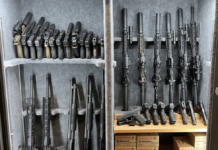
If you are a gun owner—and we heartily endorse responsible gun ownership for all preppers—make sure you practice. Not just you, but anyone in the household who is physically, mentally, and emotionally capable of firing your gun(s) should get some occasional practice.

When you are learning to shoot, practicing on what we call a “flat range” can help you learn the rules of firearm safety, gun handling, and the basics of marksmanship in a controlled environment. But once you get those down, you need to branch out. Run some drills, engage multiple targets, shoot at unknown distances, use your off-hand, and practice shooting from cover and concealment. When the SHTF and you need your firearm, the bad guys are not going to be standing still at 7 to 25 yards. They are going to be moving and shooting back. Ultimately, you are trying to prepare for that scenario, not hit the X ring on stationary targets standing in the open.
Any ammo you shoot up should be replaced. I like to buy twice as much, so if I shoot 150 rounds, I buy 300. To save money, you can practice with .22LR, but it’s always a good idea to fire a few full-power rounds so you get used to the recoil and know what to expect.
5. Stress Test Your Systems and Gear
If you want to practice bugging in and stress test your systems, turn off the breakers in your electrical panel when you get home on Friday and lock away your phones and devices. Don’t turn them on again for 48 hours. Spending the weekend without power or internet will show you if the generator starts on the first couple of pulls, if it has enough power to run the well pump, and how your family manages with limited power and no internet access. This process may help point out weaknesses in your plans so you can fix them before the situation hits for real, and for two weeks rather than two days.
If you or family members are miserable during this exercise, consider what you can do so they won’t be if this happens for real. Look for ways to mitigate the problem, whether that is buying coloring books for the young kids and a board game for the older ones, or buying a solar generator. Maybe it means buying Starlink so you have communications and internet access, assuming you can power it. If the toddler gets cranky when they can’t watch Bluey, consider if they are watching too much Bluey.
Surviving the Aftermath
When people bug in for short-term regional emergencies like hurricanes, they not only have to survive the event itself but its aftermath. The event may be scary, but once the immediate danger is over, the aftermath can still be tough. This is the case for earthquakes, tornadoes, hurricanes, and other natural disasters. You lived; now you have to feed yourself, find water, try to get some power back on, clean up, etc. If your house has sustained structural damage, you need to make repairs, try to prevent it from getting worse, and contact your insurance company.
Most homeowner policies will cover a tree that hits the roof but not flood waters that seep in under the door. Make sure you review your insurance policy when they send it out every year because things change. Also consider talking to your agent about your coverage before the event hits.
Monthly Checkups
We all have busy lives, and it can be difficult to fit prepping into them if you don’t make prepping an integral part of your lifestyle. Prepping doesn’t have to be full time, but it shouldn’t be rare or random. Use these monthly reminders to ensure you stay on track and consider dedicating at least one weekend to it per month.