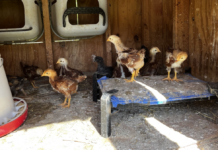
While the war in Iran intensifies, life continues on the Homestead. The garden grows, the chickens get bigger, stuff breaks, and we still need to do chores. Yes, global issues remain a concern, but what happens close to home has a much more obvious and immediate impact.
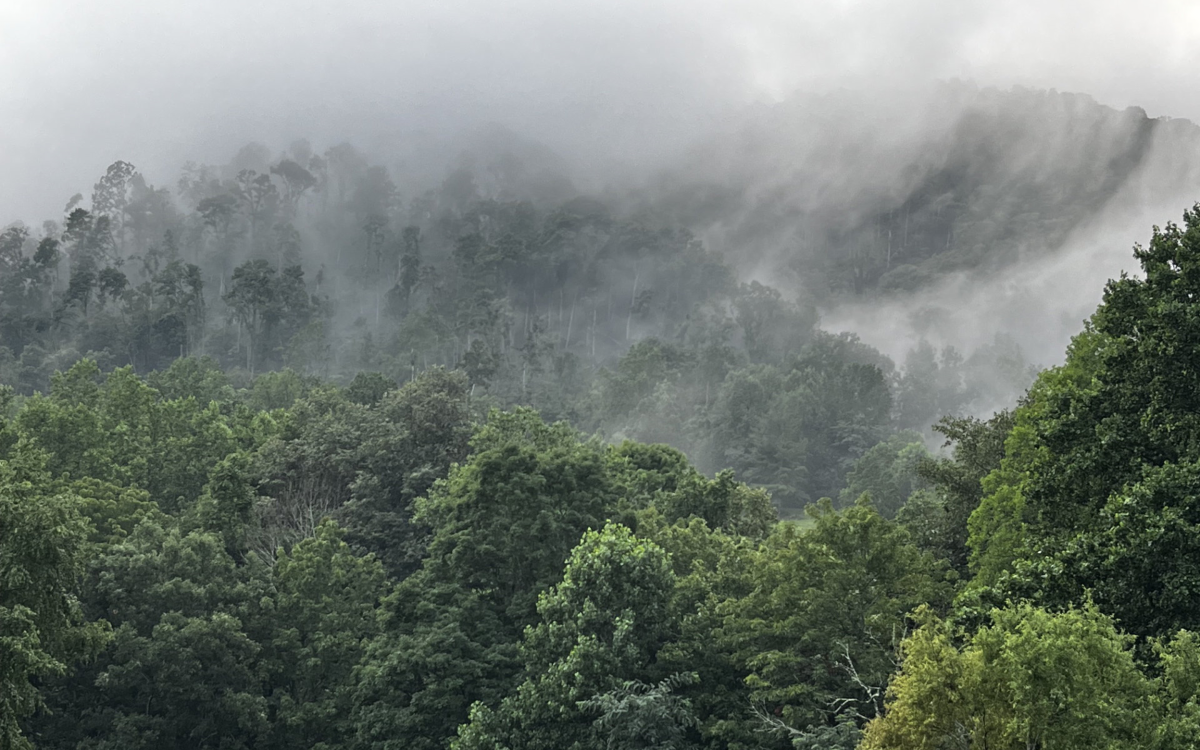
Weather is just one example. We’ve had so much rain over the past two weeks that mushrooms are now growing in the woods, a clear sign that drought is no longer the primary weather driver around here. I don’t know if this rain is from the so-called Super El Niño already, but we are enjoying a few days of sunshine before we get doused with more wet weather this weekend. I even mowed what passes as our lawn.
Power Outages
Thanks in large part to the storms, we have had three power outages in the past week and four in the past sixteen days. The shortest was two hours, the longest eleven. The funny thing is that one was caused by “equipment failure” on a day without a lick of rain and no high winds. The other three were all caused by fallen trees or limbs on days when the weather was so bad that we were not surprised we lost power.
The most recent outage occurred during a storm that knocked down three trees between our house and town, so it is understandable that the power was out. We knew that storm was coming, so we charged our batteries up to 100 percent and just ran on battery power. The outage was only eight hours, but we felt good and we could make more than enough power to run everything except the HVAC.
The longest outage started at 2 a.m. and we didn’t even know the power was out until we woke up the next morning. Our battery was already at 60 percent when the outage hit and dropped to 43 percent before the sun shone enough to recharge it.
This string of outages is why we invested in solar power. Frequent outages are common around here, and they interrupt our lives. With the solar panels and backup batteries, we can carry on like normal, especially when the sun is shining.
Preventative Maintenance
With the peak of hurricane season ahead of us (more on this on Monday), I got a head start on preparing for the possibility of longer power outages by charging my extra batteries. I have at least two dozen 18650 batteries in an ammo can, and they were last charged in September 2025. After 11 months, their rate of charge varied from 3.93 to 4.07. Considering that 4.19 or 4.20 is the maximum charge, they lost very little over the past 11 months. Had I been forced to use them in a flashlight or headlamp prior to charging, they would have run for hours.
I also charged my EDC flashlight, in part because a week ago my leg was growing hot and I looked down to see a light shining from my pocket. At some point, I had bumped the switch, and it turned on. Because I did not know how long it had been burning in my pocket, I charged it out of an abundance of caution. This light has a cable that connects via magnet, so I can charge it without removing the battery. That’s a plus because it means less opening and closing, which translates into less wear to the O-ring inside. The downside is that it uses a different magnetic connector than the two Olight Sigurd weapon lights I bought last year. I charged them this spring, but may do so again. To ensure I always have their cable handy, I keep it in the rifle’s grip cavity.
Communications Connection
While I have not yet needed the mini in an emergency, we have lent it to a neighbor when he was knocked offline. I also carry it in the Polaris in case I need emergency communications when we are off the beaten track and well out of cell range.
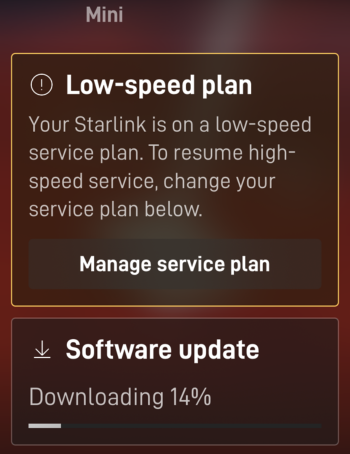
I set up the Starlink Mini and let it connect to the satellite network for the first time since March. It immediately started downloading a software update. This is why Starlink owners who don’t use their antenna very often should plug it in and point it at the sky every few months. If the software gets too far out of date, it will not operate. So by updating the unit, it remains usable anywhere I can plug it in.
I also tested my new converter that allows me to plug my Starlink into a Ryobi rechargeable battery. It ran it well for more than three hours. I expect heavy use would shorten the battery life.
We rely on our full-size Starlink antenna every time the power goes out because that knocks out the fiber optic internet signal we normally get. Even in standby mode ($10 a month), we can make phone calls and send texts. While I could not load my Fox News app, standby mode had enough bandwidth to allow me to connect to our power company’s outage map and get reports on what was wrong and when they thought it would be fixed.
Car Breakdowns
The power isn’t the only thing that has been failing around here. We hopped into my truck to go to dinner at another couple’s house last Saturday night, and I noticed my check engine light was on. I know some people drive for miles with that light on, but I’d rather not be stuck on a dark country road in the middle of the night with a breakdown, so we turned around and transferred everything to my wife’s car.
On Monday, I stopped by my favorite mechanic. He plugged in his computer and told me it was a problem with the evap system. He narrowed it down to a bad sensor or a bad device. Definitely not something I could diagnose and fix on my own. He ordered the parts and scheduled me to come in on Thursday for the repair.
I guess the lesson there is to buy an antique vehicle and rebuild it if you want to make your own repairs during a lengthy SHTF situation, because I sure as hell can’t fix either of my current vehicles. Oh, I can change a tire, change the fluids, and replace the battery. I could probably manage a new alternator or something else mechanical in a pinch, but the electronics are well beyond my capabilities.
In the book Patriots, they standardized on Dodge Power Wagons, which they rebuilt with the help of a fellow group member, Ken. Of course, that book was written 30 years ago. Who knows what they would standardize on today. Maybe a 1990s Ford F150, because I don’t think there are many 1969 Power Wagons still around and fewer parts. Around here, we still see old Ford’s and Toyota Tacomas, but not too many Dodges.
Angry Bees
For most of the spring and summer, I have been wearing my bee jacket, which covers me from my belt to the top of my head. After getting stung through my pants more times than I can count the other day, I am swapping over to the full suit.
I was wearing my Muck boots with my pants tucked in and feeling pretty smug that the bees could not fly up my pants leg and sting me behind my knee, which they do occasionally. Wrong! They took a shortcut and stung right through the cloth.
The good news is that when you get stung through a layer of cloth, it isn’t as bad as getting stung on your bare skin because they can’t sink the stinger in as far. The downside is it is like repeated pinpricks when I moved because the stingers stuck in my pants leg hit my with every step I took. I used the smoker to smoke my leg—hoping to get the bees to stop stinging me—closed up that hive in a hurry, went inside, and changed my pants. It was a full bee suit after that, and likely for the rest of the season.
This is what happens when we get lots of rain and it washes away the nectar. The bees have nothing to harvest, so they are grumpy and they stick around and protect the hive from other bees…or humans. If we get a few days of sunshine and some things start blooming, the bees should relax and get back to work. Otherwise, it will be a few weeks before their numbers die down as the queen slows her laying. Until then, they are eating their honey rather than making more, and they are on the defensive.
Sunshine and Drying Firewood
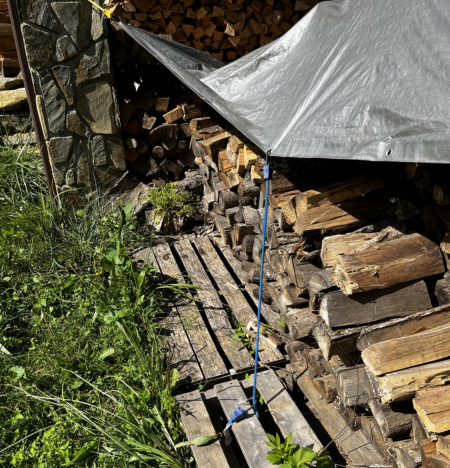
After watching the video below, the results of which shouldn’t shock anyone, I decided to cover up my firewood piles earlier in the season than I normally do. I usually left the wood exposed to the sun, wind, and rain all summer and covered it up a month or two before I planned to burn it so the wood would stay dry. I would cover two cords, and when I burnt one up, I would transfer that tarp to an uncovered pile and start working on the other covered section. This year, I have lots of oak that needs to dry, so I have deployed five tarps to (mostly) cover the six cords of cut and stacked wood.
Stacking something heavy on top of the pile is not enough to keep the tarp in place in our heavy winds. Adding bungee cords to tie down the sides and prevent it from flapping in the wind usually results in a pretty good cover that won’t blow away. Of course, come next spring, some of those tarps will have holes worn through them. That’s why I like to pick up an 8’x10’ heavy or extra heavy-duty tarp whenever they are on sale at Harbor Freight.