Our drought is over, at least in our minds. At our house, we’ve had about five inches of rain over the past five days, varying from half an inch to two inches per day. The stream in front of our house, which was low, returned to what I consider its “normal” level, but rose when we got two inches overnight. Since then, it has settled back to normal.
We expect more rain every day until Friday.
As the rivers rise, some people are reminded of the week leading up to Hurricane Helene, but we got four or five inches of rain per day that week, sometimes more. I don’t think we’re halfway there. And while there have been some downpours and at least one gully washer—seriously, it cleans the dead leaves out of the gullies and ditches—most of the rain has been slow and steady. That’s the kind of rain you want so it can soak into the dry, hard ground.
Will the drought be over? If you look at it in terms of how many inches of rain we are behind for the year to date, I doubt we will have caught up to the annual average, but people will stop talking about how dry it is. Farmers who held off will plant, or wish they had done so a week before. The burn restrictions will be lifted. For all practical purposes, the drought will be behind us. Unless we have another month of little or no rain.
But for now, everything green is taking advantage of the water to grow a few inches. I’m hoping the wildflowers and sunflowers that we planted for the bees will grow.
The Normal Summer Pattern
For much of the summer, we get a few thunderstorms in the evening. Sometime between 3:30 and 8 p.m., the clouds roll in from the west, and we get anywhere from ten minutes to an hour of solid rain, sometimes with thunder and lightning. This isn’t too bad because it takes the humidity out of the air and things cool off, leaving a cool evening.
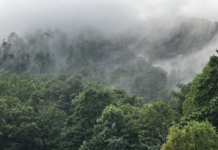
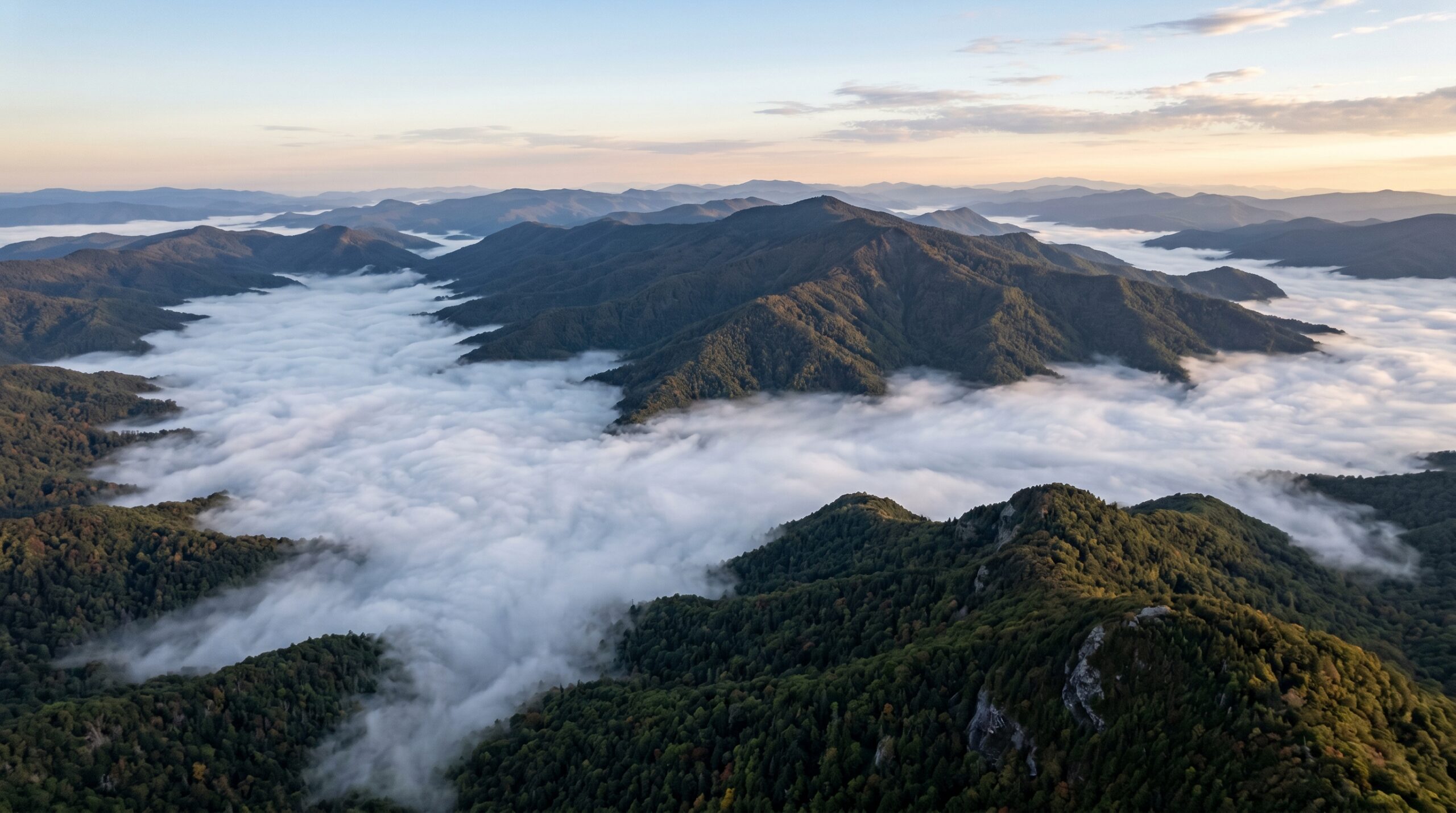
The scientific term for this is the orographic effect. Moist air from the Gulf Coast hits the mountains and gets forced upwards. The added altitude causes the atmospheric pressure to drop, causing the air to expand and cool. The cooler air cannot hold as much moisture, so the moisture gets released as rain. When the sun is setting, the air cools even faster, and we get even more rain.
Once a week or so, we get a true storm, the kind you can predict by watching what happens in Texas and Oklahoma 36 to 48 hours earlier. If they get a severe storm and it heads in the right direction, it can hit us. Once in a while, it goes to our south, but more often it heads north into Kentucky and the Ohio Valley. But we get our share.
This weather pattern keeps us well-watered all summer. In a normal year, we end up just a few inches shy of having enough rain to be considered a temperate rainforest. But this hasn’t been a normal year; it’s been an early spring and a dry one. Now that the latter has changed, we’ll have to see what happens this summer and then when the Super El Niño hits. We may end up with more water than we expect.
Water for Survival
Having so much rain is good for survival. It means we have plentiful access to water. If necessary, we could capture what comes off our roof in a tank or cistern to water the animals, the garden, and flush the toilets. We count on our spring, but one is none and two is one, so we need to have a backup source. My primary backup is the three streams on the property. So while my neighbor needlessly worried about his spring, we should have water whenever we need it (knock on wood).
Because we are halfway up a mountain, our home is about 1,200 feet higher than the local towns, and the towns are another 1,200 or more feet above the flat parts where the interstates run. We are usually three to five degrees F colder than the weather forecast because the official meteorological weather stations are outside schools and other government buildings in town. So they predict one thing, and we brace for it to be colder and windier. The only time that isn’t the case is in the spring when they predict frost in the valleys. Because the cold air settles, we’ll be warmer than the valleys those few weeks. But in winter, we are colder and get more snow. That’s just part of mountain living. We are used to it.
Of course, after a TEOTWAWKI event, weather forecasts could be a thing of the past. As I write this, I have a high degree of confidence that Friday will be sunny and I can check my bee hives. Without weather radar and satellites, we’ll be back to checking the barometer, looking at the clouds, and crossing our fingers.
Know your Weather Patterns
If you own a retreat or plan to bug out somewhere, it makes sense to know the local weather patterns, and the best way to do so is to experience them firsthand. It’s good to know if you are in zone five or seven, but that isn’t enough. There are microclimates, and a shift in elevation or afternoon shade because of a mountain can make all the difference in whether your garden will ripen before the first frost. That can mean the difference between a bountiful harvest and starvation. Can you grow plants with a 90-day growing period, or do you need to buy varieties with 75 or even 60 days to harvest? If you find yourself doing emergency gardening while you live in a tent, shed, or improvised home after the SHTF, knowing that what you plant will ripen in time to be harvested will be damned important.
My advice to people who buy rural property with plan to eventually build on it is to stay there as often as possible at all times of the year. Don’t just go up when it is warm and sunny. You need to know what the road is like in the snow and if you can cross the ford if it rains. You kneed to know where there is sun and shade in different seasons.
Tent camp there if necessary, but consider getting a 20-foot container so you can store stuff on-site. Alternatively, buy a used RV cheap and park it there, even if you need to get a guy with a bulldozer to drag it up the mountain. (That’s what they do around here.) Or get a shed and have the professionals figure out how to park it.
Good Info for Building
When we see a house built on a ridge, we know it was built by someone from out of town, probably as a vacation home. They wanted the view, but they didn’t bargain on the wind and lightning exposure. Now they just visit in the summer, and the locals are not surprised.
This is the type of boots-on-the ground intelligence you can gain by visiting your property in all kinds of weather. Before you build, pick out a few sites and spend the night there in the heat of August, the cold of January, and a few times in between. At the very least, put up a remote-controlled weather station and track the weather. One location might be far better than another.
For example, there are two part-timers who have homes on our road. They normally come up on long weekends. Neither did over the Memorial Day weekend, probably because of the rainy forecast. I get it; they have small cottages, and who wants to be shut inside in the rain? You can’t hike or do any of the other outdoor activities, so they postponed. But they missed an opportunity to learn what it is like in the rain. Can their two-wheel drive vehicle get up their driveway when it is wet? Does a tree limb lean dangerously close to their porch when it is heavy with water? Is their French drain working like it should? Do the gutters need cleaning or are they splining over? They may never know until it is too late.
This advice applies whether your retreat is in the mountains or on the coast, on a river or on the plains. It’s great to go somewhere and fall in love with it, but visit during the off-season before you are wedded to it.