

Late last week, there was a bomb scare at the BioUrja ethanol plant in Peoria. It made the news, but because it was happening at the same time as the FAA Ground Stop and the sunken river cruise ship, it didn’t make much news. Also, the device was disarmed, so there was no explosion. The media would no doubt have given it more coverage if something had blown up.
On Friday, Nov. 13, the plant received a bomb threat, leading to the discovery of a device that was considered a “credible threat” and had to be rendered safe by bomb technicians. The entire 60-acre plant had to be searched to make sure there were no other devices. This means that every catwalk, pipeline, building, tower, tank, and other component needed to be given eyes on by someone who knew what a bomb might look like and could tell if whatever they found belonged there or was a suspicious object. That’s far more complex than searching the local middle school.
My Bomb Squad Story
When I was a younger man, I was on the emergency response team for a Fortune 500 company that operated, among other things, chemical and polymer plants across the United States. I’ll keep their name confidential, but I guarantee you’d recognize it and have products they make in your bathroom, kitchen, or garage.
While I was on the team, there was a bomb scare at their largest plant in Texas that I remember pretty well, so let me give you some details you may not think of when you consider what a bomb scare at a chemical plant means.
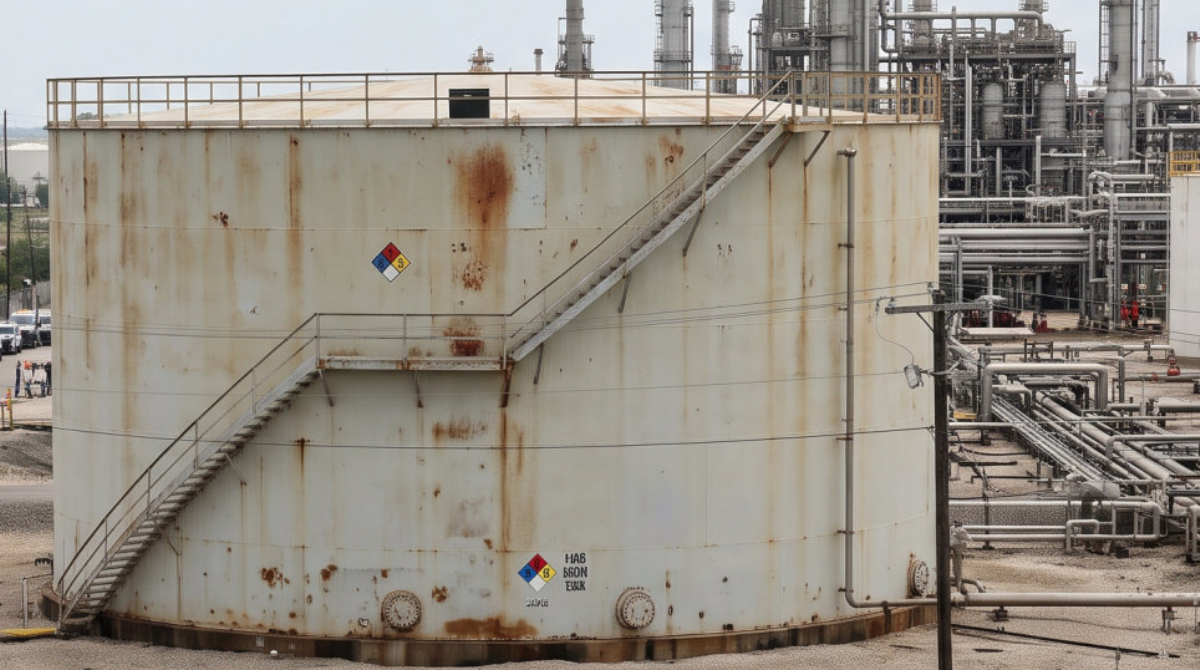
In this case, the unknown device was a large, dark, rectangular box sitting on top of a chemical tank. I don’t recall who noticed it, but the word spread. A quick investigation was conducted, and no one could identify the box, why it was there, or when it got there. All they could agree on was that it wasn’t supposed to be there. The idea that it appeared overnight was disturbing.
We didn’t know that it was a bomb, but we knew that it was an unknown box, so we had to assume the worst. But it was weird. There were no threatening calls, no notes, just a box sitting quietly on top of a large metal tank of chemicals. The chemical in question was not the worst, but would be considered hazardous and create an environmental problem if it were spewed across the ground. The chemical was a raw material for an item produced at the plant, and it wasn’t flammable, which made it strange that the bomber would pick this tank. A flammable chemical would be deadlier and more disruptive. But maybe that just meant the bomber didn’t know what was in the tank.
Chemical Plant Complications
This plant was hundreds of acres, and many different operations went on there. The bomb scare affected only one corner of it, but the sheer size of the plant made it difficult to decide whether to evacuate it or how much to evacuate. Keep in mind that many operations at a plant this size are ongoing. They need people in control rooms to operate the plant because leaving it unattended could cause a potentially bigger problem than blowing up a single tank. In the end, we evacuated a reasonable area around the tank and sent home non-essential personnel, which meant purchasing, shipping and receiving, cafeteria workers, and anyone else that wasn’t critical to operating the plant or part of the safety team.
We also had to work with the local municipality to determine if we needed to block off nearby roads, evacuate homes in the area (not that many people lived adjacent to a chemical plant), lock down schools, or tell people to shelter in place. In time, a shelter in place order was issued, which is not uncommon if a smelly but not deadly chemical might leak.
The plant employed hundreds and had its own fire department, ambulance, and armed security, including the emergency response team, but it didn’t have a bomb squad. We had to get one from the nearest big city, which was Houston. It took a while, but they came out and brought all the bells and whistles, including their robot and an X-ray machine. After lengthy discussion and planning, the X-ray machine was used to look at what was inside the box.
The Big Reveal
The box was empty. Nothing was in it. It was not a bomb.
It was a box of insulating foam constructed and installed earlier that week by a third-party technician to protect some temperature-sensitive equipment on the tank head. Since the third-party folks weren’t on site when the box was discovered, no one thought to ask them if they recognized the box or knew why it was there.
At the end of the day, everybody went home safe and happy, and some lessons were learned. The bomb squad appreciated the opportunity to train in a high-pressure environment, and the investigators got to investigate things and draw conclusions for weeks afterwards. Not only did no one lose their life, but no one lost their job. I think people mostly felt a great deal of relief and a little silly that they made such a hullabaloo over a foam box taped to a tank. But you couldn’t blame them. It was the ultimate better safe than sorry decision.
I can only imagine how much worse it must have been for folks at the ethanol plant when it turned out to be an actual device. Think also how every employee must feel about going back to work the next day not knowing how that bomb got there and if they remained a target.
A Suspect
Given the many attacks on Russian oil infrastructure, you might conclude that this could have been in retaliation, some sort of sabotage aimed at the United States for backing Ukraine. (Ethanol is used in the production of gasoline.) However, that appears not to be the case because the FBI has a suspect in custody. The individual, who remains unnamed, was apparently apprehended at the plant on Monday morning, meaning they may be a plant insider. However, the FBI is keeping quiet about their motive or background.
Do you live near a chemical plant? Or near a railroad where trains carrying hazardous materials might derail? A distribution center that holds farm chemicals or has diesel and gas tanks? A plant that uses chlorine or ammonia? These industrial facilities may not seem like threats, but during my earlier career, I responded to spills, leaks, accidents, and/or threats at all of them. They are potential targets, or the site of a future incident. You never know what might happen, where, or whether the source of danger is a foreign party, a local who is angry at plant management, or a random act of God. It pays to be prepared for just about anything.
Bugout bags aren’t only necessary for leaving home when the SHTF. They are also useful if you need to evacuate for a few days due to a chemical spill or similar industrial incident. Evaluate your surroundings and plan accordingly. It might not be a hurricane or an earthquake that strikes; it might be a man-made disaster.