
When I was a young prepper, printed materials were a big influence, in large part because there wasn’t as much information on the web back in the age of dial-up. Two books that influenced my rifle choices were Boston’s Gun Bible and The Ultimate Sniper. As a result, I focused on the .308 cartridge. Among my early rifle purchases were a FAL parts gun and a new Springfield Amory M1A. I didn’t buy carbines in 5.56 until a couple of years later.
Note: I am going to use the .308 (civilian) and 7.62x51mm (military) caliber designations interchangeably in this post. I recognize there is a minor difference in the chamber pressure ratings between two, with guns chambered for the .308 rated for more pressure. Guns chambered in one will chamber the other. It is considered safe to shoot the lower-pressure military 7.62×51 in .308 guns, but not necessarily the other way around. What you decide to do in a survival situation is up to you, but try not to blow yourself or your gun up.
Today, I own four guns chambered for the .308 or 7.62x51mm. Two of them have wooden stocks, and none of them are AR10s. None of these are bad guns. In fact, the Springfield Armory M1A sells for about $1,800 today, and the Remington 700 is a classic. I could take the Remington out of its stock and slip it into a high-tech chassis, and it would become a modern sniper rifle. But it would be a modern sniper rifle in a less-than-modern cartridge.
If I were starting over and wanted a new sniper or precision rifle, I would probably go for one chambered in 6.5 Creedmoor instead of .308. But I would have at least one gun chambered for .308 for reasons described below.
There’s Nothing Wrong with .308
The .308 is still a good caliber for preppers, just like the .30-06 is still a good hunting cartridge. They are no longer the fastest, flattest shooting, most accurate cartridges available, but they will get the job done, as they have for decades. Like anything, there are pluses and minuses to the .308.
The downside is weapons chambered in .308 are heavy, the standard magazines are 20 rounds instead of 30, and the ammo is heavier so you will carry fewer rounds. But in a barricaded defensive position or when you have targets more than 500 yards away, it has advantages over the AR15, AK47, AK74 and similar guns firing lighter cartridges. If I am dug into a defensive position covering a road 200 yards away, I’d want my MA1. If I am 600 yards out, I’d want the Remington 700 with its Leupold scope. Likewise, if I am hunting large game, I want a fat .30 caliber bullet, not one that is .22 in diameter.
If you want to consider the 6.5, ask yourself, “Do I have sufficient skill to shoot a meaningfully tighter group at 750 yards with a 6.5 than with a .308?” I’d need more practice to do that, and that’s the problem with these fancier, newer cartridges. They are expensive. Too expensive for me to get lots of practice.
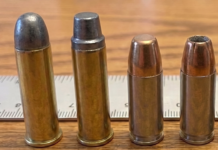
While a cheap box of 6.5 Creedmoor is $30 for 20 rounds (and you can pay twice that) a cheap box of .308 is $15 to $17. Step up to the .338 Lapua and you could pay $6 per round. Being an old prepper, I have military surplus 7.62×51 rounds in wooden cases that cost me less than 30 cents a round. I can shoot 20 of them or one .338 for the same cost.
Sometimes Good Enough Is
In sticking with the .308 I have rather than the 6.5 or other fancy new caliber I would need to buy, I am not letting perfect be the enemy of good enough. Given my terrain and forested environment, my skills and my budget, the .308 is good enough. It is a solid intermediate cartridge that can kill a deer or a man hundreds of yards away. It has more power to penetrate a car door than a 5.56 and can engage targets at a greater distance than the 5.56, 7.62×39 or .300 Blackout and hit with more power.
Plus, the 7.62x51mm round is still used by the U.S. military and remains a NATO standard. I expect there are pallets of 7.62x51mm ammo cans in National Guard armories because so many general-purpose machine guns shoot it. So in a post-SHTF scenario, you could probably find new ammo for your .308 almost as easily as you could find something to feed your 5.56. That ubiquity is another reason the .308 remains a good cartridge for preppers.
Easy Availability
The .308 is not just popular in the military. I can walk into any hardware store, auto parts store, or general store that sells ammo in these parts, and they will have boxes of .22LR, .30/30, .30-06 and .308. The odds go down for 6.5 and they are almost nonexistent when we’re talking .338. I’d have more luck finding .300 Winchester Magnum.
Frequent readers will know that I also shoot the .300 Blackout. I doubt it will be found in most of those stores, especially in subsonic loadings. The local gun stores may carry it, but not the mom and pop stores that sell a box at a time to local hunters. Guys in this area are in the woods with a lever action .30/30 their grandfather left them looking to put meat in the freezer. They don’t need an AR15 with a 10-inch barrel and a suppressor to do that.
If your “last minute” shopping list includes ammo, or if you expect to scrounge it after the SHTF, then you are better off with a .308 than a newer cartridge. If you live in a location where you need to engage targets at 1,000 or 1,200 yards, then the 6.5 Creedmoor is a better choice. Just be sure to stockpile plenty of ammo.
And if you carry a .308 battle rifle, be sure to stock plenty of spare magazines. There is no standard .308 magazine. I own guns made by the Germans, the Brits and in the U.S., and all three take different magazines. That’s a logistical problem my ARs don’t have as both the 5.56 and .300BO can use the same magazine (just different ammo).
Your Choice
If I am running out the door and need a rifle, I’m grabbing my 5.56 because it is light and I practice with it far more than I do the .308. I also have 5.56 ammo in my car, in the Polaris Ranger, and in caches around the property. That’s not the case with a .308.
Whichever gun and/or caliber you settle on is less important than how much you practice with it. In pistols, we used to say, Better a hit with a .22 than a miss with a .45. I could say the same thing about rifle calibers: Better a hit with a 5.56 than a miss with a .308.