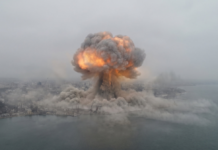

We’ve been living with the war in Ukraine for almost four years. In fact, war is so common it seems many just treat it like a dull toothache. They hope it will go away, but they don’t focus on it.
Trump continues to push for peace in Ukraine, but it appears Europe doesn’t want peace. The Russians are happy to talk and make vaguely positive comments while extending their victories on the ground, strengthening their claim on more land. Both Russia and Ukraine are inflicting tremendous damage on each other, but Russia is better able to absorb it and has more resources to throw into the maw.
Next year could well determine whether Ukraine surrenders land for peace or whether Europe joins the fight. I don’t see another likely outcome, just unlikely ones, such as a coup.
Should EU countries decide to send troops to keep the Russians from reaching Kyiv or taking Ukraine (the buffer between Russia and the rest of Eastern Europe), Russia will broaden its attack and strike across Europe. I think the U.S. will stay out of such a war for some time. Only after the Europeans have invested their men, money and material into a campaign against Russia will the U.S. military swoop in and land a knockout punch. (Not unlike WWI.) This will allow Trump to declare victory and negotiate a peace treaty that gives the U.S. both bragging rights and financial benefit.
Trump may be thinking about rare earth minerals, but the grain produced in Ukraine has more value and importance to many countries and people. Yet another reason to stockpile food, including hard red winter wheat and other grains.
Cambodia and Thailand
After a one-day battle in July, Cambodia and Thailand have broken the ceasefire that ended that skirmish. Each side blames the other, and they are once again fighting a border war. This one has already outlasted the previous skirmish.
While Thailand is a U.S. ally and has F16s, Cambodia does not have a modern air force. Cambodia seems to be armed with surplus Chinese weapons. While this war has little or no global significance so far, it is still a “hot” war in which anything could happen. For example, China could decide to give Cambodia some help. Should that happen, Thailand’s chances of victory decrease, and the war will last longer.
China and Japan
The war of words between China and Japan continues to escalate. After China took offense at something Japan’s prime minister said, they threatened to cut off her head. Things went downhill from there.
Japan moved missile systems to islands near Taiwan. China has responded with angry words and aggressive actions, including launching ships and boats near Japan’s borders to intimidate Japan. Japan, however, refuses to be intimidated, even after Chinese fighter jets lit up Japanese aircraft with their missile radar.
I see this tiff as an overreaction by China. They expected Japan to back down, and when it failed to do so, China pitched a fit, stomping its feet and waving its arms like an angry toddler. Now they have no way to save face but cannot afford to go to war with Japan. The island nation has a much larger navy than Taiwan, a larger defense budget, and a modern air force that includes F35 stealth fighters. Japan’s military force is significantly more powerful than Taiwan’s, and a war with Japan would derail China’s timetable to invade Taiwan (see below).
Japan also has a treaty with the U.S. that obligates the U.S. to “act to meet the common danger.” This is one reason the U.S. maintains troops on Okinawa and on other Japanese bases. China can hope that the U.S. will not respond if it attacks Taiwan. An attack on Japan, however, is a different matter.
While this war of words is unlikely to escalate into a shooting war, the Chinese could do something stupid or a single airman could make a mistake, resulting in a kinetic exchange and lives lost. Whether a situation like that can be limited or will escalate is a big question mark.
China and Taiwan
Most of the world still expects China will invade Taiwan, possibly in 2027. Expectations are that such an invasion would quickly embroil the United States and several other countries along the Pacific Rim. The timeline is not set in stone. China could attack early, trying to surprise Taiwan and its allies, or it could bide its time. For example, China might wait to launch its attack until the U.S. is distracted by a war with Russia in Europe.
The problem from China’s perspective is that the U.S., Taiwan, Australia and other parties continue to build their military strength, meaning that the longer China waits, the worse the war could be for them. Perhaps they would have been better off attacking while Biden was president.
I do not pretend to know when we will be at war with China, but I expect it to be when, not if. We are already in a cool war, not quite a cold war. It could heat up at any time, or we could see proxy wars.
Israel and the Middle East
Many friction points remain in the Middle East, including Türkiye in Syria, the Houthi in Yemen, Hezbollah in Lebanon, and the remaining Hamas fighters in Gaza. Likewise, Iran may be down, but they are not out. Despite recent protests and a lack of water in Tehran, their leadership continues to stir up trouble and seeks to rebuild their nuclear program. Iran may have been defanged, but it is not yet dead.
While Hamas and Israel signed a peace treaty, it is probably being violated as often as it is upheld. The treaty has allowed food and other aid to reach Gaza, but hundreds of Palestinians have refused to give up their arms, and fighting continues. Israel has also continued to bomb targets in Gaza and Lebanon.
Closer to Home
In this hemisphere, Trump continues to build up U.S. forces in the Caribbean. This is reportedly to stop the flow of illegal drugs and to target the drug cartels. In reality, the fleet is there to put pressure on Maduro in Venezuela as the U.S. seeks regime change. While the U.S. would prefer to achieve this via negotiation, it is likely Maduro will eventually be taken out if he refuses to leave. Don’t be surprised if Venezuelan oil flows into the United States sometime in 2026.
The U.S. is likely to keep a stronger presence in the Caribbean to show it considers this portion of the Western Hemisphere to be under its authority. It is a warning to potential enemies, a threat to current enemies, and a reassurance to friendly nations.
The Usual Suspects
There are many other hot spots around the world that could flare up. This includes conflict between Pakistan and India, fighting along the line of control between China and India, civil war in Yemen, and numerous other conflicts in Africa. For example, you might have seen how schoolgirls were recently kidnapped in Nigeria.
No matter how many peace treaties Trump coordinates, war still goes on. As I have said before, war is the norm and peace is the exception. Someone somewhere is always fighting.
That is one reason responsible citizens in the U.S., Taiwan, Poland, Germany, Britain and the rest of Europe should always be prepping.