
As the U.S. military intensifies its blockade of Venezuela and seizes oil tankers, the line between threatening actions and carrying out those threats blurs. Are the U.S. actions an act of war? Is seizing ships in international waters an act of piracy? Is the U.S. a criminal or just a bully?
The U.S. Blockade of Venezuela
After blowing up fast movers supposedly loaded with drugs and related chemicals—and photos and evidence recovered from the scene seem to substantiate these claims—the U.S. has escalated both its language and its actions. On Dec. 16, for example, President Trump said, “I am ordering a total and complete blockade of all sanctioned oil tankers going into and out of Venezuela.”
United States naval and coastguard assets are blockading Venezuela and have seized two or three tankers going to or from the South American country. I say “two or three” because as I write this on Sunday evening, they are reportedly in pursuit of the Bella 1, so it is an ongoing and developing story.
One of these tankers, the Skipper, was seized on Dec. 10. While the international community grumbled, they couldn’t do much because there was a warrant out for the ship, which had carried sanction oil and was part of the shadow fleet. The U.S. may, however, lack a similar legal reason for seizing the second vessel, the Centuries, this weekend. (See below for more on this ship.)
Is the Blockade of Venezuela a Declaration of War?
Since international law says that a blockade is an act of war, are we therefore at war with Venezuela?
The short answer is probably “yes,” but there may be some nuance here. For example, a naval blockade is defined as “a total stoppage of all traffic.” So far, the U.S. is concentrating only on oil tankers, which it says are supporting “narco-terrorism.” If this expands to include other vessels, such as those carrying food and medical aid, the case for it being an act of war becomes much stronger.
While the U.S. may be within its rights to declare certain cartels terrorist groups, tying oil tankers to drug trafficking is more of a stretch. These actions seem designed to put more pressure on Maduro, Venezuela’s leader, in hopes that he will abdicate. It could be argued that this will save lives that would be lost if the U.S. bombed or invaded the country. That and issues like Maduro’s corrupt regime and his disregard of election results may be a moral justification for U.S. actions, but that doesn’t necessarily make them legal.
What Defines Piracy?
Is seizing oil tankers an act of piracy? The simple answer is “no,” the U.S. is not committing acts of piracy.
Why? Because according to international law, only private individuals using private vessels can be pirates. If a ship is seized by a group of armed Somalis in small boats, it is considered piracy and a criminal action. When a nation seizes a ship, however, it is not piracy because countries cannot be pirates. (I know, it seems like a thin line, but I don’t make the rules.)
What the U.S. is doing is not a criminal action. It is a provocative state action and a fairly extreme example of using the military to wage economic warfare, but it is not piracy.
In this case, I would say that might makes right, and Venezuela lacks the ability to stop the U.S. So yes, in the sense that the U.S. is using its military might to intimidate a smaller country, we are acting like bullies.
But while the Centuries is not on the sanctions list, she is a ship with a dubious record. It is owned by a one-ship company based in Hong Kong (which makes it suspicious) and is part of the “ghost fleet” that buys and sells oil under different names and often turns off or disables its transponders when at sea. For example, it apparently used a false name when taking on oil in Venezuela. While the vessel is flagged in Panama, the U.S. claims it is false-flagged. If true, that would give the U.S. rights to board it.
So we have a powerful country taking questionable action against a questionable vessel. Do two wrongs make a right?
The China Factor: Could the Blockade have Unintended Consequences?
I am not worried about a war with Venezuela. The bigger danger here is that China will use these seizures as justification either to board or seize vessels going to and from Japan or Taiwan or to blockade Taiwan. Even if that doesn’t happen today, they could use it as justification for a blockade in a year or two.
By taking a “might makes right” stance, the U.S. is undermining the very law of the sea that it has upheld for so many decades. Just as using the dollar and the SWIFT network to sanction Russia has led to unexpected consequences that have weakened the dollar’s role as the world’s reserve currency, weakening the rules under which most nations have operated while in international waters could have unforeseen consequences.
Of course, it could be argued that China’s aggressive and often dangerous actions in the South China Sea are already violating international law. In fact, China often ignores the law of the sea and rulings of the Permanent Court of Arbitration in The Hague that limited its ownership of the South China Sea. So if they are using “might makes right” in the South China Sea, who are they to complain about the U.S. doing so in the Caribbean?
Once again we have run into the question of whether two wrongs make a right.
Lessons for Preppers: Surviving in an Insecure World
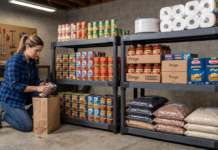
We are seeing play out on the global stage what may happen on a local level after a large-scale SHTF event. The underlying lesson here is that your stuff—be it a commodity like oil or a prep like food—is only yours as long as you can hold on to it.
Today, there are laws that protect us from criminal actors, limit what the government can do, and insurance policies that may reimburse us for any losses. However, it takes only one executive order to have troops in the field confiscating goods. And when the balloon goes up, the thin blue line disappears, and there will be no one to stop thieves and raiders but you and your team.
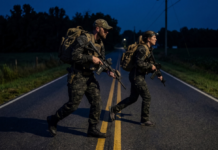
If you and your three friends feel like Venezuela when the Department of War shows up at your door up with ten times as many men and heavier weapons, then your options are limited. That’s why you should keep a low profile before and after a disaster and tell no one about your preps. It’s also why there is value in storing goods in multiple locations and having hidden caches.
Another lesson is that when the SHTF, it is better to be an ally of the local power than an adversary. So make friends, not enemies.