Last week I went to my second-favorite place to buy bee supplies. It’s in the opposite (and less desirable) direction than my favorite place, but my favorite place was out of stock on several items I needed.
Along the way, I not only stopped for the best hamburger in five counties, but at my second-favorite pawn shop where I sold a roll of silver Canadian Maple Leaf coins. It was the kind of transaction I like—all cash and no names asked for or given. I was paid $75 a coin, or $1,875 for the roll of 25. I thought that was pretty good considering silver was about $73 when I had gone to bed the night before.
Of course, a week later, the coins were worth $10 or $12 more. Oh well. I can’t complain. The coins were from 2015. I didn’t bother to look for my original receipt, meaning the value of those coins increased about five times. Not bad in eleven years. If only my retirement fund had performed as well!
My plan was to use the money to buy an 18-frame honey extractor. In the end, I didn’t buy an extractor, in part because they didn’t have the size I wanted. I also didn’t buy a decapper. It looks like I’ll be back to slicing open frames with a knife and using a smaller extractor for June’s harvest.
I also got the lids, covers, queen excluders and other equipment I needed, plus enough jars to hold 216 pounds of honey. Most of the jars went into the storage unit.
My New Purchase
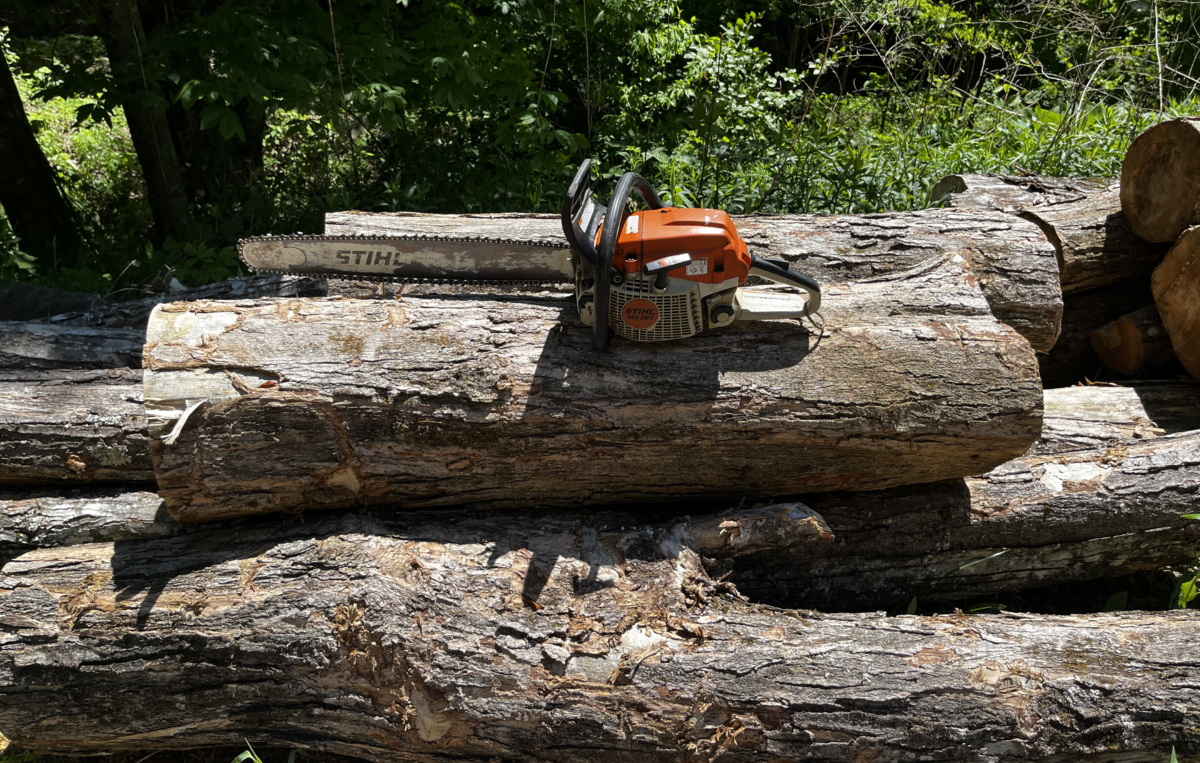
Instead of buying an extractor, I bought a used Stihl MS261 chainsaw at the pawnshop for $300, about a third of the cost of a new one. It looked like it had been used, but not abused. It had been pawned in December, and it still started right up and ran smoothly. The oiler worked. Best thing about it is that it is a professional model, so it should be more robust than the homeowner/consumer model, like the MS251 I have.
Because it uses a .325 pitch, 63 gauge chain, the same as my saw, I thought the 18-inch Rollomatic bars and chains I have stocked up for SHTF use would fit it, but they won’t. The 251 uses the small mount for the bar, and the 261 uses a medium, meaning the holes for mounting bolts are further apart. Bummer! At least the sharpener I have will fit both saws.
A few days later, I bought a 20-inch bar and an extra chain. A bar should last you four chains, so I will slowly accumulate more chains. At $40 each, I could spend as much on spare parts as I did on the saw.
The Second Saw
As frequent readers know, a second chainsaw had been on my “want” list. Because we heat with firewood, the means to produce it is critical in a SHTF scenario. I have been counting on my friend Karl to come and bring one or more of his Huskies. But what if he doesn’t make it? Then I may have to count on my neighbors and their saws, and they’ll need wood, too.
We all know two is one and one is none, so having a backup saw is important. Now the 261 will become my primary saw and the 251 will be relegated to backup and for use on smaller limbs and wood. It does great on an 8-inch or even a 10-inch log, but not so great on a 16-inch log. Before, my 16-inch electric chainsaw was the backup. Now it is the emergency backup.
There are other advantages to having two saws. Obviously, two people can saw at the same time. One can fell trees with the big saw and the other can de-limb it with the smaller one. If we have the manpower, we can now cut wood twice as fast. That means more time for other post-collapse chores. It also means less time where the sound of chainsaws is echoing up and down the holler, reminding people that we’re tucked away up here.
Firewood After the SHTF
My plan is to cut as much firewood as possible in the first year or two after a crisis, especially if it is the kind of scenario where there is little or no hope of getting any fresh gasoline or spare parts. I want to use the gas I have on hand before it deteriorates. It’s treated, but it won’t last forever.
I calculate I can produce about 18 cords of wood on my three gallons of bar and chain oil. That will more than fill the carport and consume 15 to 20 gallons of gas, plus whatever the splitter burns. My plan is to produce these 18 cords of wood in the first year or two. That’s enough to heat our house for three years. If we already have a one-year supply of wood on hand, then we should have enough firewood to last four years.
I also have 12 or 18 quarts of 10W-30 motor oil which, in a pinch, can be used instead of bar and chain oil. It isn’t tacky like the official oil, so it flies off the saw faster and you have to open up the oiler, but that would allow us to cut more wood as long as the gasoline holds out.
I’m not looking forward to cutting, splitting, and stacking that much firewood in a year, but in an economic collapse, we might have to. In a TEOTWAWKI scenario, we will definitely have to. Worse yet, I’m not looking forward to doing it by hand if we run out of oil and gas, or the saws break down. Then again, there are plenty of other reasons not to look forward to a TEOTWAWKI scenario.
There’s a reason I like to keep a year’s worth of firewood on hand. It’s to give us a head start!
First Cuts
I could not wait to try the new saw, so of course it rained the next day. I can’t complain; we are still in a drought. We got just over half an inch, which helps, but we normally get about an inch a week.
The next day dawned bright and clear, so I set out all my tools and got to work. I sharpened my saw, which needed it. Then, when I went to sharpen my “new” saw, I quickly realized the chain was already sharp and looked to be in good condition. That was promising!
Then I went to start it. Hmm. No bulb of gas to prime it with. But what’s this button? I asked Gemini, which told me that the button is a decompression valve or decomp button. I should press it down when I start the saw to vent some air from the compression chamber. That will reduce the resistance when I pull the starter cord and be easier on the saw. The choke works the same as my current saw, so I got it started without flooding the engine, and we were off to a “roaring” start.
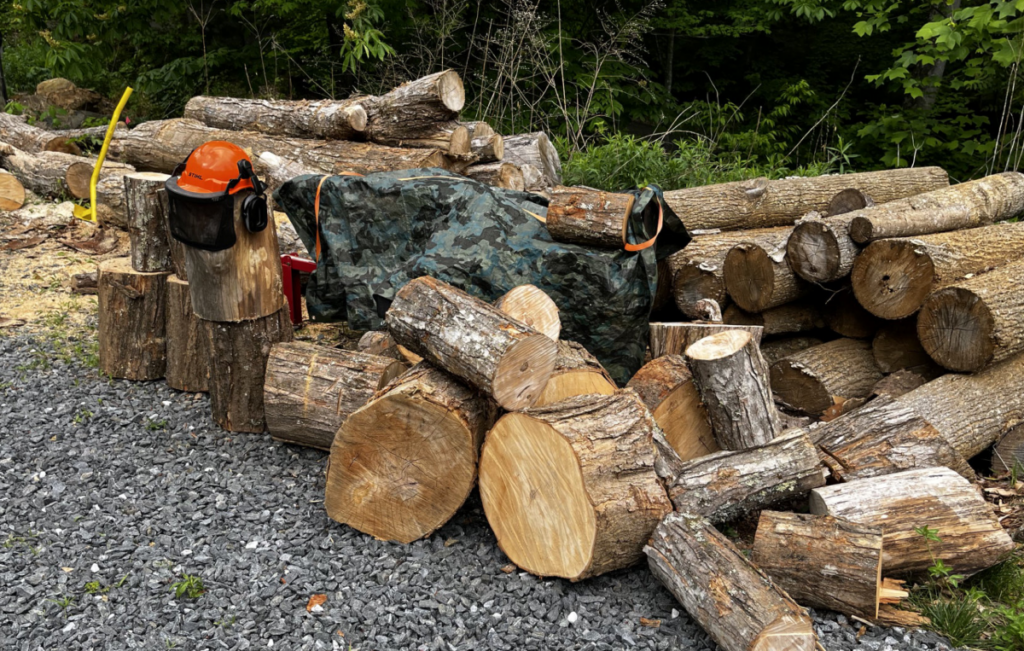
I tackled some large logs and it chewed its way through them. There is a noticeable difference between the MS261 and the MS251, which should surprise no one. Three days later, I was out there cutting more.
Now I have another stack of rounds to split, but I have to work the bees first. The tulip poplar and the black locust are both blooming, so I have to put on more supers when the bees start to fill them up.