Over the weekend, I wrote about the surge in silver price which climbed 13 percent last week. Silver continued to climb this week, approaching $60 an ounce before it fell back a bit. Gold continues to hover around $4,200 an ounce.
You may have heard the term “debasement trade” used in the past month or two. This term means investors are moving their capital from the dollar, which is losing value or being debased, and into gold and silver. In short, investors are doing what I have recommended for several years and moving into hard assets in the face of the decreasing value of the dollar.
If you have already moved into hard assets such as gold and silver, brass and lead, real estate, or other tangible investments, those investments should benefit from the debasement trade. For example, the three gold Krugerrands I bought in 1998 for $273 each will now fetch 14 times that amount. Are the coins worth more, or the dollar less? One might answer, “both,” because gold appears stronger when measure in weaker dollars.
Not all assets perform the same. The house I bought in 1998 is worth only two-and-a-half times what I paid for it all those years ago. Of course, the house provides shelter and a place for the kids to grow up while the gold just shelters your buying power. Your best bet is to own both.
Fiat is Failing
As our fiat currency—the paper bills in your wallet or the dollars in your bank account—buy less and less, the debasement trade increases. Unless something is done to halt the decline of the dollar, the price of gold and silver are likely to be driven even higher. Because a series of record highs in the gold market or silver market attracts media attention, traders take notice and buy hoping to make a quick profit. Others short the market, thinking the metals will fall back. The result is volatility, but over the last year, volatility has driven the market up.
Even if you don’t own an ounce of silver or gold, the bull market in precious metals is sending you a signal. You just have to listen and interpret it. It is telling me more inflation lies ahead. It warns me the value of the dollar is dropping on the international stage and we may soon pay more for imported goods and items like cars, which contain imported parts even when they are “built” in the USA.
One reason silver has climbed is the expectation that the Fed will cut interest rates. If they do not cut rates, then the price of silver might fall, giving people who buy on the dips a chance to do so.
Another reason is that the Fed has ended quantitative tightening, or QT. QT is deflationary, so by ending a program that removed dollars from the money supply, one program working against inflation is gone. While quantitative easing, the opposite of QT, has not started, QE could be coming our way. If the current Fed does not initiate QE, then it may start late in the first quarter after Trump’s choice takes over as the new Fed Chair.
Quantitative Easing and Inflation
QE makes more money available to banks for less. This “easy money” trickles down to Wall Street, big business, and then to smaller ones, and (we hope) to employees. It gives companies funds to invest in capital expansions, like pipelines, new factories, power plants, and data centers. That generates jobs. It should also keep interest rates low and make it easier for people to buy cars and afford houses. While this all sounds great, there is a downside: QE often leads to inflation. In fact, the definition of inflation is an increase in the money supply.
But this is not written in stone. If QE fires up the economy, if more people get jobs and wages rise, if workers become more efficient, and if the easy money is absorbed in the economy resulting in a higher GDP, the inflation effects may be delayed. That is the outcome Trump and his advisors hope for. They want to get the economy roaring again, and he has a proven track record. The economy was going like gangbusters during his first term until COVID shut everything down.
There is a fine line between QE that does not result immediate inflation and QE that does. If QE results in more inflation (and it is inflationary), then gold and silver prices can be expected to rise. If not, they could just trade back and forth in a narrow range, waiting for something to push the market one way or the other.
More than Inflation
Of course, there is more to the economy that inflation. Growth is important, and while some sectors of the economy have been growing, others have not. Peace is also important. While the threat of war may boost the stock price of businesses in the defense sector, it causes fear and uncertainty which are bad for markets and can contribute to lower consumer confidence.
A big influence is artificial intelligence, or AI. The government is injecting billions of dollars into the AI industry and into energy. This could boost the economy, or at least those segments. At the same time, people are being laid off because AI can do their job at a lower cost or allow someone else to do it more efficiently.
We are seeing an employment shift, meaning that while some positions are being eliminated, others are getting hired. Kind of like when people building covered wagons and breeding horses were replaced by people building automobiles and refining and distributing gasoline.
I have seen reports that over the next five years more than 500,000 new jobs will be created by the expansion of AI, data centers, and the energy generation and distribution networks needed to power them. Of course, that assumes 500,000 people have the background to qualify for those jobs. If I was graduating high school or looking to change careers, I would look at training that would make me a good candidate for these positions.
To Buy, Sell or Hold
What’s going to happen to the economy, in precious metals, or in the financial markets? No one knows. People can study the charts, look at various technical indicators, study history looking for similar situations and make an educated guess, but it is still just a prediction. You either have to make your own decisions or find an open-minded financial planner who doesn’t wince when you want to put some of your money into more aggressive or untraditional investments.
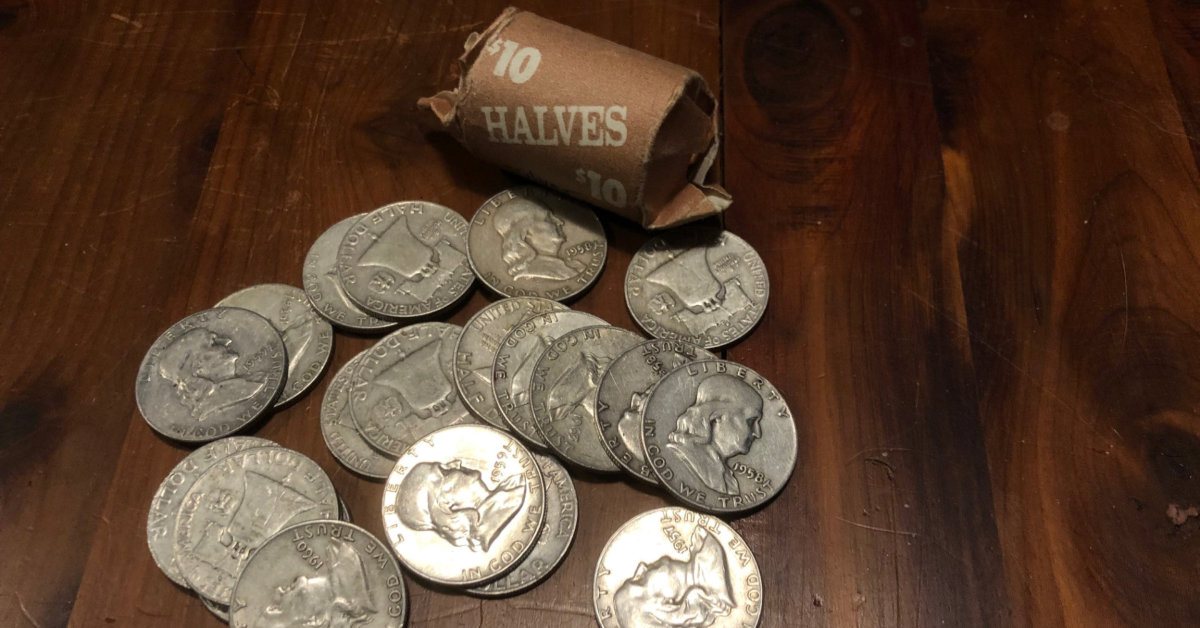
Back in October, when silver closed over $48 for the first time, I said I would wait to sell my junk silver “until silver hits at least $70, whether that is later this year, next year, or many years down the road.”
Now that it looks like it could reach $70 in the next month or two, I am changing my plan. I will hold off selling, hoping it may reach $100 an ounce. It probably will, eventually. Despite the many predictions you can find online, no one knows whether “eventually” is next year, 2027, or 2047. But since I got into my junk silver to use as currency in a post SHTF-scenario, I’m not an investor counting on making a profit to fund my retirement or buy prepping gear. From my perspective, junk silver is prepping gear. So for now, I’m continuing to hold it to use after a financial collapse.
What you do is your call, of course, but please keep prepping. And remember, investing in junk silver or other precious metals for prepping purposes should be done only when you have all the prepping basics covered.
Disclaimer
I am not a financial advisor, accountant, economist, tax professional, lawyer, or precious metals expert, so do not consider this or any other posts to be financial or legal advice. I am simply a well-educated prepper relaying my personal beliefs established over more than 30 years of prepping experience. Do your own research and consider consulting a financial professional to assist you with your investments and financial decisions.