
If you’ve read the blog for any length of time, you know I try to keep several months of chicken feed on hand, and one of the things I will try to buy if we are in a slow-moving SHTF moment is more chicken feed. That’s how important the chickens and the eggs they provide are in our post-disaster plans to feed ourselves, anyone who bugs out here, and our neighbors. Eggs and chicks or chickens may also become valuable for barter.
I know our chickens can free-range to find food, but free-range chickens have a tendency to disappear for unknown reasons—likely eaten by a bird of prey, a fox, a coyote, or other predator. This means they need a shepherd; someone with a .410, a .22, or even a 5.56 to watch over them while they are free-ranging. Not the most productive use of manpower. (Although a good use of young-teenager power or maybe elder-power.)
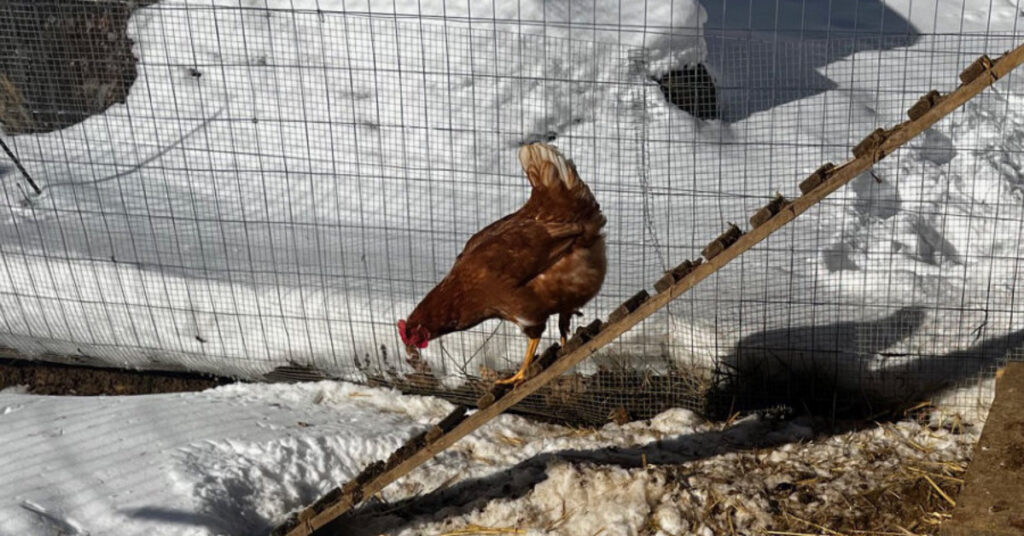
On top of that, there is not much food to find while free-ranging in January, and even less when it snows. And that is the time of year when the chickens need calories; not only to keep laying, but to keep warm.
My plan had been to harvest as much of the grasses as possible with our sickle (we have multiple varieties of grasses grown and without lawn mowing, they will grow unchecked) and feed them to the chickens in the winter, letting them find the seed heads for some protein. We would also grow extra winter squash and pumpkins for them, save apples and other available resources that humans don’t want, and feed them table scraps the dog won’t eat.
But I have come across a better idea.
How it Began
When we terminated the previous flock in June, the chicken run was nothing but bare mud. Any hint of greenery that grew in there was immediately gobbled up by a bored or hungry chicken.
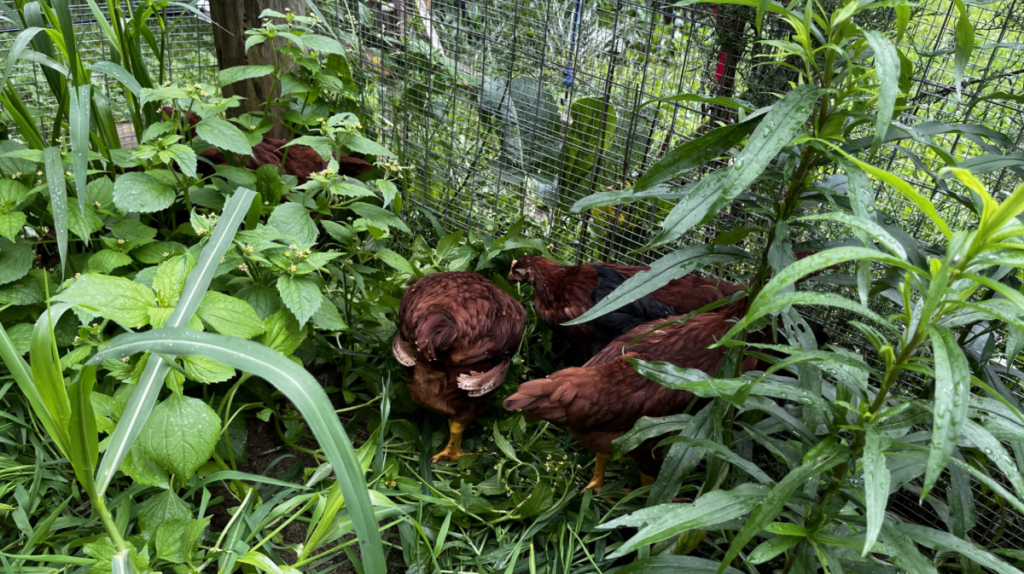
For the first seven weeks of their lives, the baby chicks, now old enough to be considered pullets, never left the coop. That meant whatever greenery might grow in the coop could do so, and let me tell you, lots of stuff grew, especially when the drought broke and it started to rain again. All the greenery was what we call a volunteer, as we didn’t plant anything. As you can see in the photo below, it just grew, and it grew kind of wild.
There were familiar plants in there; things we see in the yard all the time: clover, different varieties of grass, goldenrod, dandelions, and stuff I can’t name but looks familiar. And then there were unusual things not normally grown on our land, such as plants that grew up from seeds in the chicken’s scratch or feed. For example, we have a corn plant growing in there. I don’t know that we will get an ear of corn, but it’s growing. Second, we had a funny-looking plant that was too tall and thick to be grass. I wondered, could that be wheat or some other cereal?
I took a picture, and Google identified it as foxtail millet. Apparently, a few grains were not eaten by the chickens, and now they have grown up. Millet is not only an excellent feed for chickens, but it is one of the oldest cultivated grains in the world and can be made into millet porridge for human consumption. It’s also drought-resistant. Sounds like a good prepper crop. I’m going to have to stockpile some millet for planting.
How it Ends
The millet in the main photo is still green, but the heads will dry and turn brown. Then we could harvest them and use the millet for chicken feed. For human feed, it would have to be de-hulled. With some practice and adjustments to the plates in our Country Living Grain Mill, it could dehull the millet, and we could use it for porridge or throw it into homemade bread to extend our wheat flour. If you don’t have a grain mill, a mortar and pestle can help dehull it, but like wheat, it first has to be threshed to knock the seeds off the head, then winnowed to remove the chaff, and winnowed again after dehulling. That’s lots of work, but it’s worth it if you have little to eat. If you have stored food, it may be easier to feed the hulled seeds to the chickens and eat their eggs.
We are also growing sunflowers again this year, although not as many came up as last year. The seed heads can be harvested, if you beat the wild birds to them, stored, and fed to the chickens during the winter. Sunflower seeds are not only a good addition to their food in limited quantities, but pecking the seeds out of the head also gives the chickens something to do to keep busy. The high oil content helps the chickens stay warm.
Like millet, sunflowers can also be consumed by humans. They do not need flat pasture to grow, and the seeds can be added to bread, oatmeal, or eaten plain. They do not grow as easily as millet, which means we need to keep trying different varieties until we find one that thrives under our conditions. Our current crop may have too long a growing season or was stunted by the drought and needs more water.
Porridge for Preppers
Speaking of porridge made from millet, in 2024, I called porridge the most-ignored prepper meal. When times are tough, it can be a lifesaver. Let me quote from that post:
Porridge is any grain or mix of grains prepared by boiling it in water or milk. This makes it a simple prepper meal. Oatmeal may be the example we are familiar with, but you can make porridge from rice, quinoa, wheat berries, cracked wheat, buckwheat, corn, and other grains. Cream of wheat, grits, and congee are all examples of porridge.
Humans have been eating porridge for more than 10,000 years. Sometimes called gruel or mush, porridge was a common breakfast for centuries, and during difficult times it was served for dinner, too. In the past, the peasants or serfs would glean fallen grain from the field and take it home to eat as porridge. We may need to revisit that when the grocery store shelves grow empty and your canned foods run low….
…Porridge may not be as exciting as your freeze-dried chicken a la king or even a can of Chunky soup, but it will keep you alive and healthy when the good stuff runs out. It fed generations, so don’t be bashful. Indulge in the rich, nutty taste of … boiled mush.