
Late last week, summer left and fall arrived, all in about 24 hours. We went from daytime highs near 80°F to nighttime lows below 50°. The temperature in the house steadily dropped from 75° to 65°, at which point my wife turned on the heat. We started wearing fleeces and added more blankets to the bed.
Over the weekend, we lit a fire in the wood stove late one afternoon. It wasn’t a big fire, and it didn’t last long. We burned eight logs over six hours to take the chill out. It worked. The temperature rose to 73° in the basement and 69° upstairs.
I’m not sure I’ve lit a fire in September before, but I probably say that every September when I light my first fire.
Fall Spells the End of Gardening
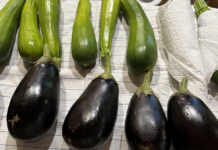
As soon as the temperatures dropped, the cheerful sunflowers turned brown and curled up to die. They are definitely a warm-weather plant. Believe it or not, we are still getting zucchini from the garden. My wife harvested the last of the eggplants and tossed the plants onto the compost pile.
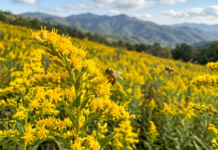
The goldenrod is technically still blooming, but it looks sad. I doubt there is much fresh nectar in it anymore. Maybe some salvageable pollen. The bees are all over the asters, of which we have three colors/varieties blooming. I plan to start feeding the bees soon so they do not eat too many of their reserves before winter.
The chickens, who are now three months old, are old enough and well-feathered enough that the cooler temperatures don’t seem to bother them. They’ll consume more feed, which happens every winter. In a month or six weeks, we should finally get some eggs in return for our investment. We’ve already put straw in the nesting boxes with some fake eggs to encourage them to lay.
When chickens first lay, I think it surprises them. They don’t know where to nest and will sometimes lay in the corner of the coop or out in the middle of the run. The fake eggs help train them to use the nesting boxes.
Removing a Downed Tree
The downed tree that blocked the road up to our springhead has been cleared, and I can now drive the side-by-side all the way up and down, which is necessary if we run into any problems with the spring. The tree was a locust, which will make good firewood. I left it piled along the road but plan to harvest, cut and split it so it can dry in time to use next winter.
Speaking of trees, very few of the apple trees had apples this year. Apparently, the blooms were killed in a frost. Of the five trees nearest us, one had a single, lonely apple on it. Interestingly, the one pear tree I know of had pears.
The lack of apples will be bad for the animals, as we know the deer, bears, raccoons, skunks, and other animals eat the apples when they fall to the ground. If we were in a survival situation and counting on the apples, it would be bad for us as well. Just another reminder that you need to have redundancies and can’t count on everything going well all the time. Keep Murphy’s Law in mind when you make your preps and over-prepare because if something can go wrong, it probably will.
Solar Power Production on Cool Days
Now that we no longer need to run our air conditioner, the solar panels are making a profit again. On Sunday, a sunny day, we made 44 kWh and used only 23 kWh. That “profit” of 21 kWh came despite a few runs of the heat pump after my wife woke up. When the temperature is above 40°F, the heat pump uses far less electricity to heat the house than it does to cool it when it is 83° out.
Speaking of heat pumps, if you recall my July post where I discussed the possibility of replacing our large, whole-house HVAC with multiple smaller heat pumps, I am exploring an alternative approach that might solve our needs. This doesn’t mean the heat pump idea is dead, only that we will save it until our HVAC unit dies and needs to be replaced. That could be next year, or it could be 2035. No way to know.
In the meantime, I have been too busy to fully explore this idea or get quotes, and I probably won’t be until my Special Assignment ends in early November. So more details to come next month.