

To show solidarity with your friends in Europe, I have spent the last five days without air conditioning.
OK, that’s not entirely true; this has nothign to do with Europe and everything to do with our HVAC unit crapping out on Friday—the first day of a three-day holiday weekend during which the local repair guys do not work. It still hasn’t been repaired. We have been forced to resort to the old mountain practice of opening all the windows as soon as the thermometer drops below 79°F, and then closing them and pulling the shades the next morning when the outdoor temperature approaches the indoor temperature.
We’re running fans, too. And the dehumidifier. On Saturday, I resorted to wearing cargo shorts for the first time in two years. It all helps, but it is no substitute for HVAC. I tell myself this is the equivalent of training for a post-SHTF scenario, but that doesn’t help me feel cooler.
In hindsight, when our HVAC started to draw more electricity than it ever had before, I should have been smart enough to realize something was going wrong. Instead, I blamed it on the extra-hot weather. In any case, when the thermostat clicks on, the outside compressor makes a noise like it wants to run, but never kicks on. The fan doesn’t turn. I don’t know if the motor is shot or if the capacitor is bad, but we are living proof that it’s not all that hard to stop a Trane.
My fear is that because our current compressor is 15 years old, we may need a new one. And if we are getting a new compressor, do we want to pair it with a 15-year-old air handler? Probably not. I just see dollar signs.
HVAC Then and Now
The good news is that in the 15 or so years since the house was built, the HVAC industry has evolved. Whatever we get today will be more efficient than what they had when the house was built. The bad news is that, like everything else, these are more expensive than the older models. Some of that is due to technology and larger size required to meet stricter government efficiency standards; some of the price increase is just because of inflation. The last HVAC we replaced was ten years ago in another house. It cost $7,000 and was smaller than this one. I hate to think of what a new one will cost today.
More good news is that some companies make heat pumps that will work at 5°F and will still produce heat down to -13°F. This means we could get rid of the heat strips that our current unit uses to generate heat when it falls below 35°F. These are terribly inefficient and draw so much power we can’t use them if we are off-grid.
Of course, wood is our primary heat source, but we use the heat pump as a backup. We set the thermostat to kick the heat pump on to keep the pipes from freezing if we are gone all day or overnight and can’t put wood on the fire.
The Mini-Split Alternative
I am also considering whether it makes sense to put in a mini-split or two. We could use heads in four different rooms. This would give us much greater control over our cooling and heating than a whole-house system. If my wife is in her office, she can turn on its mini-split. If no one is in the guest room, no need to heat or cool it. The heat pump gives us no choice but to heat or cool the whole place.
A mini-split would cut our power bill, and it would be easier for our solar power system to run. However, a downside is that we would have mini-split heads or floor consoles sticking into rooms rather than small vents in the ceiling. That would look uglier, but I think people are used to seeing mini-splits these days, and it shouldn’t detract too much.
Solar Power and HVAC
The HVAC system is the largest electrical load in our house. When the heat strips are on, it can draw 15 kilowatts. The only time our solar power system ever shut down and rebooted itself was when the power went out on an exceptionally cold night when the heat was on. I had to run and turn off the breaker to make sure it didn’t happen again after the solar power system rebooted.
When on grid power, 15 kilowatts costs between $2 and $3 an hour at our rates, more if you are in California. So if it runs half the time, or 12 hours per day, we are looking at $30 or more to heat the house for one day. If we get two weeks of bitter cold, that’s $420, not counting our day-to-day electric consumption. In a month like January or February, we could be looking at an electric bill of $1,000.
Numbers like that explain why we burn firewood. I can heat the house for a month on $250 worth of firewood. This year, most of it is free, if you don’t count labor. And that chainsaw I bought…
When you start a traditional heat pump, there is a big draw because it is kicking on a motor. That kind of surge or inrush current will shut down our solar power system. Whether heating or cooling, our existing HVAC system can deplete our batteries in a few hours. A mini-split will address both the start-up surge and help with the consumption because it is more efficient. And because mini-splits will allow us to heat or cool specific areas, we could limit consumption further. If it is sunny and we’re making 6 to 7.5 kWh, we could run it as long as the sun shines.
Wait and See
I don’t know if I need a new heat pump. It might be a simple repair. But doing some research on my alternatives, evaluating brands and products, and finding the closest dealers means I will have a plan if we get bad news. Without a plan, I might just do what the repairman recommends and never know if that was the right choice.
Like a good prepper, I will hope for the best and plan for the worst. And if the worst doesn’t hit this time, we know it will one day, because nothing lasts forever. Even a Trane.
A Quick Homestead Update
The baby chicks are now two weeks old and all 15 are still alive. They even look like birds rather than fuzzy golf balls with stubby wings. But don’t be fooled! In a few weeks, they will look like a prehistoric creature that is the missing link between dinosaurs and birds.
They run about, and when scared, they try to fly. They are amusing to watch.
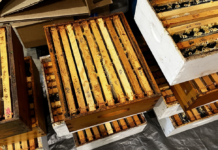
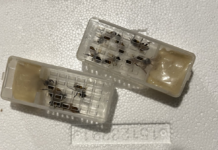
The two queen bees I placed in hives late last week have both escaped their queen cages. That’s a good sign, but I will wait until at least this weekend before I check and see if they are laying. I may also get a chance to finally harvest more honey this week.



2 comments:
1) Take a picture of the capacitor in the outside compressor. You should be able to find a replacement on Amazon for $20-$30. My HVAC is 13 years old, so I keep a spare capacitor just in case. If my A/C shuts down, I’ll replace the capacitor before I call the HVAC guy.
@) Love the Mitsubishi mini split. Have a unit in enclosed lanai and a unit in the garage with both connected to a single compressor outside (we opted for a larger outside unit). The mini split in the lanai is a cassette unit and is installed in the ceiling with a remote control to set temperature and turn on/off. It is flat with a louvered vent and looks like a large A/C vent. The mini split in the garage is a wall unit (box) installed above my storage cabinet. The garage mini split is great in the summer if I’m working on my car or a project in the garage. What a difference it makes. The mini split can cool down (or heat up) the lanai or the garage in short order but we keep them turned off when we’re in the main section of the house.
The main A/C keeps the interior of the house cool.
Thanks for your suggestions and feedback. I like he idea of getting my own capacitor.
I had not even seen the cassettes until I saw the Mitsubishi brochure. But we have a cathedral ceiling and they are not made for that. Is a cassette overkill for a bedroom? While we did not need to replace the AC now, doing so has moved to my long-term wish list along with getting a third (and maybe fourth) battery for the solar system.
If you have to replace the whole system, be sure to scrap the aluminum, copper, brass, motors, and wires. Those are the money parts especially the radiator fins. You’ll need to cut out and separate them by metal type to get the most money from your local scrap recycler. I did a 3 ton unit and made $300 on just those parts. I simply threw away the steel as it wasn’t worth dealing with.
That is a good suggestion, thank you.
The repair man showed up while we were eating lunch on Thursday and when he heard the noise it was making, he said, “I know just what that is.” The capacitor? I asked. He nodded and we were back up and running in ten minutes. He showed me the old one and the top was bulged out. “Fourth one I replaced today,” he said. “They don’t make ’em like they used to.” With any luck, we’ll be good for several more years.
I am seriously considering buying my own to have on hand as a spare.
Comments are closed.