This is the first edition of what will be a recurring monthly post on what I recommend preppers do during the month. My objective is to point out a few timely items as well as some evergreen tasks to help new preppers get better prepared.
You don’t have to do these, but I recommend that you at least review them and think about it.
1. Fill Your Gas Tanks
Looks like the war in Iran is restarting. After Iran attacked five ships, the U.S. fired back Tuesday night, hitting targets along the coast, and then attacked more aggressively on Wednesday night. That’s driving up the price of oil, which will quickly be felt at the pump.
Everyone should fill their gas tanks and any spare gas cans they have. I’m topping off my lawn mower and Polaris Ranger—which holds more than 10 gallons—and then refilling that can.
2. Stock up on Coffee
Along similar lines, stock up on coffee, as this article suggests, if you are a big consumer. The market remains in flux, and prices are unlikely to drop for two years.
3. Start Carrying Concealed
If you are not already carrying a concealed weapon, I encourage you to start. There are a litany of reasons why. Here are a few.
- During past periods of civil unrest, we usually had a warning. Protests would take place during the day, but not get violent until dark fell. If you had paid attention, you knew what areas to avoid. These days, teen-takeovers, street takeovers, and other kinds of social-media-driven violence can pop up with little or no warning. That means you could find yourself in the middle of a wave of violence while out to dinner or driving across town. That’s enough to make me carry a second magazine.
- Socialist candidates—and some elected officials—not only want to eliminate ICE, they also want to defund the police. Again. They are either blind to the failure of previous attempts, which resulted in more crime and violence (shocking!), or think we are. We already know that when seconds count, the police are minutes away. If we see more socialists elected, they may be hours away, just like they are in some blue cities.
- Catch and release is letting more criminals out rather than keeping them off the streets. Combined with sanctuary cities that release criminal aliens, this increases the number of violent criminals on the street. Many are mentally ill or cannot be reasoned with because of drug use, so you may need to shoot one to save your life. Don’t believe that? Look at the number of random assaults on subways and city streets.
You not only need to be armed, you need to be aware. Put your phone away when you are in public, keep your head up, and learn to spot danger while you can still avoid it. Get some professional training in both defensive shooting and tactics. If you don’t need it today, you may in a couple of years.
4. Improve your Emergency Communications
Many preppers focus on food, water, and shelter, which we call the Big Three. There’s nothing wrong with that, but if you have not already done so, make plans to improve your communications in case the grid is out for days or weeks and local cell phone towers are non-functional.
If you have done nothing yet, get a portable AM/FM radio. For $20 to $35, you can get a bare bone model that runs on batteries. If you have more cash, get one with the weather band. If you feel flush, look for one with “world band,” which means it can receive shortwave radio broadcasts from across the U.S. and globally.
During our three weeks of grid-down living in the aftermath of Hurricane Helene, we would gather in the living room at 1 p.m. every day to listen to the local station broadcast the latest news on recovery and relief efforts. It was our only way of getting news. When all else fails, revert to radio.
5. Buy Some Canned Food
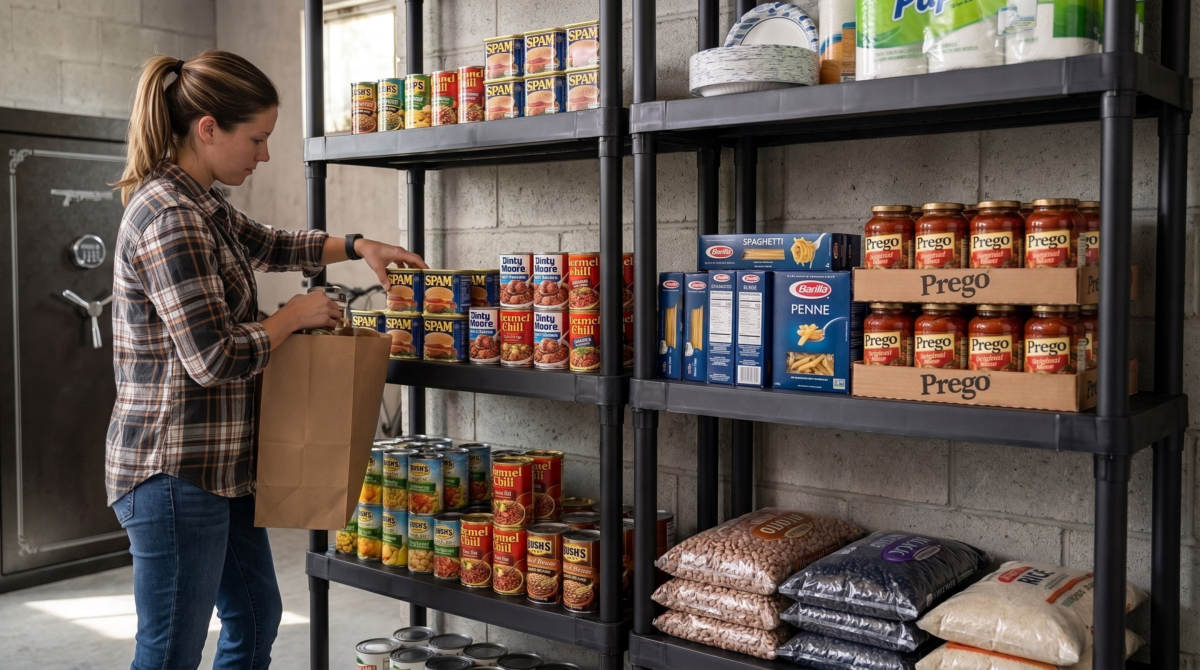
I am always a fan of buying food. If you spend $10 a week on “extra” food for your prepper pantry, you can build a surprisingly large supply of emergency food in six months or a year.
Canned food is a cost-effective option with a good shelf life. My favorite canned foods for prepping are chili, Spam, canned chicken, beans (baked, pintos, or black beans, for example), and corned beef hash. I’d throw peanut butter in there, too, even if it is not technically canned. My favorite dried foods for prepping are rice, pasta (including ramen), and oatmeal or grits. If you combine the canned food with the dried food, you get a full meal and often a complete protein.
Don’t rely on my list; buy what you and your family will eat.
6. Test Your Systems and Gear
It’s great to have prepping gear, but you need to know how to use it, and how to use it well. This month, we’ll focus on bugging out, which many preppers plan to do if the SHTF.
If you have purchased a tent, then go camping so you won’t be setting it up for the first time after an earthquake destroys your house. At the very least, set it up in your backyard and camp out, sleeping in your sleeping bags or bedroll.
If you have a bug-out bag (BoB) and plan to carry it on your back while you bug out on foot, I recommend you go on a weekend hiking trip with nothing but your EDC and your BoB. If you are planning to drive to a friend in the country, grab your BoB and head out without taking the time to pack anything else. That will teach you what is missing from your BoB and show you how your friends will react if you show up unannounced.
Likewise, if you have a survival kit or a get-home bag in your car, spend the night in your car with nothing but the contents of your kit. That will show you what you have that works and what you are missing.
You don’t have to run all of these tests this month. Just do one this month and pick another next month.
Prepping is a Lifestyle
There is more to prepping than a closet full of food. It’s not something you do when you get scared by a specific threat, like the Iranian conflict, but something you do all the time so you don’t get scared or caught unprepared. Prepping is also an attitude and a lifestyle. The more you practice it, the better off you will be when the SHTF. The more you incorporate prepping into your everyday life, the less disruptive a bad situation will be.