I can’t help but feel that there’s a good possibility that Russia will escalate the war in Ukraine in the next few months, expanding it to include more of Europe. They will start small, but eventually, this will grow to include Poland and multiple other countries. Unlike 2022, it won’t start with infantry or tank invasions. Instead, it will start with cyberattacks, assassination, and sabotage. Russia will attempt to hide its attacks, looking for deniability while still doing physical and psychic damage. It will be sneaky, trying to avoid retaliation, but this will only succeed for so long.
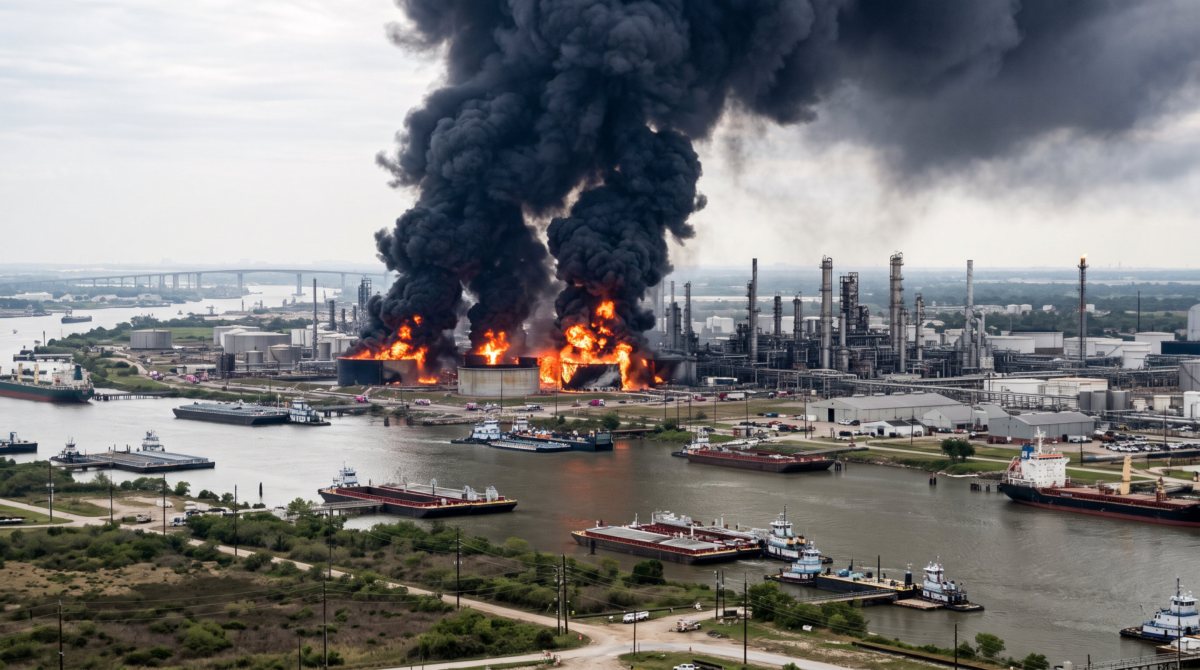
As the war builds, the attacks will grow more obvious, and the Europeans will eventually respond more aggressively. More ships will be sunk. Ports will be targeted. Pipelines will be destroyed. Petroleum plants will be blown up. Underground cables will be cut. Ultimately, something will snap, and the war will break into the open. Unmanned sea drones will target tankers and cargo ships, disrupting trade. Missiles, drones, and aircraft will fly, targeting key military and industrial targets across Northern Europe and deeper into Kaliningrad, Belarus, and Russia itself.
Russia has grown used to being targeted and can shake some of this off; Europe has not. Their economy—already on shaky ground in quite a few countries—will suffer. The civilians will need far more than the weeks’ worth of supplies they’ve been told to stockpile as shortages cause prices to shoot upwards. Gasoline and diesel will disappear, and lines will form at stations. Natural gas prices will rise, and the populations will suffer from a lack of electricity. Businesses will close, and unemployment will rise. Internal strife will go hand-in-hand with external attacks.
It won’t be a good time to live in Europe.
U.S. Involvement
If NATO gets involved in a war with Russia, and it is hard to imagine how it would avoid doing so, the U.S. will be sucked in. That opens the threat of similar cyberattacks, sabotage, GPS jamming, and other deniable attacks in the continental U.S. This is what we, U.S.-based preppers, must prepare for. Our rail yards, refineries, and economic targets could be subject to attacks from sleeper cells and drone swarms.
While the U.S. will not suffer as much as Europe does, it will still be ugly as our economy, the supply chain, and our fuel supplies will suffer far more than they do now or did during the pandemic. We will likely experience shortages, rationing, martial law, and a reinstatement of the draft. U.S. factories will stop making consumer goods and start turning out war material. Our quality of life will suffer, but it will be better to live in America than in Europe.
The big question is, will China take advantage of a war in Europe to attack Taiwan? I expect so. In fact, they would be foolish not to do so. That will make things worse, both on a global scale and in the U.S. As bad as things would be with a broader war in Europe, a full-on global war will be worse.
Preparing for Disruption
It’s relatively easy to pick a specific scenario—such as a power outage or a hurricane—and take specific steps to prepare for it. It’s harder to prepare for a broad disruption, especially one we have never seen before and therefore cannot predict what will happen. Because we don’t know what a war in Europe will mean here at home—or what World War III will look like—preparing is a greater challenge. All we can do is prepare for the worst and hope for the best, and the worst could be quite bad indeed.
My approach is to take the worst that we have seen in individual events and combine them so that we are facing multiple scenarios at once. Think of it like this: Double-digit inflation like we saw under the Biden Administration; empty shelves and rationing like we experienced during the pandemic; supply chain issues that make it impossible to get replacement parts, much as we experienced at the end of the pandemic when everything from farm equipment to HVAC repairs could not be made because of a lack of parts; rising mortgage rates and bank failures; rising crime. Pick any four. Or any six.
But how can you prep for all that at once?
There is no easy answer. Just prep as best you can.
Redundancy and Resilience
For us on the homestead, that means covering the basics. For example, we have extra clothing and footwear on hand. There are also spare blankets and bedding to keep warm on the coldest nights. We have hand tools to back up our power tools. I have repair parts, like replacement bars, chains, sprockets, and carburetor parts, for my chain saws. There is extra oil on our garage shelf, from 10W30 and 5W40 to bar and chain oil. I can change the oil in every vehicle or piece of equipment at least once.
We can also make do with less, and this is where resiliency comes into play. Perhaps because my wife and I grew up in the 1970s, when there was the original energy crisis and inflation drove up prices, we can face adversity better than someone born after the turn of the century. We were not spoiled; we learned to enjoy what we had and not to miss what we did not. Luxury items were rarities; we didn’t expect them every day and still don’t. We learned to make sacrifices, and we learned to work hard, two things Americans may quickly have to get used to doing again.
Mental and Physical Toughness
Most of all, we learned not to complain, not to whine. We grew up tough because when we faced more adversity than recent generations have. Our parents played the hand they were dealt, and we learned to make the most of it. Growing up, we had a single TV in the living room, shared our bedroom with a sibling, wore hand-me-down clothes, and when we ate beanie-weenie for dinner, we considered ourselves lucky to have a meal with meat in it. (We were also thinner, healthier, and in better shape.)
So if war breaks out and our standard of living drops, if the supply chain breaks, if you are forced to tap into your preps, just remember, it could be worse. In fact, it probably will get worse, but one day there will be a recovery. Your job is to survive until we reach it. Reach for that toughness your ancestors displayed. It’s there, somewhere. Be like the Ukrainians and refuse to surrender. Fight back.
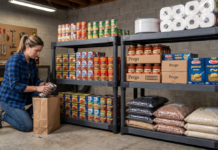
In the meantime, keep prepping. Every can of chili, box of pasta, or bag of rice and beans you put on the shelf represents another day you won’t be as hungry after WWIII breaks out.
And keep an eye on Europe. What happens there in terms of sabotage could well migrate to our shores. Use what you see happening there to guide your preps and be ready here.