The government has launched the FORTRESS America initiative, which requires all U.S. military bases in the U.S. to be capable of sustaining themselves for 90 days with no outside inputs. Technically, that means they must be able to survive independently with no water, no power, no food, and no replenishment from outside the base. Almost no one believes the bases can do that anytime soon.
For now, let’s ignore why this initiative was launched and let’s assume the government has a good reason, such as knowledge of a future war or cyberattacks on U.S. infrastructure. Let’s also ignore whether it is possible for the military to reach such an “extremely ambitious” level of preparedness. Instead, we will focus on whether we—you and I—could meet the same 90-day criteria. Because that’s a long way from the standard three days of preparedness FEMA suggests all Americans have.
The Goal: 90-Day Survival
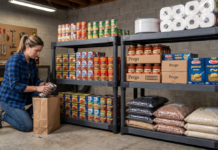
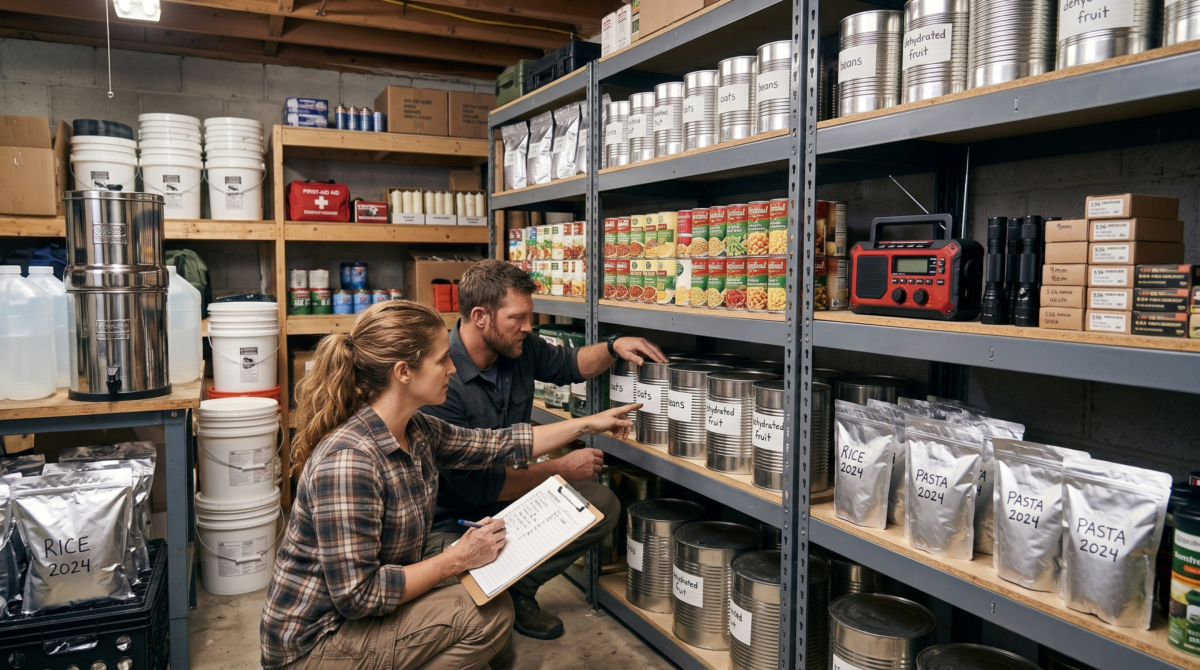
When I look at the basics—food, water, shelter—I have plenty for 90 days. I even have sufficient dog food, cat food, and chicken feed. When I include heat, we have plenty of firewood, at least for this winter. It’s when we get beyond the basics that questions arise. For example, I have first aid supplies and basic medicines, but none of us have advanced medical training. If someone needs a doctor or trauma care during that 90-day period, we are out of luck. Military bases have medical personnel.
If I look at electricity, our solar power system should be sufficient, assuming our system continues to work and does not require support from a third party. Once every year or 18 months, we have needed tech support, which can be provided over the phone and on the internet. I call support and report the problem. They connect to my gear remotely, run some diagnostics, and then update the firmware and reboot. The problem is usually fixed in 45 minutes. That’s now. What happens then?
If there is no communications or no tech support, I am once again out of luck. I would reboot the system manually, cross my fingers, and hope it comes back up and runs fine. Advanced systems like this are difficult for laymen like me to maintain. My equipment may have a 10- or 25-year warranty, but that does no good if no one is available to perform the warranty service.
In a grid-down scenario, we would depend on Starlink for communications. This assumes that no one has taken Starlink out and that their ground stations and satellites are still operating. It also assumes that the internet still exists, that routers and servers are still running somewhere, so that there is something to connect to. We can’t call anyone if the cell towers are down.
What No Outside Support Means
The good news about this 90-day scenario is it doesn’t say that the sh*t has hit the fan. We don’t know how severe the problem is, or if there is no rule of law and the cities are rioting. We don’t know if we need security to prevent marauders and raids from people who lack the supplies to last 90 days. Maybe we should assume things are going to hell, but if it is a pandemic scenario like COVID-19, that might not be the case. People might stay home, hunkered down in front of their favorite news or streaming services, watching through a glowing square screen, afraid to leave their homes as the world around them collapses.
It also doesn’t imply whether neighbors and friends are considered “outside inputs.” I’m going to assume they are not because just as an army base is like a municipality unto itself, so are we if the SHTF. While chances are high that my wife and I can survive—just the two of us—for 90 days without leaving our property, it will be easier if we can include the entire street. Or maybe all the people who live along the two miles that encompass our end of the road.
Who knows? Maybe there’s a doctor among those houses. I don’t know of one, but I bet there’s at least a nurse. Even a retired nurse would be better than nothing.
Your Story Will Differ
How well you are prepared to last 90 days without “outside inputs” is going to be different from our scenario based on how long you have been prepping and what kind of financial resources you have, but this is a good time to at least ask the question. I’ve been prepping for 30 years; don’t feel bad if you aren’t at this level. Use this as a thought exercise as an opportunity to identify what you are lacking and where you should focus your efforts.
We don’t know if you can bug out or have to bug in, so I say, for the sake of this exercise, do whatever you were planning to do. We don’t know if the roads and highways are open; we have no idea if martial law has been declared. So imagine the best-case scenario and evaluate your plans based on that. Then, imagine a worst-case scenario and see how your results change. Then, ask yourself, what can you do over the fourth quarter of the year to even the score?
The Military Threat
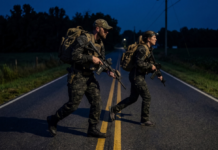
One of the best things about military bases being self-sufficient for 90 days is that implies that the soldiers won’t be out confiscating food, livestock, fuel, and other supplies from civilians.
I consider that a real threat in the event of a serious global disaster. In a regional emergency, we expect the military to come to our aid. We are used to seeing helicopters lifting flood victims off rooftops and the National Guard clearing roads and giving people lifts to the nearest shelter. But what happens when they run out of MREs? Will a military patrol think your goats look like the solution to their hunger? Will they declare a “State of Emergency” and search your house, taking the canned food you carefully squirreled away? There’s no way to know. I’d like to think the best of our military, but at some point, it is going to be every man and woman for themselves, or at least for their team. And the military is a pretty big team with far more guns than I have.
For centuries, civilians in Europe have run into the woods, the mountains, and even hidden in caves to protect themselves from armies that stripped the earth as they passed, stealing what they could and often burning what they had to leave behind. Consider having some sort of getaway plan like that. You may not have mountains or caves, but you can still carry a bundle of supplies and hide off the beaten path to keep them from capturing and questioning you. (And who knows what else?)
Other Ramifications
After you have made your plans, think about the difference between the government wanting the military prepared for 90 days and telling civilians to prep for three days. There’s a message there: civilians don’t matter.
If the SHTF, the government and the military is going to protect itself before they protect you and me. In a global war, they are going to worry about continuity of government far more than continuity of the electorate.
We are on our own. This should not be a surprise; just confirmation. No one is coming to save you. You need to be prepared to save yourself. 90 days is a good starting point.