My daughter called me the other day while driving to the Washington, D.C., area for a business conference. She said, “I’ve never seen so many cops on the road. I’m being very careful not to speed.”
I explained they are no doubt looking for suspicious cars filled with military-aged males, possibly even tracking specific license plates using vehicle-mounted license plate readers and AI to track the movement of suspects. Because Washington is a likely target area for terrorist attacks, I told her to be careful. Although she owns a gun, she didn’t bring it. And since she was driving to Maryland and Washington, both rabid anti-gun areas, I don’t entirely blame her.
The next day saw the attack at Old Dominion University in Virginia and the synagogue in Michigan, both attacks linked to terrorism and/or inspired by what is happening in Iran. Here are two lessons I take from these events:
- If you count the bomb throwers in New York, this is the fourth attack in the homeland in the 13 days since the war started. Expect more and plan accordingly.
- When attacked, fight back, preferably with guns (Michigan) but with your hands (Virginia) if you have no other option.
A day or two later, I made the 90-minute trip to Home Depot and Sam’s Club in a city a tiny fraction of the size of Washington, but I was carrying my EDC Glock 48, two spare magazines, my S&W lightweight revolver, and two speed loaders. I also had an AR-15 in my trunk and a full tactical med kit in my backseat.
Needless to say, nothing happened to either of us, but I felt safe!
Food Inflation
After visiting Sam’s Club, I feel like I am living in some kind of alternate world where the prices for some things are steady, a few things are inexpensive, but a shocking number of items have seen price jumps. Often, it makes no sense why one thing (thick-cut bacon) is the lowest price I have seen in several years while another (an 8-pack of Spam) is the highest ever. It’s especially crazy considering they are both pork.
The eight-pack of Spam was $25.56, which is $8.58 (or $1.07 per can) higher than it was in August 2022. So in less than four years, the cost of Spam is up 52 percent. I used to eat Spam at breakfast because it was less expensive than bacon. At $4.26 per pound, it is now more expensive than the bacon, which cost me $3.49 per pound.
Despite it rising price, Spam remains a better option for prepping because of its long shelf life and the high caloric density it offers. Each can has 1080 calories, meaning my cost-per-calorie was about 0.3 cents. That’s better than most canned food.
This wasn’t the only survival food I purchased. I bought another 25 pounds of Jasmine rice ($23) and 20 pounds of regular Quaker oatmeal for just $16, both of which will go into Mylar bags and 5-gallon pails for long-term storage. The cost of Quaker Oats in the 10-pound box is so low, everyone should buy it for an emergency. I’m not a huge fan, but one day we may be glad to have it.
Protein is Getting Expensive
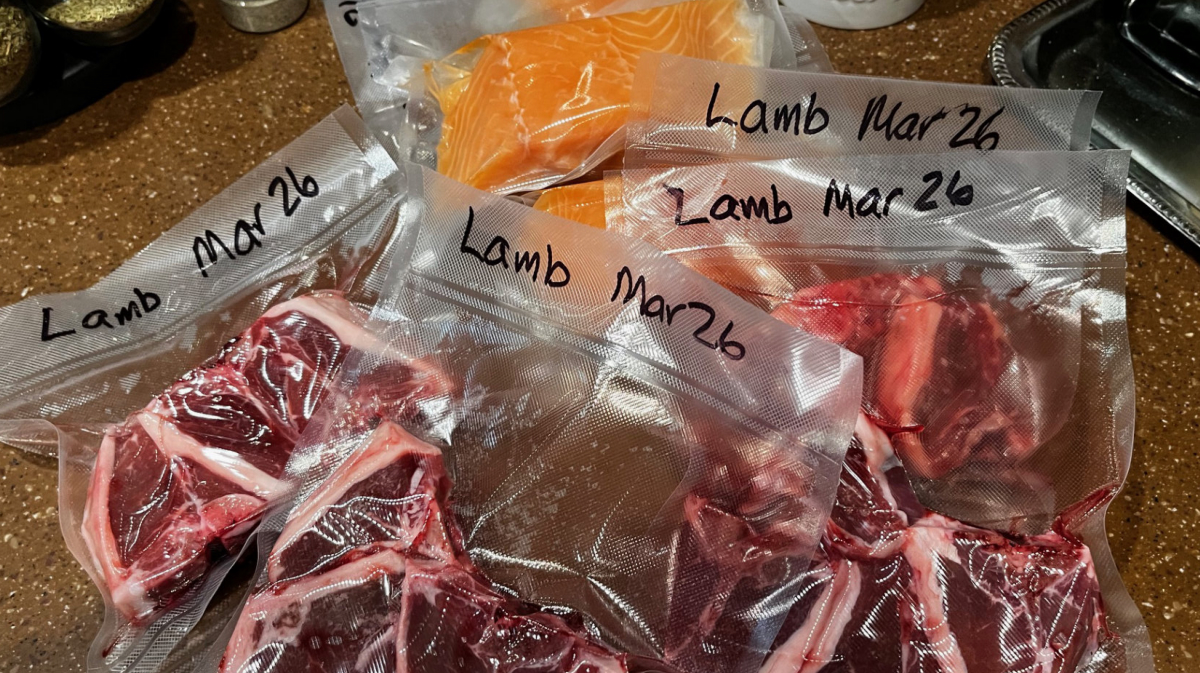
I spent $150 in the meat aisle at Sam’s Club. (This is one reason we only go there every other month.) That included six pounds of ground meat (on sale) two packages of lamb chops, $23 in salmon (also on sale), and a corned beef brisket, which cost $34, despite being $3 off. The salmon will be three meals for the two of us, and the corned beef at least as many. The corned beef was a once-a-year splurge. I look at packages of sirloin or ribeye steak for $50 or more and I can’t bring myself to buy them.
I have not done any actual data gathering and calculation, but based on my observations, the cost of common protein sources, from low to high, is:
- Beans
- Eggs
- Dairy products
- Chicken
- Pork
- Fish
- Beef
This is why we need to store beans, because beans are far less expensive and store better than any of those other items. They also work with grains to provide your body with complete proteins.
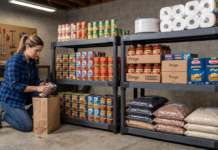
My advice is to store beans and powdered milk (a complete protein) before prices rise further. Besides pinto beans, black beans can often be found in bulk. Most dried beans are relatively inexpensive, while canned beans are quick and easy to prepare in an emergency, but more expensive per serving.
Almost everyone can afford to store dried beans and oatmeal. If you have the space, have chickens for eggs and goats or cows for dairy. Dairy animals are difficult and expensive, but those homesteaders who are the most self-sufficient in food have dairy animals. It’s enough to make me wish I had five or ten acres of pasture.