Once you are an established beekeeper with some experience, the difficulty is not running out of bee hives; it is how many you can handle, because they have a way of reproducing.
I tell new beekeepers (who we call new-bees) that they should start with two hives. I think four hives is all it takes to be a self-sufficient backyard beekeeper that no longer needs to buy bees or queens. Four is a self-sustaining number, and good minimum for preppers or homesteaders. If a hive dies, you can take resources from another and create a new one. If two die over the winter, you can split the two survivors and have four hives again. Four is also good because you can make enough honey to give to all your friends and family, even if one or two of your hives are not as strong as you might like.
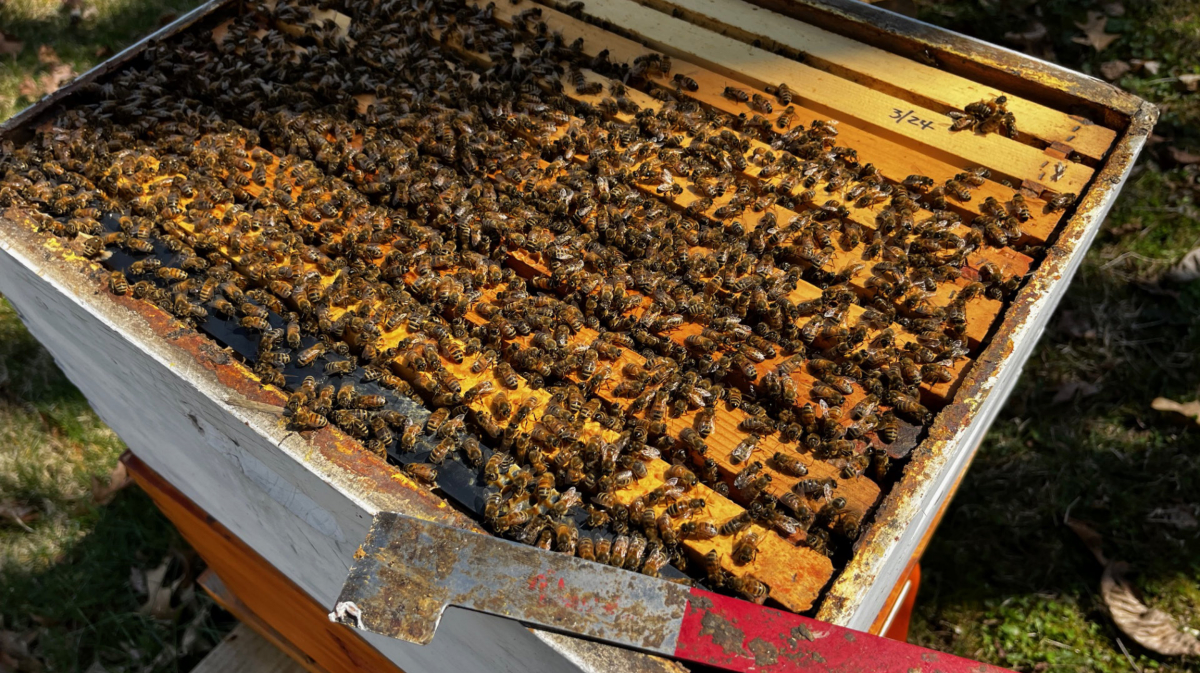
I entered the winter with ten hives. One died over the winter. This week, I split my largest hive, meaning I now have ten hives again, although one does not yet have a queen. Another hive in my bee yard at the lower altitude is thriving, and in a week or two, I’ll do another split—probably a double-screen board split, possibly a walkaway split, which is what I did this time.
When you do a walkaway split, you basically divide the hive into two hives, and the hive without the old queen creates a new one.
Making New Queens
A hive will die without a queen, and since queens have a lifespan of just a few years, you need to replace them. You can go spend $40 on a new queen, or you can harness Mother Nature to get the bees to make their own queen. That is what I am doing this early in the season, although I may graft to produce a larger number of queens in late April or early May.
This is not a beekeeping blog, and there are plenty of videos and how-to-split guides online, so I will not go into detail here. Instead, I’m going to recommend three things folks who keep or want to keep bees for preparedness reasons should learn to do that relate to splits:
- Inspect your hives weekly during your geographic area’s peak swarm season. Know what to do when you spot queen cups or queen cells. Be able to recognize a hive that is preparing to swarm so you can split and avoid losing half your bees.
- Know several splitting techniques. None of them are difficult, but because you are making a new hive, they require additional hive bodies, bottom boards, and covers. I start every season with more equipment than I think I need and then find myself building more in June.
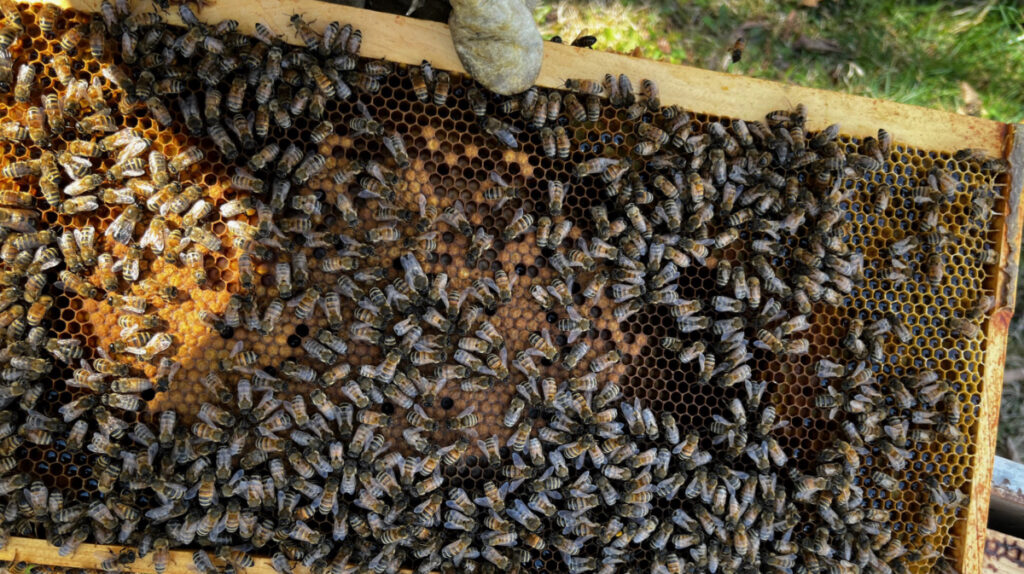
- Know how to read a frame and spot eggs so you can ensure a split has the raw materials the bees need to raise a new queen.
Emergency Beehives
The honeybee will set up a colony in any decent-sized void that is protected from the weather. What is a decent size? A five-gallon bucket can work. You can slap together a box out of 2x6s or 2x8s, drill an access hole, and put a tile lid on it, and you’ve got an inexpensive beehive. (Search for the Comfort Hive developed by Sam Comfort.)
In the wild, bees use hollow trees, but they will also build a hive in your shed’s soffit, a 5-gallon water bottle, and even empty gas tanks. It’s just easier to harvest the honey if you have a hive with removable frames. And a hive like the Langstroth hive—used by commercial and most backyard beekeepers—has frames that preserve honeycomb for re-use, allowing the bees to dedicate their time and energy into producing honey rather than wax.
When I run out of “official” bee equipment in a post-SHTF scenario, I’m banging together whatever box-shaped construction I can make using wood “borrowed” from abandoned barns and outbuildings. In a world without the rule of law, all those speed limit signs will begin to look like the perfect lid for my new beehives. Maybe some of those 5-gallon pails we eat the rice or wheat from will end up as beehives. Just use your imagination, and you can have an art collection and apiary all in one.
Why Bees for TEOTWAWKI?
I raise bees because they don’t take up much room or much of my time. As my beekeeping skills and knowledge have improved, I find it only takes four or five hours a week to keep ten hives from March through October, with little or no time spent in the winter. The bees will also be fine if I go a couple of weeks without giving them any care at all.
But more important for prepping is the honey you can harvest. Depending on where you live, you should get a minimum of 30 pounds of honey per hive, with 120 or 150 pounds possible from a strong hive in a prime location (which we are not). Besides providing 1380 calories per pound, honey is a homegrown sweetener that can be used for baking, in hot or cold beverages, in cereal, and on top of pancakes or biscuits. If you run out of sugar, honey will be even more valuable on the homestead and as a barter item.
Honey and other hive products—such as pollen and propolis—are reputed to have health benefits. While I believe honey can help you fight seasonal allergies and works as a topical antiseptic on small wounds and abrasions, I will let you do your own research on other benefits of hive products.
Finally, we have beeswax, which is good for more than just candles; it makes an excellent polish, can waterproof fabric, and can be used in cosmetics and lip balms.
More Bees = More Honey = More Fun
Beekeeping can be hard work, but on most days, I enjoy it. It’s sweaty working in that protective suit or jacket in the sun, and worse if you wear gloves. (I often do, especially when splitting hives.) But talk about sweet success…
The nice thing about beekeeping is that it is not political, and almost no one hates beekeepers. Wear a beekeeping T-shirt, and people will strike up a conversation. Sure, people hate getting stung, but I expect 75 percent of people who think they got stung by a “bee” most likely were stung by a yellow jacket or wasp. The public has no idea that the honey bee does not live underground and does not build round paper balls on tree limbs.
While I get stung frequently, it’s usually for good reason. But if you become a beekeeper, get a supply of veils. By the time you get six or more hives, bees will be all over your yard and garden, and there will be days you want to stop them from stinging you in the face while working in the garden or splitting firewood.
I get stung every year. The season has barely begun, and I‘ve been stung three times already. But most beekeepers build up resistance. For me, it hurts when they sting me, but in a few minutes not only is the pain gone, I have a hard time finding where he stung me. I experience almost no redness or lingering pain. That has not always been the case. Just four or five years ago, I would swell up and be in pain for two or three days.
Getting Started
If you buy everything you need to become a beekeeper, with the equipment already constructed and painted, including two nucs (nucleus hives), I would estimate you will spend $1,500. But that’s doing it commercially. You can do it for less if you build the woodenware yourself.
The best way to learn beekeeping is with a mentor—an existing beekeeper who will let you work with them while you learn. You will see so much in an established bee yard that when you run into a similar situation in your own apiary, you will feel confident to handle it yourself. Plus, it’s always possible the mentor will give you bees or equipment.
The second best way to learn beekeeping is by joining your local and state beekeepers associations. Most offer educational speakers and programs, and you’ll meet other beekeepers by attending the meetings. Our local association offers a beekeeping class, state accreditation tests, and days in the apiary. A new-bee can learn quite a bit about when and how to treat for mites, when and what to feed, and how to get your hives ready for winter.
Global and Local
There’s a great deal going on in the world today, with bombs falling, missiles launching, and boats being blown up and sunk. Countries are making threats and counter-threats. But that’s all on the world stage, and there is nothing you or I can do about it except prep. But I can go out to the bee yard, check my hives, help the bees reproduce, and be ready for the spring honey flow.
I want to get some more of that dark tulip poplar honey, like we had last year!