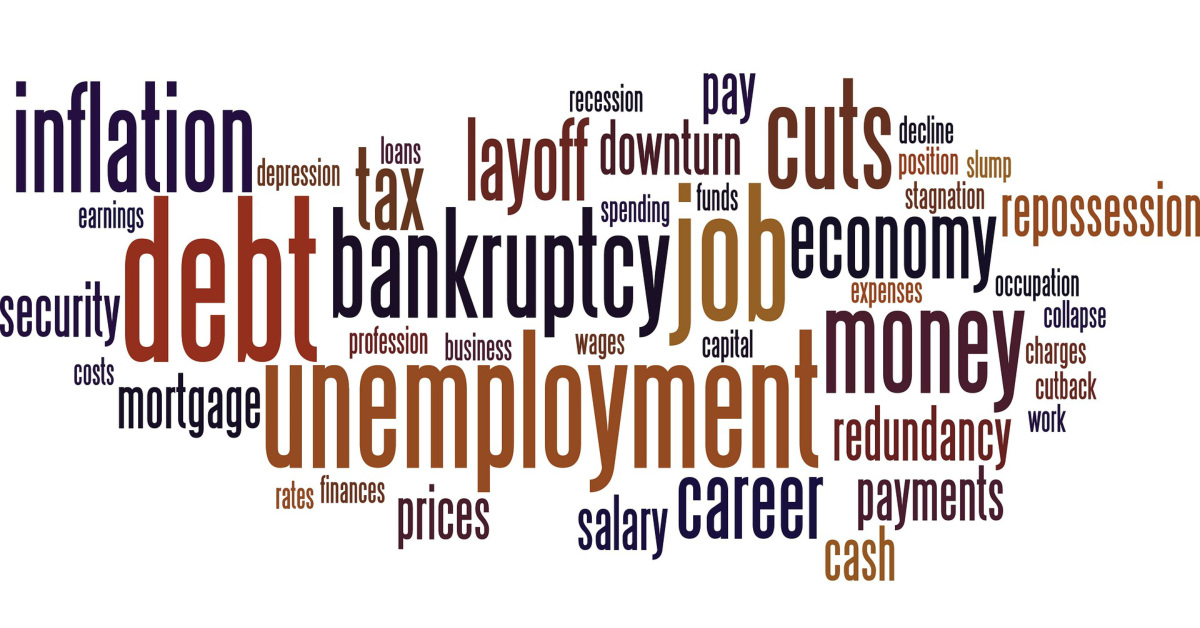
One article predicts the stock market will “melt up.” The next says we are waiting for a crash. One video says the Magnificent Seven have room to run as the AI market is just getting started, but another compares things to 1929 when the Great Depression hit. One influencer says banks are running out of money, while another says things have never been better.
So how do you know where things stand?
You don’t, and neither do they. They are making educated guesses. All we can do is make our own best guess.
It doesn’t matter if the so-called experts read charts or crystal balls, if they have 40 years of experience or are not even 40 years old; no one knows what the market will do. Just because some guy predicted the last crash doesn’t mean he can predict the next one. After all, even a stopped clock is right twice a day.
So What Do We Do?
First, acknowledge the inevitable:
- One day, there stock market will retreat.
- One day, we could experience a recession, a depression, or even an economic collapse. We don’t know which or when, but based on historical data, we are due for a recession.
- We can expect to deal with deflation, inflation, stagflation or even hyperinflation, but again, no one knows which or when. The country could see inflation, followed by stagflation, and then more inflation leading to hyperinflation over a period of years.
- The political divide may grow wider, and political violence might worse. This could lead to internal strife, civil unrest, a crackdown on freedoms and rights.
- The country may go to war, most likely with China and possibly with other countries, including Russia. Worst case, we could see another World War. Again, we don’t know when, but China appears to be aiming at 2027. That’s just two years away. War always has asevere economic impact.
- We could experience all the above—and some other problems—all at once. For example, a war could trigger inflation. Or, a recession could encourage China to attack. Even a natural disaster could lead to economic problems.
Second, we must admit we can do nothing about any of these. They are beyond our control. We can’t control the world, only ourselves and our small corner of it.
Third, take steps to protect yourself physically and economically.
Specific Steps
Here’s the good news: by being a prepper, you are already on your way. The first step to take is to prep. Start with the basics and build from there.
For a quick review, the basics are what I call the Big Three: food, water and shelter. Then come the Next Three: medical/first aid, self-defense, and communications.
Food is first for a reason. Not only is starvation an ugly way to die, our supply chain is complex and easily disrupted. A hiccup in the just-in-time system could leave store shelves empty.
Yes, a lack of water can kill you faster than a lack of food, but many of us live in an environment where water occasionally falls from the sky or runs across the ground. Unless someone is air dropping you pallets of MREs or you just shot a goose, food does not fall from the sky. Likewise, most of us already have shelter.
To build your food preps, start by building a prepper pantry. This post below gives details on building your food preps from scratch, including the three layers of food storage:
Once you have your Big Three covered, you can work on the next three. Then circle back over time and add more of everything. Taking small steps is better than taking no steps. Prepping is a journey.
Beyond Traditional Preps
When you get beyond these prepping building blocks, the second step is to prepare financially. I have always recommended three things: have a supply of emergency cash; have a reserve fund in case you lose your source of income; and invest in some physical assets like gold, silver, real estate, or even ammunition. If you are blessed to have enough wealth to have investments, be sure to diversify and have some alternative investments.
Here is a post about three steps you can take to combat inflation:
The Ultimate Step
Once you are prepared and your finances are in good shape, you need to look at becoming as self-sufficient and independent as possible. If you already survive with minimal external inputs, you won’t suffer as much if the system collapses. If you produce goods rather than consume them, you can avoid some downsides of inflation.
The best way to be self-sufficient in much of the U.S. is to have a small farm or a homestead because having a large garden and raising livestock will help you fulfill much of your food needs. If you buy property with survival in mind, look for one with a source of water and enough forest to cut your own firewood.
One benefit of being a being a homesteader is that you are unlikely to lose your job to artificial intelligence. It’s going to be awhile before you can get a robot that can clean the chicken coop, harvest eggs, milk the goats, and harvest your firewood.
Livestock
If you have sufficient acreage, you can grow grains and beans, but it is difficult to produce sufficient protein, fat and calories with only a garden. A garden will help extend your prepper pantry and can boost your caloric intake. It can also produce goods for barter. Animals, however, are a better source of protein and fat, two necessary macronutrients.
The animal that can provide the most calories is a dairy cow because you can produce milk, cheese, yogurt, butter, kefir, cream and other dairy products. Of course, a milk cow is large, needs acres of pasture, and has to be bred annually so she will continue to produce milk. (That calf can be a source of meat protein.) Rather than one cow, you may find you need a small herd, and a barn, and a food source, so it gets complicated and expensive. Many homesteaders go with a herd of dairy goats instead of dairy cows. There is no reason you can’t milk a sheep, but it’s not done much in the U.S. doing so would have the advantage of producing wool in addition to meat and dairy.
And if your current home doesn’t allow you to have goats, consider chickens. Rabbits are another alternative and can be raised secretly in a shed in your backyard. Here’s a prior post on rabbits for preppers.
I should note that I decided against raising rabbits because while our state allows me to sell eggs and honey, I can’t sell rabbit meat for human consumption. If the economy collapses, I may well raise them for food instead of profit.
A Source of Food
When countries collapse, services can be disrupted for several years, and it may take ten or fifteen years to get back to “normal.” No matter how much you prep or how many tons of food you stockpile, you will be better off if you have a renewable source of food and a local source of water. A homestead can offer both.
The next best thing to owning a homestead or small farm is to have a good relationship with someone who does. You might buy food from them or trade work for food, such as assisting with chores such as canning or providing security.
Have a Plan for That
One key to being ready for any disaster—financial or otherwise—is to have thought about it before hand and made a plan. Even a crappy plan is better than panicking or doing nothing.
Your plan for a stock market crash can be simple, like to cut back on spending and live on your preps while you wait for it to recover. A plan to survive inflation could be to get a side gig. Your plan for hyperinflation could be to move to the country and live with your parents/uncle/sister/friend. A plan for bank collapse and subsequent bail-in might be to have assets outside the banking system.
The benefit of having a plan is it allows you to act quickly. Like bugging out, the early movers will be more successful than the laggards.
So, make a plan. Prep. Try to become as self-sufficient as possible. Generate income from multiple streams and diversify your investments to include some hard assets. And remember, recessions and even depressions come and go. Stock markets that crash eventually claw their way back. Wars came and go. Your job as a prepper is to survive the bad times with as little disruption and damage as possible and reach the recovery, preferably with a full belly and as few losses as possible.
Disclaimer: This post is not financial advice. I am not a financial advisor, accountant, economist, real estate expert, tax professional, or lawyer. I am simply a well-educated prepper relaying my personal beliefs established over more than 30 years of prepping. Do your own research and consider consulting a financial professional to assist you with your financial decisions.