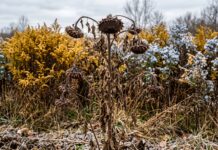

While war rages in the Middle East, life goes on here in the Appalachians. We can’t control what happens over there, but we can control what we do. The best thing you can do is go on with your normal life after taking a few precautions, as I outlined Sunday.
There is a video at the end of this post that echoes my warning on the possibility of sleeper cells or lone wolf attackers and recaps one such event in Austin, Texas.
Now, back to our regularly scheduled post and our ongoing homesteading activties.
Early Spring Days are Good for the Honeybees

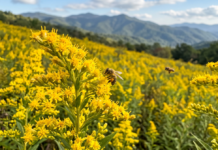
We had the closest thing yet to a spring day on Friday. I even saw a flower blooming and a bee visiting it. I thought the little yellow bloom was a dandelion, but wife, who is an expert gardener, tells me it is a coltsfoot because dandelions grow their leaves before they bloom. She doesn’t like it because it is an invasive species, but as long as the bees like them, I’m happy. Early spring food sources mean stronger beehives later in the spring.
On Saturday, the first of the snowdrops appeared, and a bee found them, too. I just wish we had an acre of them.
I am taking advantage of these warm days to feed the bees both sugar water and pollen substitute. When the maple trees start producing a good quantity of pollen, the bees will ignore the fake stuff. They don’t need Robert Kennedy to tell them what to eat; they know the difference between real pollen and the man-made replacement, and they know the real stuff is better.
Hive Inspections
This weekend, I took advantage of the warmth to inspect all ten of my beehives. The good news is that nine survived the winter. The one deadout had a homemade cover, and water soaked through it, likely chilling and killing the bees. When I opened the hive, there was water on top of the foam insulation board. Inside, not only were there no bees, but some frames were wet.
This is why wooden hive covers have sheet metal on top. I could have saved $200 worth of bees for a $30 part. Lesson learned.
Still, a 90 percent survival rate is good. The hives had more bees inside than I expected, and all but one hive had plenty of stores. I swapped a frame of honey into the hive that was running low and fed it some sugar. The challenge of having strong hives is that they eat a lot, and right now, there is little or no natural food. Their winter stores still have to last awhile.
Actually, at my out-yard, which is at a significantly lower altitude, I observed bees bringing in pollen, and they had plenty of bee bread in the hive, so they have natural food. We haven’t seen that kind up here on the mountain.
So I have nine hives with queens, eggs, and brood, some of which is capped, meaning there will be new bees hatching soon. Now I just have to keep them alive, make splits before they swarm, raise some new queens and keep growing my apiary. I have averaged two new hives a year, but I am hoping to boost that this year because I am opening a new bee yard. I’d like to end the year with five to seven hives at my existing locations and at least three at the new one.
Chilly Nights and Spring Chores
Despite the temperature reaching over 60°F outside, it’s only 64 in my man cave, which is heated only with the wood stove. I feel guilty burning wood when it is in the 60s, but sometimes I do so after dark when the outside temperature falls into the 40s. But it is funny to wear a heavy fleece when working at my computer and then take it off to go outside and dig out a ditch, which I did yesterday.
I also used 3-foot T-posts to reinforce our silt wall. The wooden stakes had broken in our high winds. The T-posts should hold up better.

Perhaps the biggest job I did this weekend was removing the bedding from the chicken coop and replacing it with fresh straw. It filled five wheelbarrow loads, which substantially increased the size of our compost pile. The compost pile is next to the beehives—probably not the smartest location—so all this was done to the accompaniment of buzzing bees. One hit my forehead but departed before either of us could do any damage to the other.
We use what is called the deep bedding method in our chicken coop, so when the chickens poop up their bedding, we just add another layer of straw on top. (As you can imagine, that can only go on for so long.) Supposedly, the lower layers start to compost, and this generates heat in the winter. I am unconvinced, but none of the birds got frostbite this year, so that is a plus.
We are still getting four or five eggs per day. Enough to feed us, but not enough to make any money selling eggs. If the laying doesn’t pick up by April, the slaughtering will commence.
We Get Another Firewood Delivery
My firewood guy came up and dumped another load of firewood on Friday. I could tell from the smell that it had been freshly cut. He says business is booming. Last Monday, he was six loads behind. By the time he delivered, he was seven loads behind, so people are ordering wood faster than he can produce and deliver it. It took about a week for me to get my latest load, but I was in no rush. I won’t be burning this wood until December or January. That will give it at least nine months of sun and wind to season. And we get more wind than anywhere else I have lived.
While this weekend warmed up, we had snow and temperatures in the single digits less than a week ago. This was followed by a solid day of rain. It was so cold and wet that I burned all my indoor firewood and had to take a few of the emergency firewood logs from the garage. It is dry enough now that we brought more wood inside. All the wood he delivered last spring is now gone. I have only the fast-burning softwood and a load he delivered in the fall. If we get a long period of cold, I’ll burn it, but I’d rather save it for next year.
I have replaced one of the pallets under our wood storage already this year, but it looks like I need repair or replace a second one. How do I know when they need to be replaced? A slat breaks when I stand on it.
Pallets are a great way to keep firewood off the ground, which minimizes rotting, and they are available for free or a couple dollars each. I usually keep a few spares on hand.
Be safe.
Video of the Day
This video is an example of why I recommend you stay close to home, avoid crowded locations, and go armed.