
Not much time for a post today because I am tired after busting our butts harvesting honey.
The picture above is what the honey looks like when it comes out of the extractor. First thing we do is to run it through the metal sieve you see to strain out the wax, miscellaneous bee body parts, and other debris. Then we strain it through a 400 micron strainer followed by a 200 micron filter to remove any other solids. This allows the pollen to remain in honey while still allowing the resulting product look clear and clean when bottled.
This year our spring honey is about 17 percent water with the balance natural sugars. Last year, it was about 15 percent water, which meant it was thicker and poured more slowly. It also crystalized very fast.
Between the lack of free water molecules and the acidic pH of honey, most bacteria cannot live in it. This makes it safe for storage without needing to be pressure canned. It also explains why putting it on an open cut or scrape can prevent infection. That and the 1,380 calories per pound make it a good product for preppers. Local honey is recommended if people with hay fever want to use it to help build immunity to local pollens.
More to Come
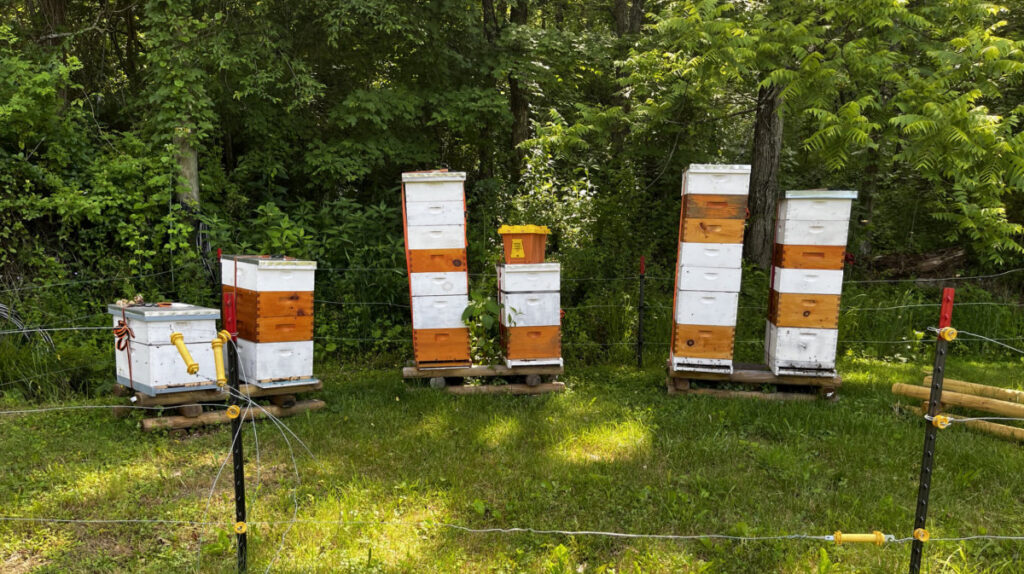
In the photo above, you can see we had 17 honey supers on five hives (the fourth hive from the left had a feeder, not a super). Unfortunately, not all the honey was capped, so I was not able to harvest it all. The supers we harvested were quite heavy, with each one producing 30 pounds of honey. So far, we have produced two five-gallon buckets of honey and I have glass bottles filled and ready for delivery to my retail customers. We’ll have more extracted by the end of the week and probably twice as much in a few weeks when the bees finish capping the honey on the hives.
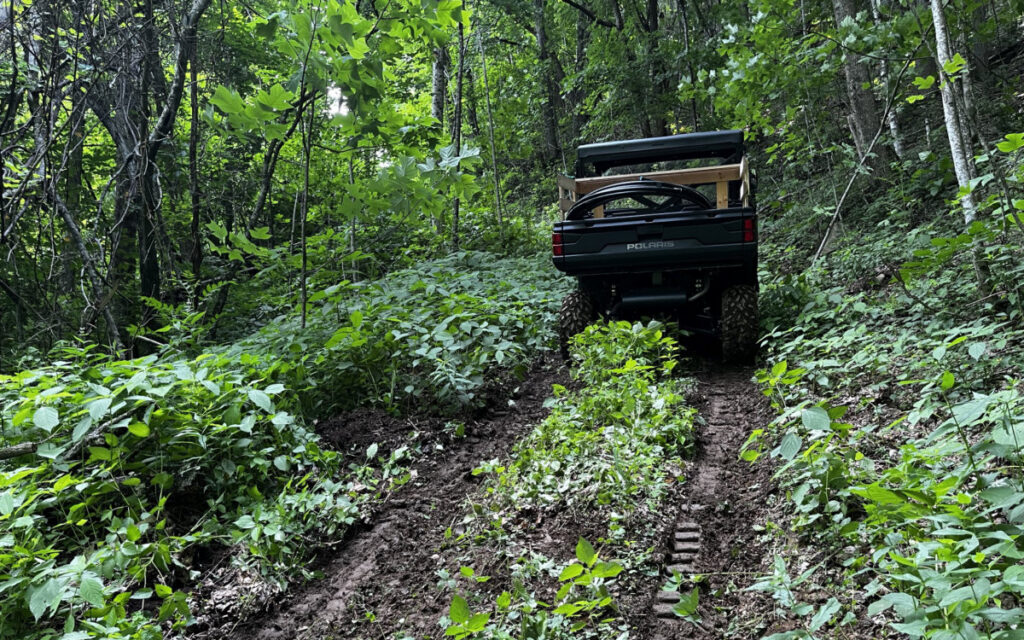
I have also been working with our contractor to bury the water line. More on that another time. But here’s a look at the Polaris delivering a run of pipe up the mountain. We use it like a mini dump truck or a motorized wheel barrow as much or more than we use it for pleasure or just to run over to the neighbors. It’s a work horse, and it saves me from climbing the mountain.