The world is topsy-turvy and no one knows if the ship of state will right itself or take on water. (See Part One for specifics.) Today we present three more broad categories for advanced preppers.
Non-Digital Materials
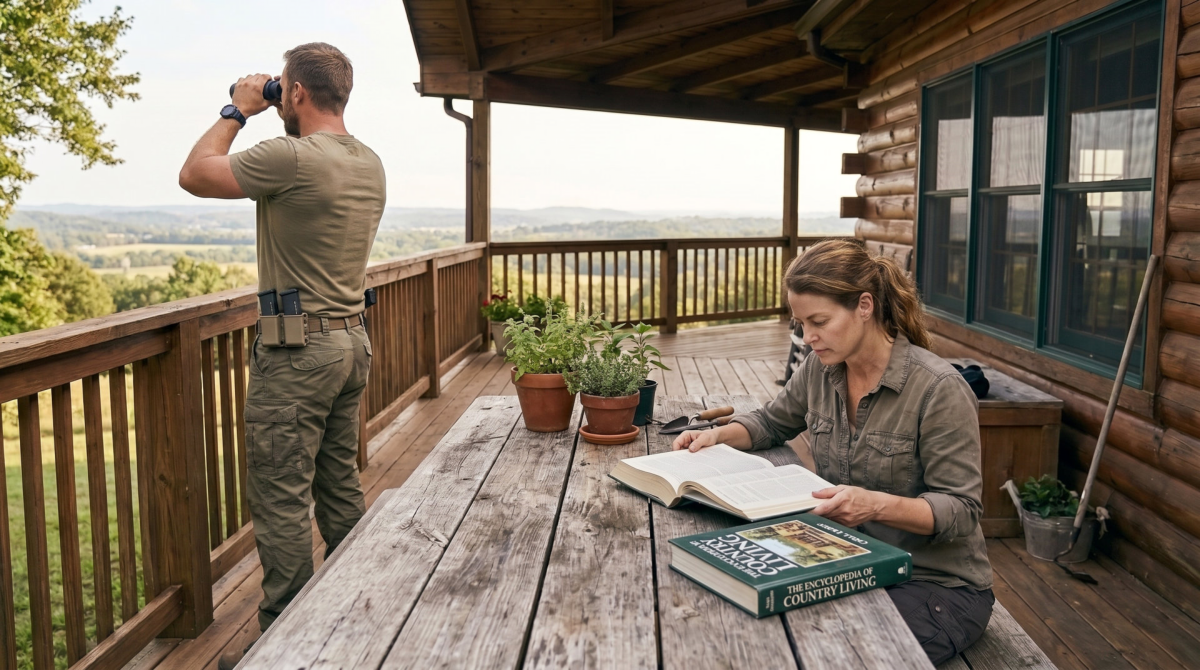
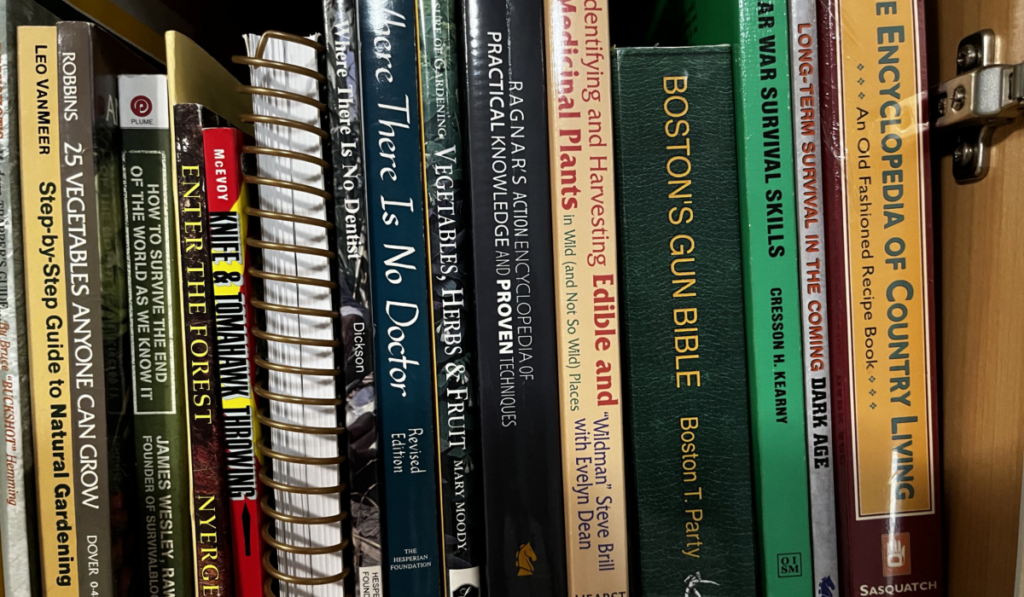
- The most obvious is books: Because I started prepping before there was much of an internet, I still have lots of prepping-related books. You can see some on my bookshelf (below), but I also have boxes of survival books that were never unpacked after our last move because I don’t have the shelf space. Books are great when you can’t remember something or for training non-preppers. For example, if someone bugs out to your house and they lack prepping skills, books on gardening, trapping, skinning, or cooking game animals can help get them up to speed in areas where they can contribute. And if they don’t like it or don’t want to, then they can go hungry or go somewhere else.
I also have print outs of internet articles on how to disassemble, clean, and reassemble my M14, FAL, and other guns. Not because it is hard, but because I don’t do it very often, and one day someone else may have to. If you find something useful on the Internet, save it as a PDF, but printing a copy might also be useful.
Speaking of PDFs, I also have PDF copies of many other books and guides. These are on my hard drive, in the cloud, and on a thumb drive. I hope at least one version will be useable post-SHTF, but it depends on what the big event is. If it is critical to your survival—like a book on prescribing antibiotics for specific illnesses—then you should have a hard copy. - Games and entertainment: So many people rely on streaming and gaming for entertainment. Well, after a global disaster, “streaming” might mean going to the stream and hauling back water, while “gaming” might mean lurking in the woods with a rifle and bringing back some game meat. In a post-SHTF environment when mobile phones don’t’ work, you may have to read a book, play a card game, or play a board game to entertain yourself. Of course, there are also games like charades that don’t need props, but does anyone remember games like that anymore?
Eyewear and Optics
If you use glasses or contacts, you should have at least one spare pair. You are no good to yourself or others when you can’t see.
- Reading Glasses: I used to have 20/20 vision, and then at about age 45, I had to hold books further and further away just to read the print. At some point, I could no longer read the small print. This is a condition called presbyopia, and it slowly sets in after about age 40; everyone gets it, eventually. I started wearing +1.5 glasses. A decade later, I moved to +1.75 and now I have to wear +2 for close up things. You can bet I have spares and +2.5s in my prepper stash.
Shooters also know the value of “eyes,” or safety glasses, and most of is own sunglasses. Some can do double duty. Since these can get lost or broken, stock up. Just buy the cheap stuff that will protect your vision, and don’t worry about looking cool. - Optics: It sucked to learn that my shooting deteriorated as my eyesight did. At some point, I realized the front sight on an AR15 had become blurry. I added a red dot, and my group sizes sank to a third of their previous size. A few years later, it happened to the front sight on pistols and I had to add dots to them. I can still shoot iron sights, but I would not want to take a head shot at 25 yards when the front sight is too blurry to see clearly. Magnified optics also help, but when I adjust a scope to my eyes, it will be blurry for someone else. That’s important to keep in mind if you grab somebody else’s gun.
Binoculars, spotting scopes, and range finders are also worth considering. If you are manning a lookout point, having a 40x or 65x spotting scope can allow you to see an enemy approaching well before they see you. Even a pair of basic 6x or 8X binoculars can help you see what is going on at a distance where the naked eye cannot see. This can be an advantage and give you time to prepare for whatever is headed your way.
Barter Goods
Read our post on bartering if you have never done so. It talks about the downside of bartering goods of limited quantity and the value of bartering skills, work/manpower, or goods that can be replenished, like chicken eggs or garden produce. Still, many believe there may be value in stocking goods specifically for barter. If you feel that way, stock up now.
- Small Items: Many prepper sites and lists recommend stocking airline bottles of alcohol, cigarettes, coffee or other desirable goods to which people are addicted, but I disagree. I don’t want addicts coming to my house or knowing I have a stash of the products they desire. (Plus, I doubt my wife is going to give away any of her coffee.) I prefer small, desirable items people will need after the SHTF like lighters. Regular lighters are fine, and I pick up a three-pack every time I go to the Dollar Tree. Barbecue lighters are even better for people who want to light fires, but they are more expensive to acquire.
Other things that will have value after the SHTF include salt and pepper shakers, a deck of cards, water purification tablets, toilet paper, a pocket knife, and maybe even a pair of socks. My EDC is an $80 folding knife, but if I lose it, a $12 blade is better than nothing. There will be people after the SHTF who will barter for that same $12 knife because they need a folding knife. When you are desperate, you can’t be choosy. - Food: The downside of trading away food is that you may need it; that is why I recommend bartering food your raise or grow because it is replenishable, and we all know you can easily end up with too many cucumbers, zucchini, or pumpkins. I have too much honey, for example. But, when people are desperate, you might be able to trade cheap food—like a couple packets or cups of ramen—for something you want and they cannot use, like a pair of shoes their child outgrew or a DVD they can’t watch without power but your family still can because you have a solar generator.
- Big Needs: Let’s say you need antibiotics because your daughter has a bladder infection. Well, that’s going to take more than a few ramen packets. When a trade is potentially lifesaving, that is when alcohol might come in handy, or when a six-pack of canned chicken is worth trading away. That is also about the only time I would trade ammo or a gun—assuming it is a spare.
There are other big needs you might have that are not life threatening, such as a wanting gasoline so you can run your chainsaw and log splitter. Or needing canning jar lids because you ran out. You will need to trade something valuable for desirable items such as these. I have silver coins, so I would try those first. Then ammo, since I have lots, assuming the person was trustworthy and wouldn’t turn around and shoot me. This is also when having extra gear comes in handy: you might be able to trade an old sleeping bag, a tent you don’t use because you upgraded, your bright blue day pack, an extra headlamp, a water filter for which you have only one cartridge, etc.
Finally, never underestimate the value of a bucket to someone who does not have one. As you eat food in 5-gallon pails, you end up with a valuable bucket that can be used to carry water, harvest food, or store goods.
There are other categories like these, but your needs will vary based on where you live. Are you on the coast? You might need fishing gear, crab traps, or a boat. If you are in the north, you might need snow shoes and cross country skis.
If you have the basics, you are to be congratulated for successfully passing phase one of prepping. But there is always something else that will be valuable. Take a deep breath and keep working, because prepping is a journey, not a destination.