September is National Preparedness Month. If you are like me, that doesn’t matter because every month is a preparedness month, but you can use this to talk to your non-prepper friends. Just bring it up casually, ask if they are doing anything to prepare for the last month of hurricane season, the coming winter, or the possibility of rising oil prices.
Some prepper stores might take advantage of National Preparedness Month to have sales. If there are good prices, you can use the opportunity to stock up or expand your preps. If it coincides with end-of-season sales, so much the better.
I find late August and early September is the best time to shop for winter clothes, especially long underwear. Many stores will have their winter inventory in, and while it won’t be on sale yet, you will have the best selection of the year. While other folks are at the sporting goods store looking for golf clubs on sale, you can be stocking up on thermal underwear, winter boots, and a new parka.
Prepping for Winter
Around here, September is a transition month as summer falls behind us and we look forward to winter. We probably won’t need to light a fire for warmth this month, but we’ll bring in a big load of firewood so that we’re not caught off-guard when the time comes.
This is also a good time to look at your secondary heat sources. Do you have one? Is it fueled and ready to go? Can you keep warm if the power goes out and your central heating won’t run?
Things still growing in the garden will slow down before coming to a stop when we get a frost. Then the remaining plants will get yanked out and tossed onto the compost pile. The next time I clean out the chicken coop, its bedding will get spread on top of the raised beds to provide some fertilizer. Chicken poop should be given six months to “cool down” so it doesn’t burn new plants, which makes September or October the best time to do this.
Vehicle Needs
I haven’t lived anywhere that has required snow tires since the 1990s, but if you do, check your local laws and get them mounted before the first snowfall. I had six tires for my old car, two of which were snow tires. This meant I could swap them on and off myself, which at the time was a money-saving decision.
If you occasionally need chains, get them out of storage, untangle them, make sure you have chain tighteners, and are ready to go. Then store them in your vehicle with a pair of work gloves, any necessary tools, and a headlamp so you’ll have everything you need to put them on when the time comes.
It is also a good time to check the battery because cold weather reduces its cranking amps. You can survive all summer on a battery that won’t crank once the temperatures fall.
Your Vehicle’s Survival Kit
The biggest change I make to the vehicle when the seasons change is to update our survival supplies. First, I add one or two wool blankets. Then I make sure I have a knit cap, gloves, and a pair of warm socks. I always add a seasonally appropriate jacket or outerwear when I get into the car, but it’s good to have some hand warmers and other cold-weather gear already there. If I am going on a long trip or believe I may have to spend the night in my truck, I bring a sleeping bag.
Snacks, water, and first aid are always in our vehicles, plus some basic tools and towing supplies in my truck, but September is a good month to check on them. If something is getting old, or the packaging is worn, eat it and then replenish it. I also swap out the water after it sits all summer in the heat.
When traveling beyond the area or to do beekeeping during hot weather, I carry a soft cooler meant to hold twelve cans. With a few blue cooler bricks, it barely holds three or four bottles of water, but that’s all I need. In the winter, the same insulated cooler can keep my water from freezing if I leave my truck unattended in the parking lot for hours.
It’s Camping Weather
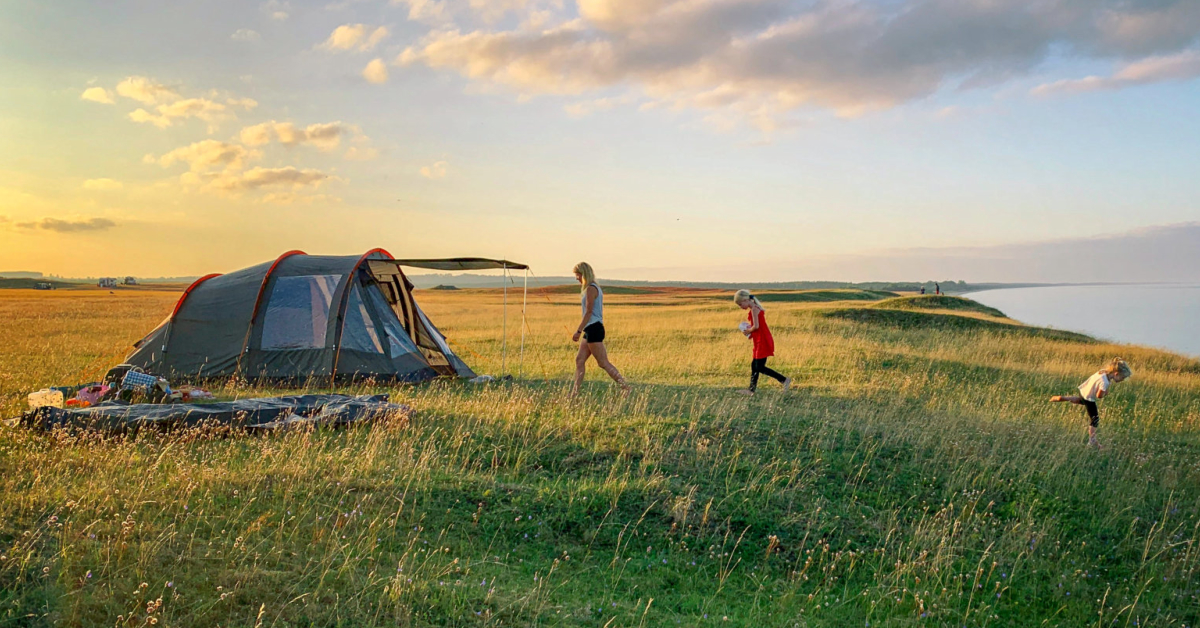
September and October often have great weather for camping. Not too hot and not too cold. Plus, you could catch some fall colors, depending on where you go. Around here, the first two weeks of October are prime time for leaf-peepers.
While camping and backpacking are good fun on their own, they are also excellent opportunities to practice some primitive skills, do some bushcrafting, and let the family get used to living out of a tent, sleeping on the ground, and cooking over an open fire. Get the kids acclimated to outdoor living while it is an adventure, not a forced march to your bug-out location.
We talked about hurricane preparedness last month, but quite a few dangerous hurricanes have hit in September. Don’t plan a camping trip if a storm is heading your way. People have been swept away from campgrounds and drowned when creeks rise. Plus, camping in the constant rain is a drag. You want your family to enjoy it.
Hunting Season is Coming
If you have hunting season coming up, September should have good weather for checking the zero on your rifle. This is the time to make sure your first cold-bore shot hits where you want it to. I also check the batteries in my optics to make sure all those red dots and reticles still light up.
September and October are a good time to finish up any meat left in the freezer, clean it out, and get it ready for this fall’s hunting season. If you use a vacuum sealer, make sure you have plenty of rolls to make bags and other supplies for freezing your catch. If you own a meat grinder, check that it is in good working order, and if you don’t own one, consider buying one at the season-opening sale.
As people start to wear heavier clothes when the weather cools, you will find that you can conceal a larger gun. If you are carrying a subcompact with ten or fewer rounds, this is an opportunity to upgrade to something that holds 15, 17, or even as many as 21. Alternatively, you can consider carrying a larger bullet that is more likely to penetrate multiple layers of clothing.
Make a Cache
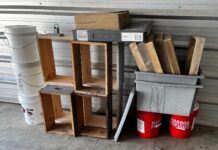
This month’s prepping activity is to make and bury or hide a cache. It can be on your property, but it can also be somewhere in between where you live and where you plan to bug out. We traditionally think of a cache as a PVC tube or pipe, but I like 50-caliber ammo cans and 5-gallon pails. We also think of them buried in an isolated place, like the middle of a national park or state gamelands, but a cache can also be in a small 5’x5’ storage unit filled with food, water, clothing, and some ammo. Another place for a cache is on private or unused state land just outside a rest area you are likely to pass through.
Your cache should be designed to replenish your supplies if you are on foot. If you can drive to your destination, then the cache may not be needed, so just leave it buried. But if you are on foot, a cache not only gives you something to look forward to, it can give you a full belly. MREs in pouches are good choices for a cache because they are sealed, usually good for at least five years, and contain 1,200 or more calories each. Besides food, common things for hikers might be a compass, a map, a fire starter, some hard candy, water purification tablets or a filter, a small first aid kit, a blister kit with foot powder, moleskin, a roll of athletic tape, clean socks, and a spare magazine or two.
Everyone’s bug-out scenario and needs are different. That means your caches will be different. Plan for them to fit your scenario, your life, and your needs. Just because I have ammo in my caches doesn’t mean you need it in yours; it’s your call.
Monthly Check-In
We’re all busy with back-to-school, and youth sports are starting up again. Work is probably getting busier, too. It’s easy to get distracted by life, so consider this a reminder not to neglect your prepping. You don’t have to prep every day, or every weekend, but consider prepping one or two days every month.
What did you do last month or plan to do this month? Comment below.